Michel Maisonneuve, RMC 1976: We must follow the brave example of the warriors who came before us
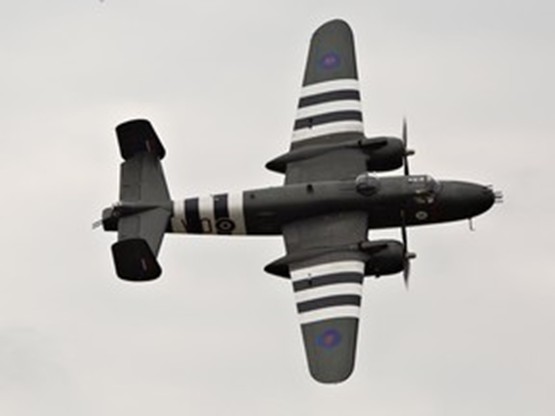
I crewed a B-25 flight last year, an experience that demonstrated just some of the challenges faced by Canadians in the Second World War
Here I was, sitting in the rear gun turret of our Mitchell B-25 fighter-bomber, with all my senses on guard and my head on a swivel. The day was clear, the sky could not be bluer, and the danger of enemy fighters coming at us with the sun at their back was almost a certainty. Luckily, we had just finished our bombing run and were on our way back to base. Our experienced pilot, Major David Rohrer, co-pilot Liam Pearson and flight engineer Jessica Side had managed to get us to the target unscathed, and we now only had to cross the water to make it home.
Suddenly, Dave had to take evasive action, jerking the plane up and to the right in an almost barrel roll. Calm as cucumbers, the rest of the crew stayed silent as they hung on and continued to marvel at the incredible manoeuvrability of the B-25. Able to support the ground fight with 18 machine guns as well as a full load of bombs, it was a workhorse. This one was built in 1945 in Missouri: what a multi-purpose aircraft!
Never mind that this was taking place in Canada, just last July, with the only airworthy B-25 Mitchell still flying in the country, from the Canadian Warplane Heritage Museum in Hamilton, Ont. The pilot was the CEO and the crew volunteers. The target was Niagara Falls, then downtown Toronto (where we flew at about the same height as the CN Tower) and the body of water was Lake Ontario.
12506 Captain Lionel Boxer (wearing his Royal Military College of Canada Class of 80 cap) with his cousin’s husband Phil Scott at Federation Square in Melbourne, Victoria, Australia. Lionel and Phil joined 372 other pipers to capture the world record of bagpipers playing at once. Somehow all the pipers were set to the same pitch – for 15 minutes of tuning it was an awful racket! Phils’ grandfather Percy Goulette MM and Lionel’s grandfather Robert McIndoe MBE were both D Coy 24thBn 1st Australian Imperial Force in the last battle of WWI involving Australians – the Battle of Montbrehain. Phil’s grandfather was awarded a Military Medal during that battle. This world record of bagpipers playing together was set on 12 Nov 2025 playing along to the 1976 video of ACDC playing Long Way to the Top. That night was a sold out ACDC concert at the Melbourne Cricket Ground – Lionel attended Royal Victoria Regiment Ps&Ds rehearsal instead. Two of the three pipers who performed in the 1976 video were part of the 374 pipers – Kevin Conlon and Les Kenfield are still piping with the Rats of Tobruk Memorial Pipes and Drums.
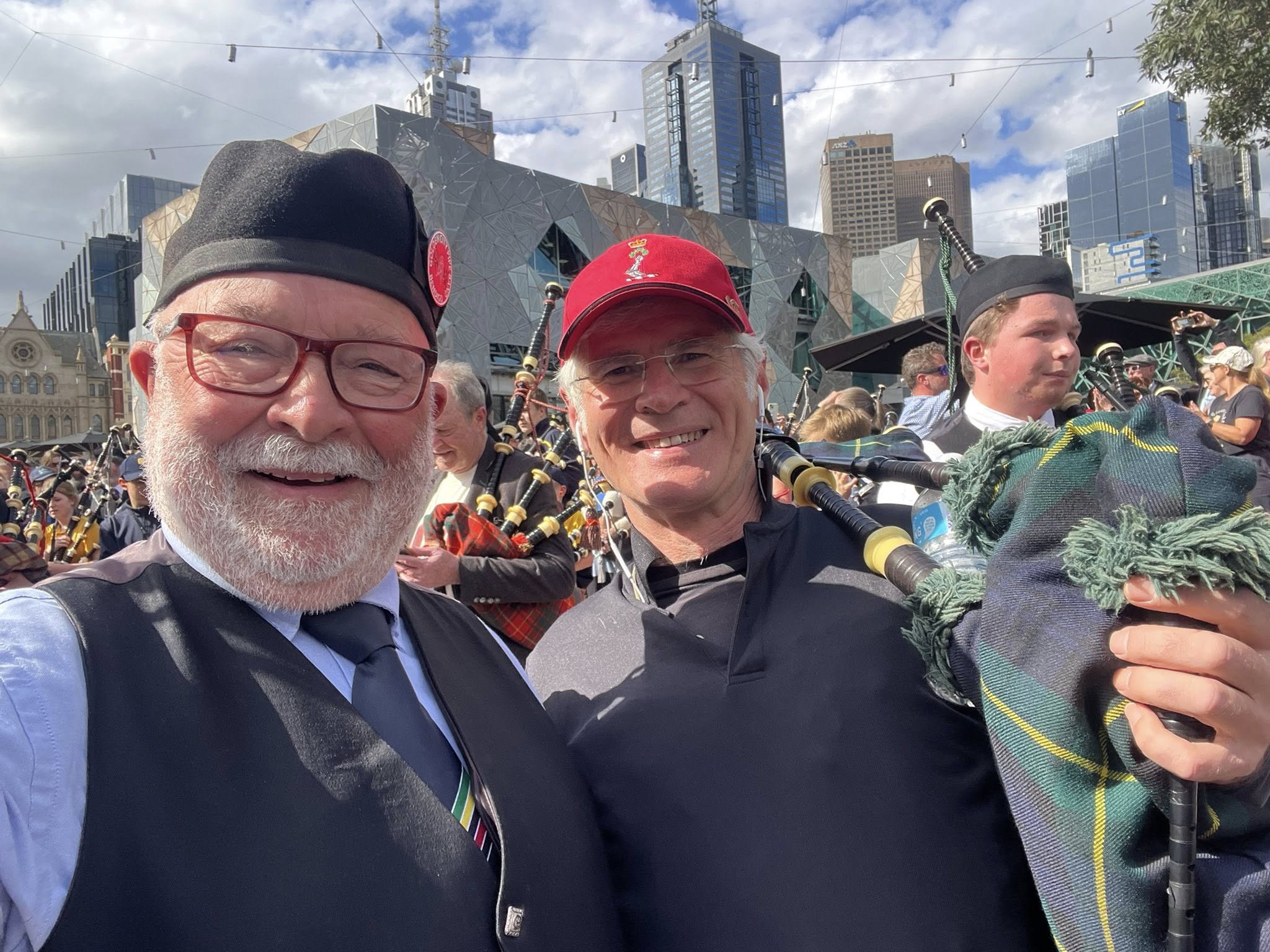
12506 Captain Lionel Boxer (coiffé de sa casquette de la promotion 1980 du Collège militaire royal du Canada), en compagnie de Phil Scott, le mari de sa cousine, à Federation Square à Melbourne, Victoria, Australie. Lionel et Phil se sont joints à 372 autres joueurs de cornemuse pour tenter d’établir un nouveau record du monde. Étrangement, tous les joueurs étaient accordés sur la même tonalité – un vacarme épouvantable pendant les 15 minutes d’accordage ! Le grand-père de Phil, Percy Goulette MM, et le grand-père de Lionel, Robert McIndoe MBE, ont tous deux servi dans la compagnie D du 24e bataillon de la 1re Force impériale australienne lors de la dernière bataille de la Première Guerre mondiale impliquant des Australiens : la bataille de Montbrehain. Le grand-père de Phil a reçu une médaille militaire pour sa bravoure lors de cette bataille. Ce record du monde a été établi le 12 novembre 2025, sur la vidéo de 1976 d’AC/DC interprétant « Long Way to the Top ». Ce soir-là, le concert d’AC/DC au Melbourne Cricket Ground affichait complet – Lionel assistait à la répétition du Royal Victoria Regiment. Deux des trois joueurs de cornemuse… Ceux qui ont participé à la vidéo de 1976 faisaient partie des 374 joueurs de cornemuse – Kevin Conlon et Les Kenfield jouent toujours de la cornemuse avec le groupe Rats of Tobruk Memorial Pipes and Drums.
Royal Roads remembers: Generations united in service and sacrifice
https://vicnews.com/2025/11/11/royal-roads-remembers-generations-united-in-service-and-sacrifice/
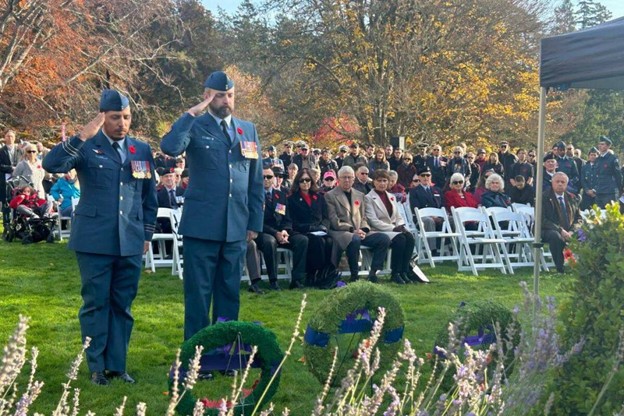 On a crisp, bright autumn morning, hundreds, young and old, gathered on the lawn of the majestic Hatley castle for a ceremony of remembrance. The grounds of Royal Roads University are not just beautiful; they connect generations to the moment’s meaning. “I think it is a very important and auspicious location that connects us presently here to all the past generations who used to train all the way back to the early years of World War Two,” said Lt. Harry Cheng, a young underwater warfare officer with the HMCS Vancouver who lives on the campus grounds.
Royal Roads once was a naval training establishment that later evolved into Royal Roads Military College – an academy that many Canadians went through in order to serve in the army, Navy and Air Force up until it closed and became a university in 1995. It’s a legacy that lives on. As part of the Nov. 11 ceremony, the 46 Royal Roads ex-cadets and alumni who gave their lives in Canadian military service were solemnly honoured, while past alumni members stood moved in the crowd.
Canmore reverend among first class of women at Canadian military college
CANMORE – Every November 11 holds significance to Reverend Donna Lee Lamothe CMR RMC 1984.
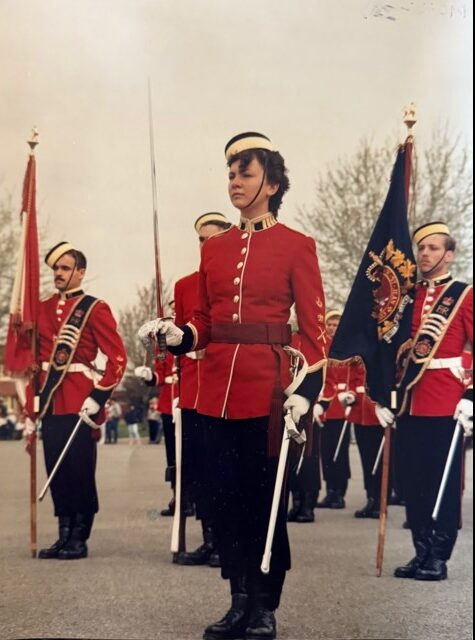 Among the first class of women to attend a Canadian military college and a proud member of the Armed Forces, Lamothe recalled standing in Remembrance Day parades decades ago in frigid temperatures.
Now, an ordained pastor at inSPIRE Church in Canmore, she said in those early parade days her face and fingers were freezing, but she was inspired by the people who served before her, with her, and after her, to ignite a gratefulness within her.
“You think of real people, real faces,” said Lamothe.
One who served with Lamothe was colleague Captain Judy Trépanier, a logistics officer at the Communication Command Headquarters, who died in a Hercules aircraft crash in 1991 during a resupply mission to Canadian Forces Station Alert in Nunavut after the pilot lost sight of the runway.
Lamothe, who was supposed to be on that flight but didn’t end up going, said what really resonates with her on Remembrance Day is people who are not necessarily at war, but know they can step into the line of fire, in whatever capacity, at any moment.
“We all knew we could be asked to do anything at any time and the deal was we would do so,” she said. “There are people who can’t do that, so I think of people in the military on Remembrance Day who are doing that and willing to do that. I see faces.”
“I grew up playing a lot of sports … so I was pretty used to competing against guys, and so for me, that probably wasn’t as different from my life of sports as it might be for some other people,” she said.
Upon graduation, she went on to become an Air Force finance officer with postings that included CFB Borden, National Defence Headquarters, a secondment to the Treasury Board of Canada, and Communications Command Headquarters.
An image of Lamothe is even featured at the Canadian War Museum in Ottawa, presenting the pioneering women who helped shape the modern Armed Forces.
“I believe in women and I love for young girls to know that they can grow up and do things that are their own adventures and their own new things,” she said. “However God has wired them, they should step out with confidence and strength and shoot for the things that are in their hearts, mind and souls to do.”
An important life lesson Lamothe received during her time in military college and the Armed Forces is that heroes are made by teams that come together to accomplish a goal. That’s why every November 11, she thinks of all the people, faces and heroes who make up Canada’s team.
“The reality is there are a lot of really important things to do that require just more than you and your best effort, that’s best accomplished on a team,” she said.
Major Sarabjot Anand RMC Class of 2015
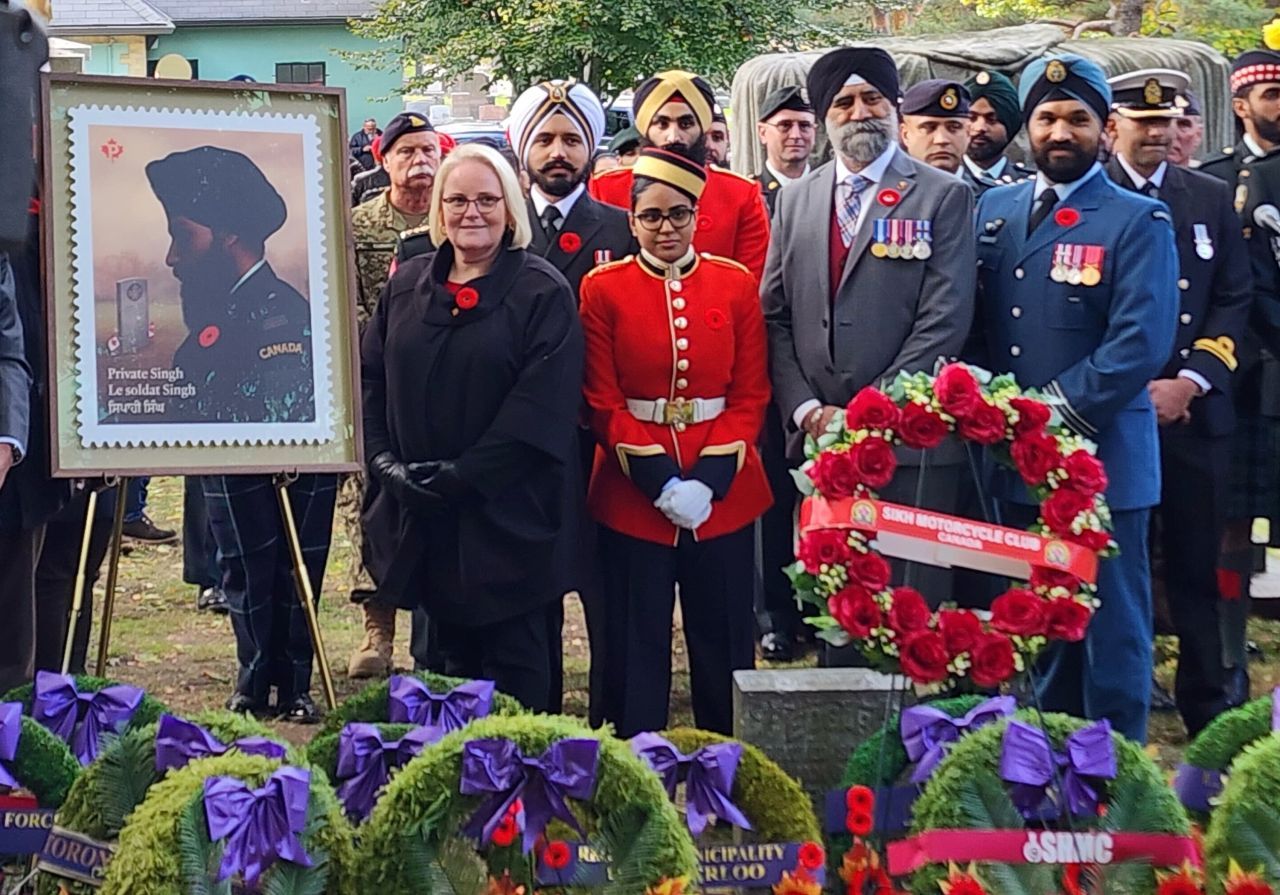
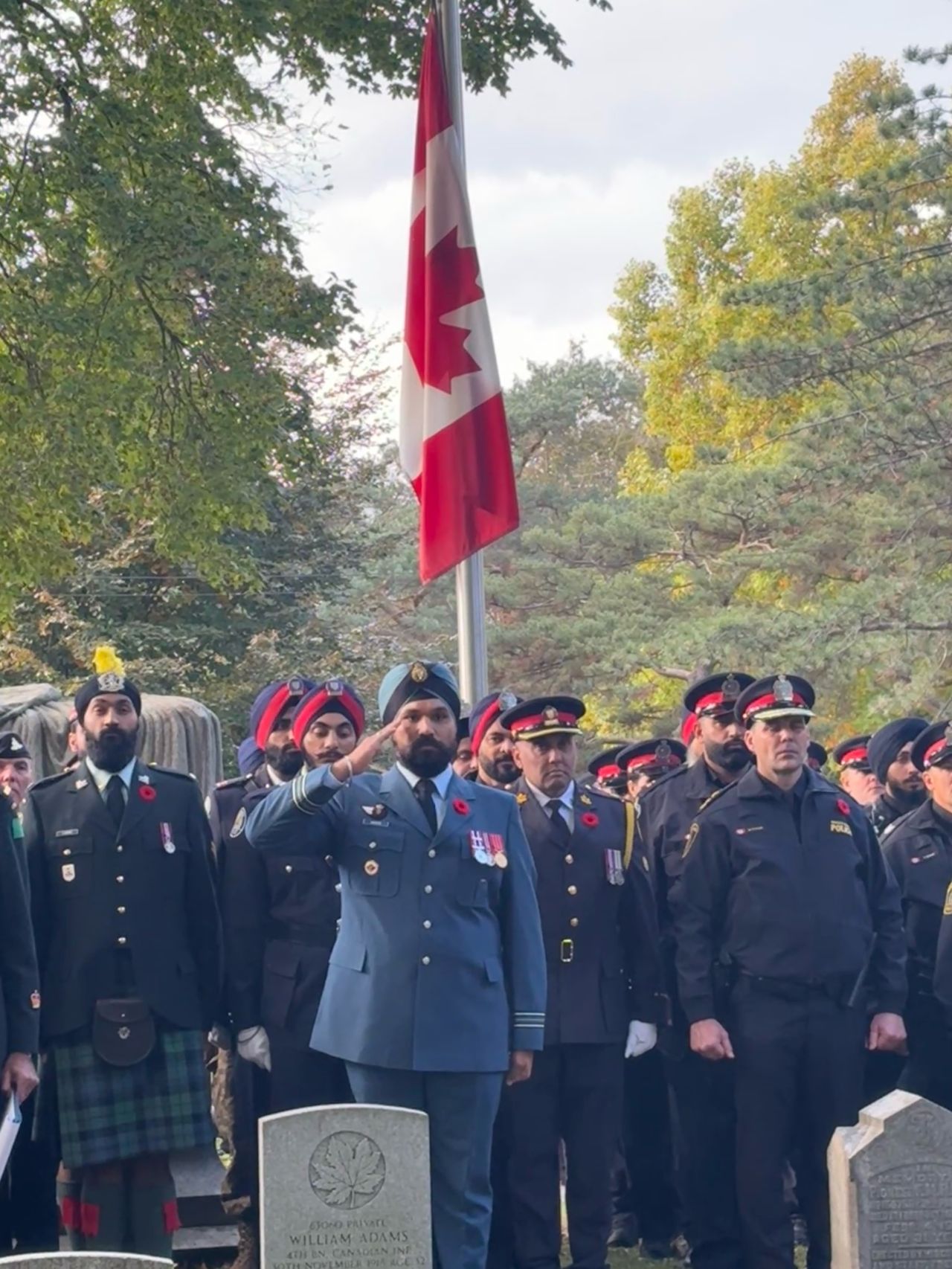
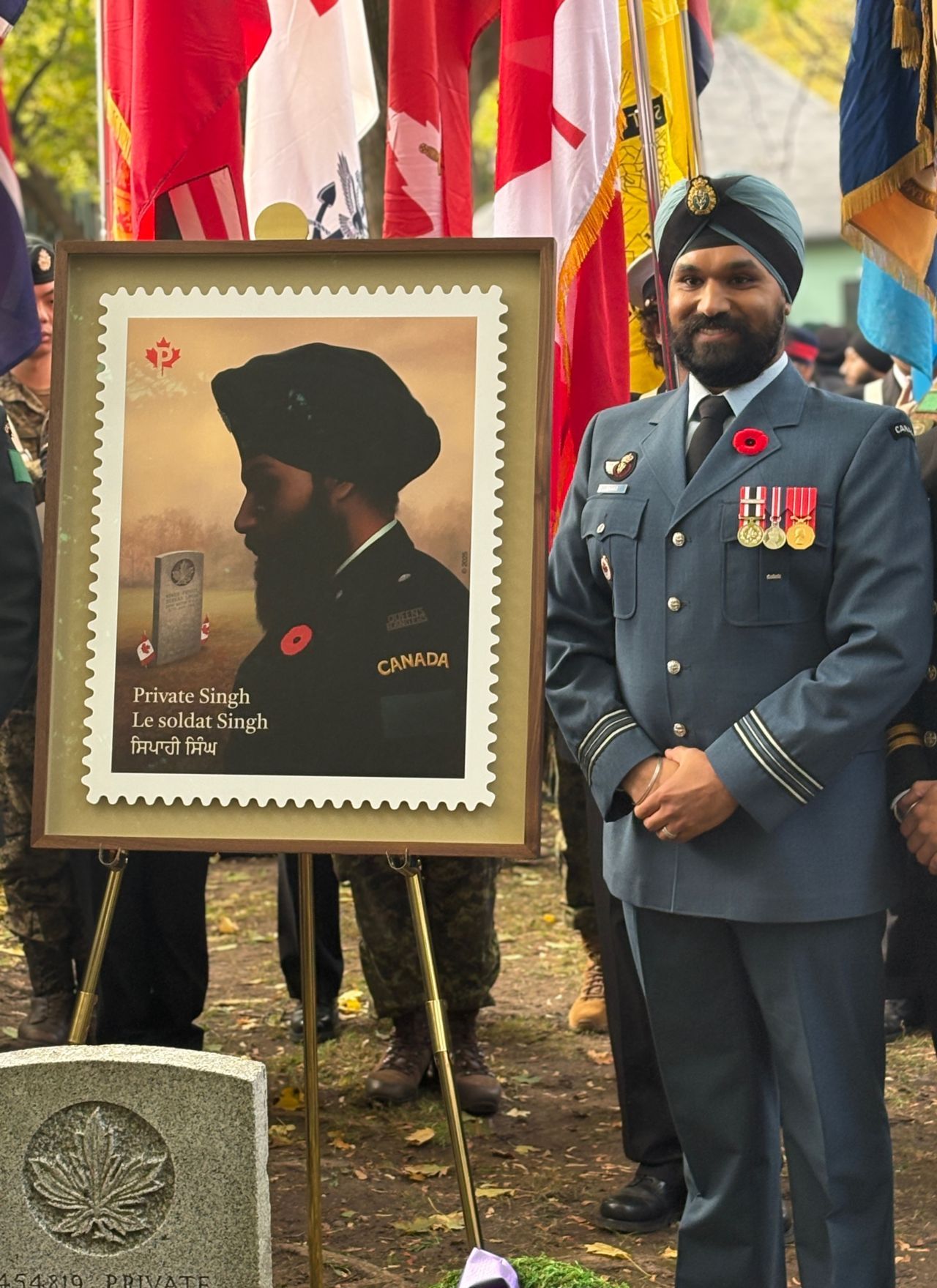
One soldier’s grave. A nation’s promise. Honoured to serve as Parade Commander at Sikh Remembrance Day ceremony in Kitchener, ON. We gathered at the gravesite of WWI hero Private Buckam Singh, the only known military grave in Canada of a Sikh soldier who served with Canada in the World Wars. Together, we honoured their sacrifice and the inclusive spirit that defines Canada. It’s a reminder that service sees no colour, no religion, just dedication to duty. Proud to stand with Senator Baltej Dhillon and The Honourable Jill McKnight. Deep thanks to the Canadian Armed Forces | Forces armées canadiennes. Canada Post / Postes Canada your Remembrance stamp brings Private Buckam Singh’s story to the front of the nation.
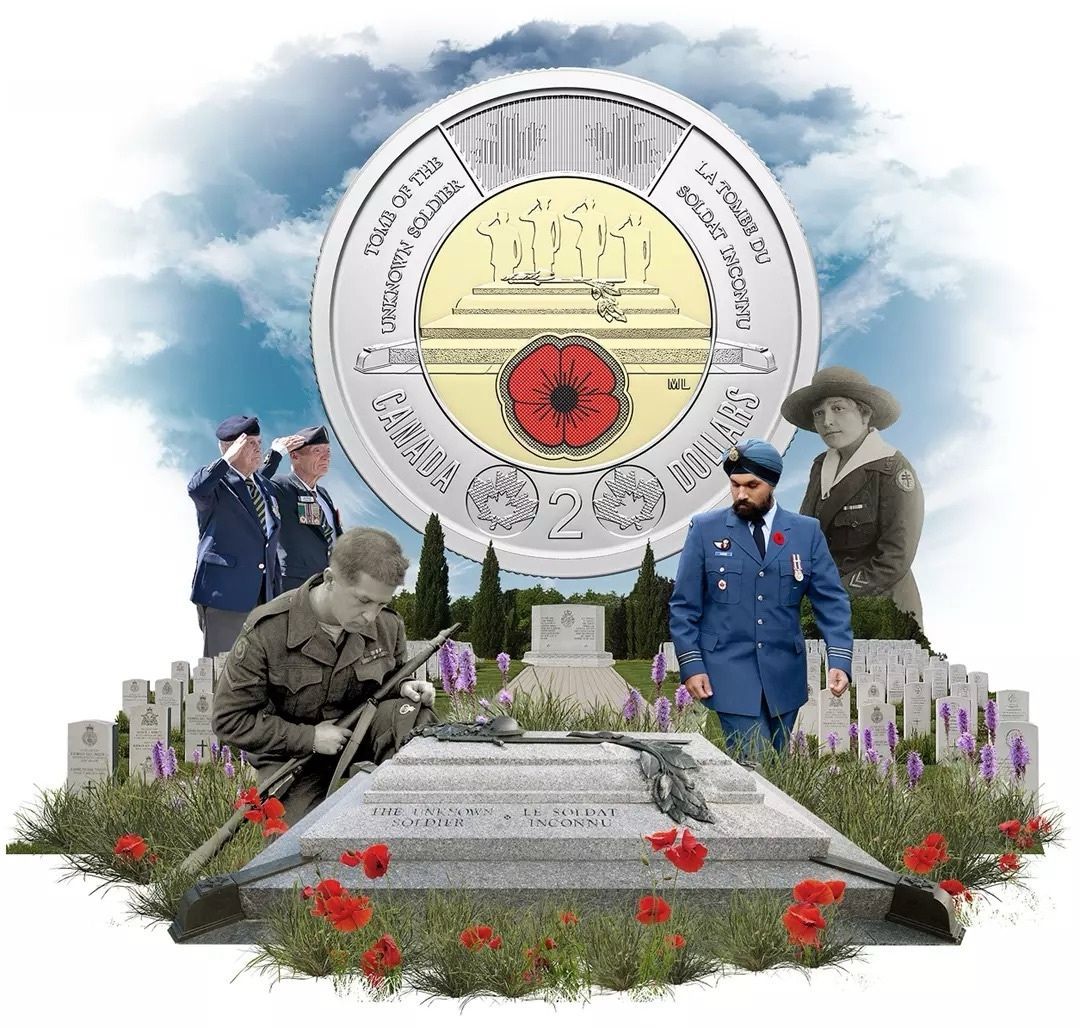
Royal Canadian Mint, your $2 coin marks 25 years since the Unknown Soldier came home and honours the Tomb that holds our promise.
National war memorial to be unveiled in Kingston’s Macdonald Park
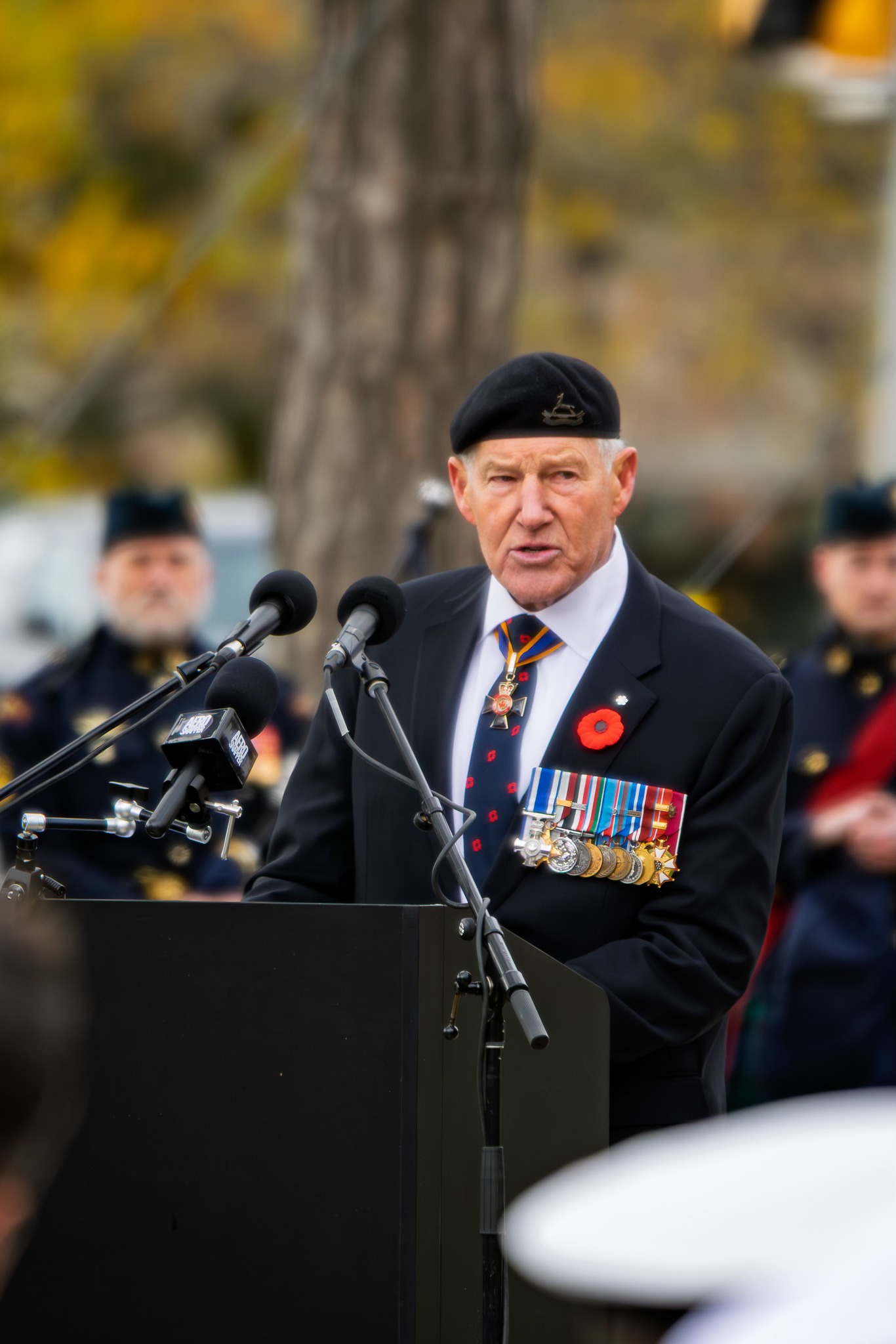
Dignitaries, City representatives and members of the National Wall of Remembrance Association (NWORA) gathered on Saturday, Nov. 1 to commemorate the new National Memorial to the Fallen in Macdonald Park. The ceremony will take place at Macdonald Park at 1 p.m. and all are welcome to attend.
The monument is a partnership between NWORA and the City of Kingston, dedicated to honouring the more than 120,000 Canadian veterans who have lost their lives during military conflicts. After 15 years of planning and fundraising, one of NWORA’s main goals has finally been achieved with the construction and unveiling of this physical memorial.
“This memorial, situated in the historic city of Kingston, is a place where memories become personal. Families may reflect. Veterans may honour their comrades. Children may learn. Canadians may pay their respects,” says General Walt Natynczyk (retired) RRMC CMR 1979, former Chief of Defence Staff and former Deputy Minister of Veterans Affairs, guest of honour for the ceremony and patron of NWORA. “This is a space for the living, shaped by the lives of the Fallen. And here, against the backdrop of Lake Ontario and beside the watchful walls of the Murney Tower, we make a national promise: that memory will not fade with time. That sacrifice will not be forgotten. That service will be honoured—every day of the year.”
“As a city with deep military roots, Kingston is proud to be the home of this national memorial,” says Mayor Bryan Paterson. “It’s a place that honours the memory of every Canadian who has fallen in service, and reflects our enduring gratitude for their courage, dedication, and sacrifice.”
Memorial design
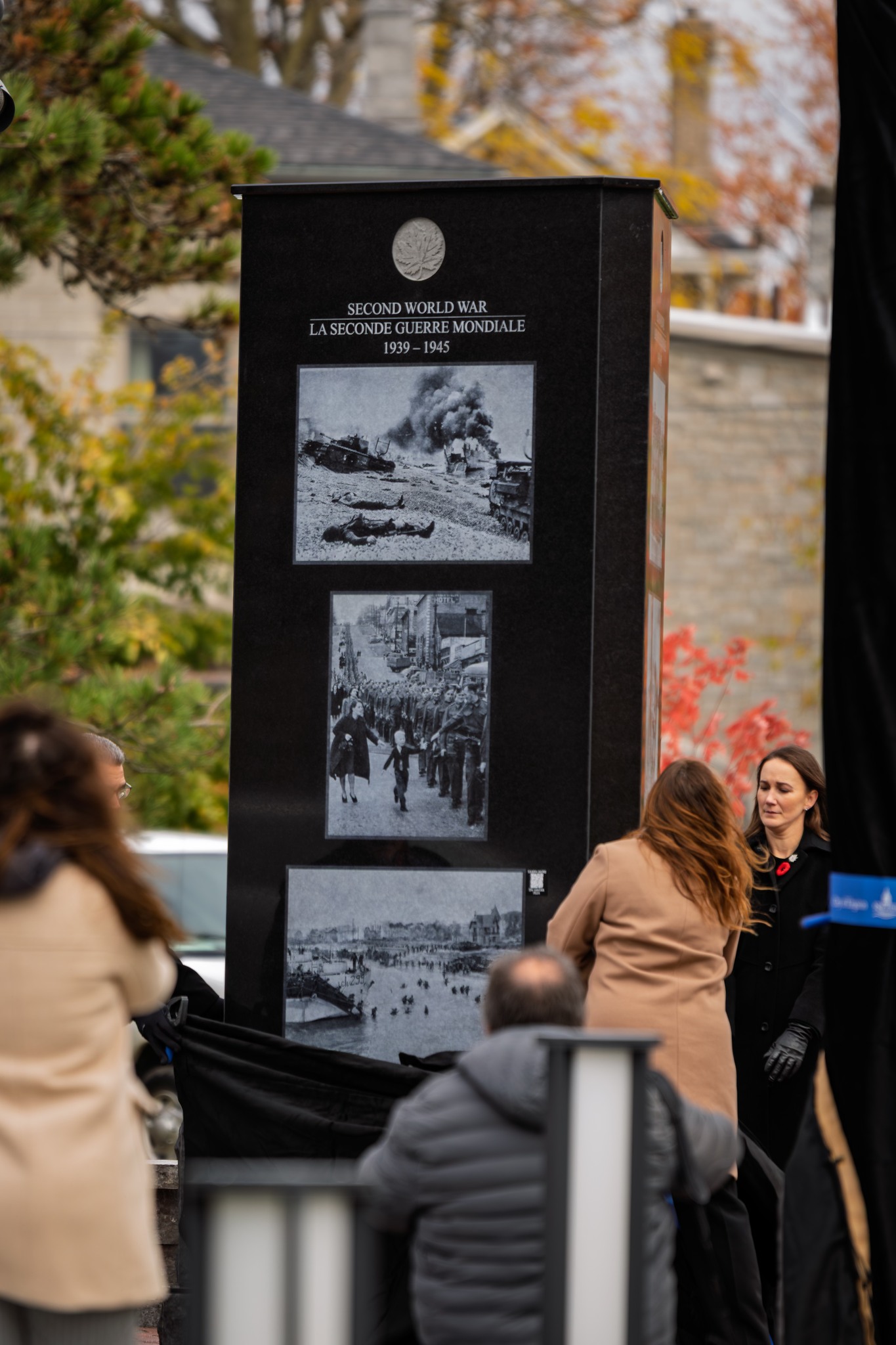
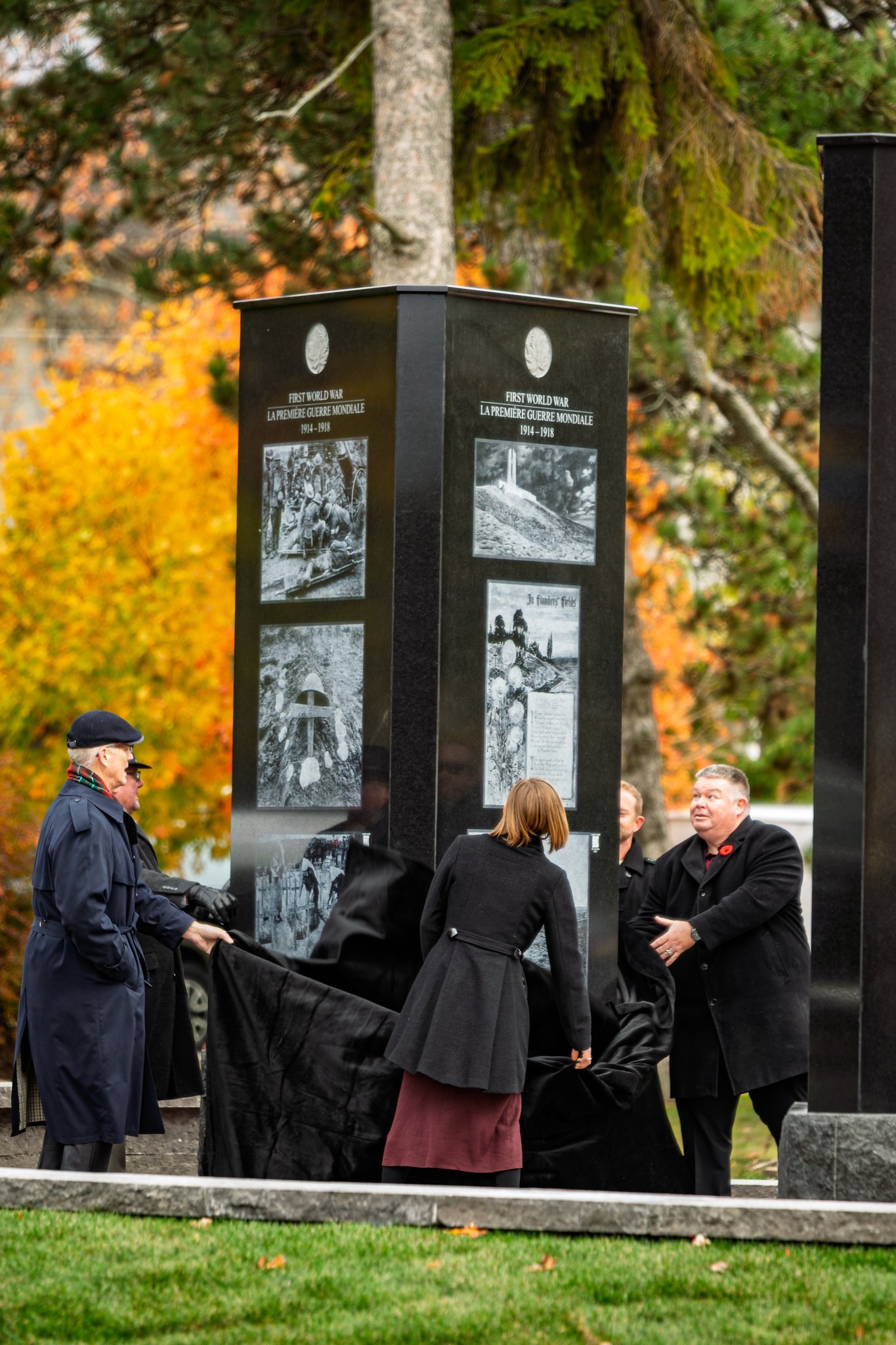
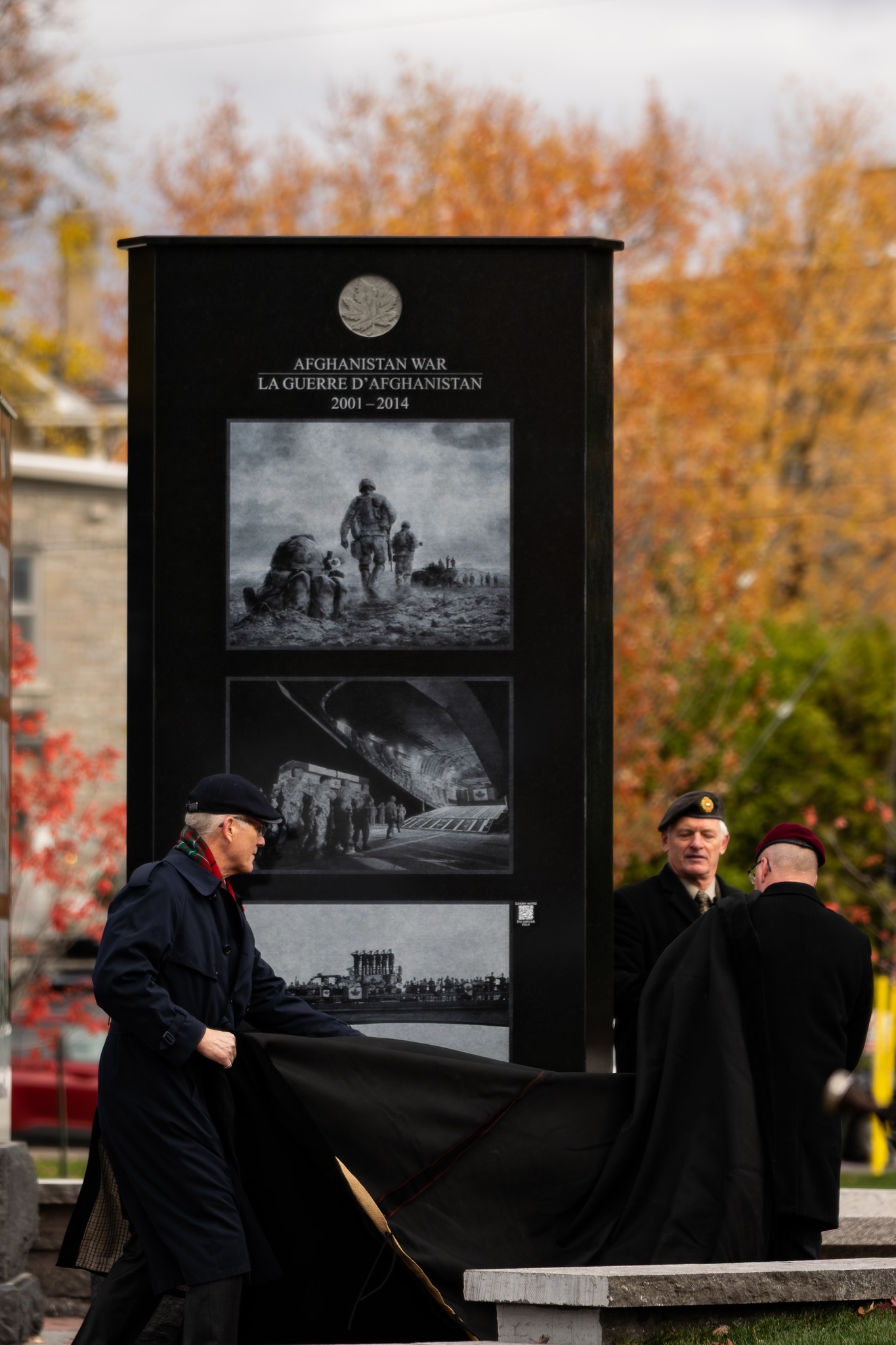
The memorial includes four granite pillars engraved with images referencing Canada’s contributions during conflicts, including pre-First World War, First World War, Second World War and to the present day.
The four pillars represent the cardinal directions — north, east, south and west — and from above form the likeness of a compass. The four points symbolize the global impact of Canada’s military service and Canada’s Fallen soldiers around the world.
The physical monument is connected to a digital memorial at CanadianFallen.ca, which presents further stories, biographies and photos of Fallen soldiers. The website further explains the physical memorial and highlights the numerous other programmes offered by NWORA which help to honour the Fallen.
Victoria artist finds healing through art after military injury
https://vicnews.com/2025/11/08/victoria-artist-finds-healing-through-art-after-military-injury/
When 9/11 unfolded, Dana Batho was teaching in Japan. Glued to the news, her interest in diplomatic work began to grow. It was while working at the Canadian embassy in Japan that she decided to join the military after discussing this growing interest with her father. In 2007, Batho packed her bags and returned to Canada. A year later, she joined the Royal Military College in Kingston, Ont., where she began a Bachelor in what was called Military and Strategic Studies.
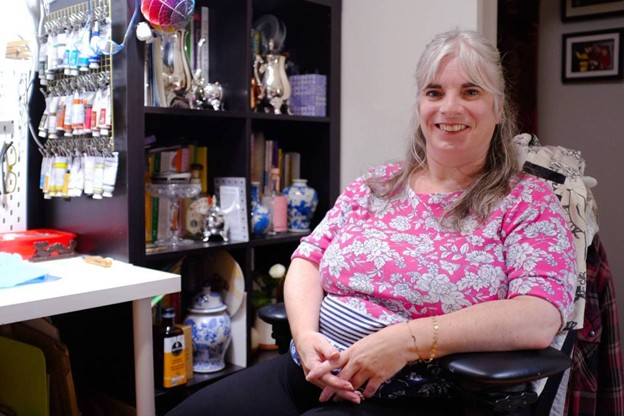
“I was 35 at the time, so everybody thought I was old enough to be their mom,” she said, cracking a smile. Because of credits earned in a past degree, Batho fast-tracked her undergrad and finished at the top of her program. “Instructors almost ordered me to join the master’s degree,” she said. In 2011, she packed her bags once again and headed to Carleton University in Ottawa, determined to become an intelligence officer.
But in the summer of 2012, a single event would change the course of her life. As part of the program’s military requirements, every student was expected to complete infantry training in Halifax over the summer. By the third week of training, the cohort suited up for an eight-kilometre ruck march – a fitness exercise that involved walking long distances with a weighted backpack. Batho, who stood a foot shorter than many of her peers, said the exercise was off to a bad start even before it began.
“The equipment wasn’t really suited for somebody my size,” she said. “Normally they would actually properly fit the equipment to you, but because I was just on a summer training course, they just give you whatever’s around.” Wearing a 60-pound rucksack with a large metal frame, Batho found her movements restricted. To help her, some of her friends adjusted the pack higher on her hips to give her legs more room to move, but the change only made things worse. “What it actually did is it pushed the back of my helmet down onto my chest,” she said. “So I had a 10 pound Kevlar helmet on, with a 60 pound ruck, and all of the weight was sitting on my neck.” In pain, Batho remained resolute, but her tenacity ended up causing more harm than good. “The sergeant kept yelling at me ‘Lift your head up,’” she said. “I couldn’t adjust (anything) because then I wouldn’t have been able to keep up with the crew.
“When we got to the range, my neck seized right up as soon as I took everything off. That ended my military career unfortunately.” Halfway through the summer program, Batho kept on going, but her condition slowly started deteriorating. “I couldn’t feel my hands so I couldn’t dive to the ground and shoot,” she said. “We were using thunder flashes, which are like quarter sticks of dynamite to simulate grenades, but I didn’t feel safe.” Because this growing pain was disabling her, affecting her every move, Batho was released from the summer course and sent back to Ottawa. After an initial visit to the doctor, she was prescribed muscle relaxants and ibuprofen as the sole painkillers.
Raluca Csernatoni
 Dr. Raluca Csernatoni is a research Fellow at Carnegie Europe in Brussels, Belgium, where she specialises in European security and defence, with a focus on emerging and disruptive technologies. At Carnegie, she is a Team Leader and Senior Research Expert on new technologies for the EU-funded project, EU Cyber Diplomacy Initiative – EU Cyber Direct (EUCD), and led Carnegie Europe’s research project on ‘The EU’s Techno-Politics of AI’ supported by the McGovern AI Grant. Csernatoni is currently also a Professor on European security and defence, focusing on new technologies, at the Brussels School of Governance (BSoG) and its Centre for Security, Diplomacy and Strategy (CSDS), at Vrije Universiteit Brussel (VUB), Belgium. At the CSDS, she is a Senior Research Expert on digital technologies in the context of the EU-funded project, ‘Indo-Pacific-European Hub for Digital Partnerships: Trusted Digital Technologies for Sustainable Well-Being’ (INPACE). She is also a Co-Leader of the ‘Governance of Emerging Technology’ Research Group with the Centre on Security and Crisis Governance (CRITIC) at the Royal Military College Saint-Jean, Canada. Her academic articles appeared in peer-reviewed journals such as Minds and Machines: Journal for Artificial Intelligence, Philosophy and Cognitive Science, Global Policy, Geopolitics, European Foreign Affairs Review, European Security, Critical Military Studies, Global Affairs, and European View. Her co-edited book, Emerging Security Technologies and EU Governance: Actors, Practices and Processes, was published with Routledge Studies in Conflict, Security and Technology Series in 2020.
Federal budget brings promise, peril to Kingston, Paterson says – An increase in defence spending and cuts to federal jobs could affect Kingston’s economy, mayor says
https://www.thewhig.com/news/federal-budget-brings-promise-peril-to-kingston-paterson-says
A pledge by the federal government to boost spending on the military could benefit Kingston, said Mayor Bryan Paterson, but the city will have to wait to see how planned cuts hit the federal workforce locally.
Speaking after Tuesday night’s city council meeting and hours after the federal budget was tabled, Paterson said the local Canadian Forces Base Kingston and the Royal Military College of Canada could benefit from the pledged increased spending.
“I think the emphasis on on more military spending, that’s the right move, and certainly I think there could be real benefits here in Kingston, just given the the military community we have,” he said.
The budget was framed by the federal government as a way of strengthening the economy and making it less reliant on the United States.
Analysts have said the new financial plan could include the reduction of the federal workforce by tens of thousands of jobs.
“We’ll have to wait and see what that means,” Paterson said. “If that means potential job losses here in our community, obviously, that’s always a concern to us. I think it’s one of those places where the details matter so we’ll be interested to know more about how that rolls out.”
Dr. Bryan Brulotte CMR 1987-The Cdn Armed Forces are Not Racist
https://www.linkedin.com/pulse/cdn-armed-forces-racist-dr-bryan-brulotte-mstj-gcj-cd-zzice/
This past week, General Jennie Carignan, Canada’s Chief of the Defense Staff, tearfully apologized for what she called “systemic racism and discrimination” in the Canadian Armed Forces (CAF). The intention was noble. Yet the sweeping assertion that the CAF is “systemically racist” demands closer scrutiny.
Such declarations, made without clear evidence or definition, risk distorting truth, undermining morale, and eroding one of our most vital national institutions. Our military is not perfect, no organization is, but branding it as “systemically racist” is conceptually lazy and historically unjust.
To claim systemic racism, one must show that racial or ethnic identity consistently predicts poorer outcomes; that policies or structures inherently disadvantage specific groups. No credible data has been released to demonstrate this. The defense backgrounders accompanying the apology offered no evidence of pervasive inequality in recruitment, promotion, pay, or retention. Without transparency, the claim rests on assertion, not analysis.
Historical wrongs, such as the exclusion of Black volunteers from front-line units early in World War I, are undeniable. They deserve acknowledgment and remembrance. But those injustices were addressed long ago through reforms, legislation, and cultural change. To conflate them with today’s military is intellectually dishonest.
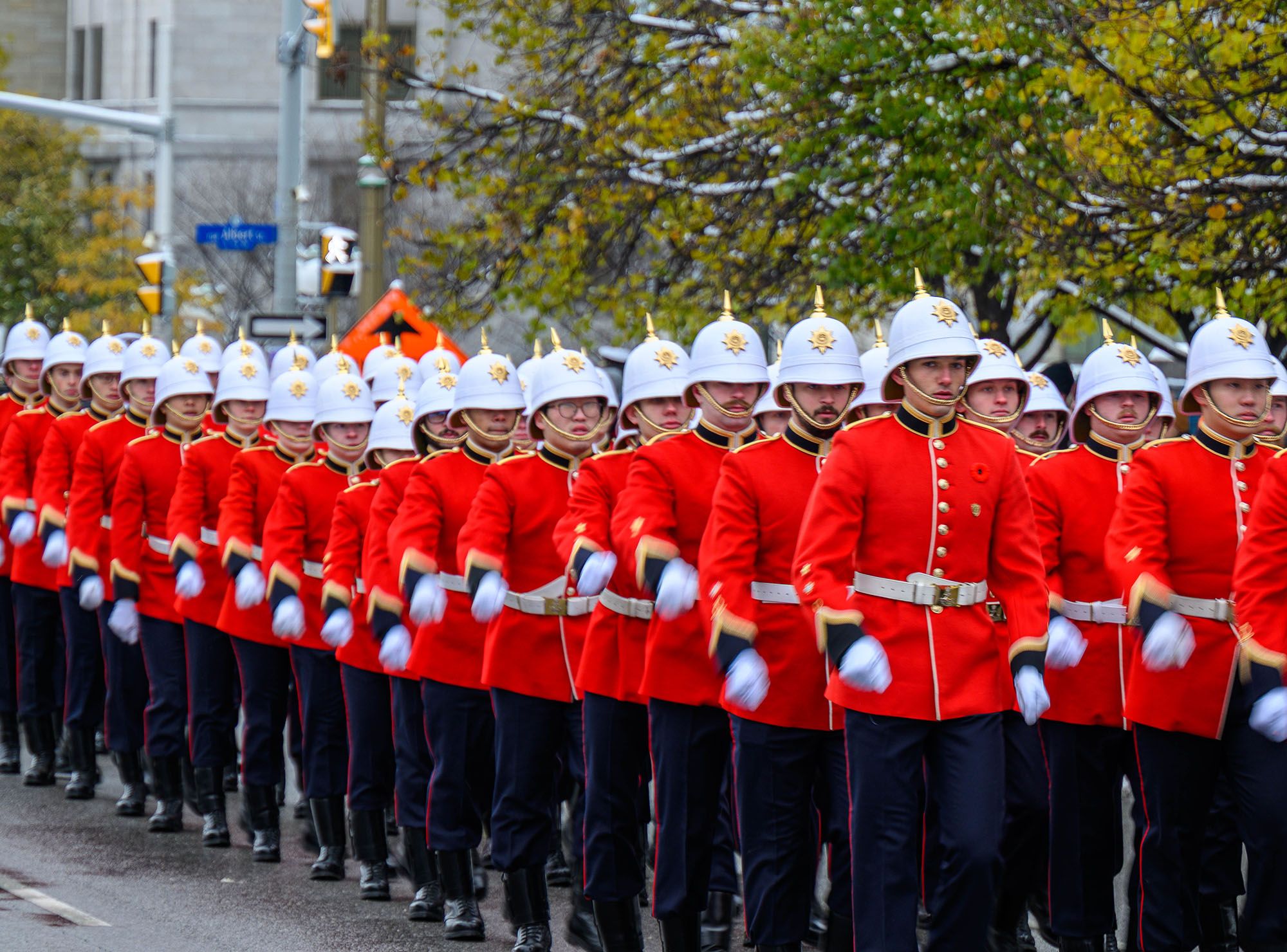
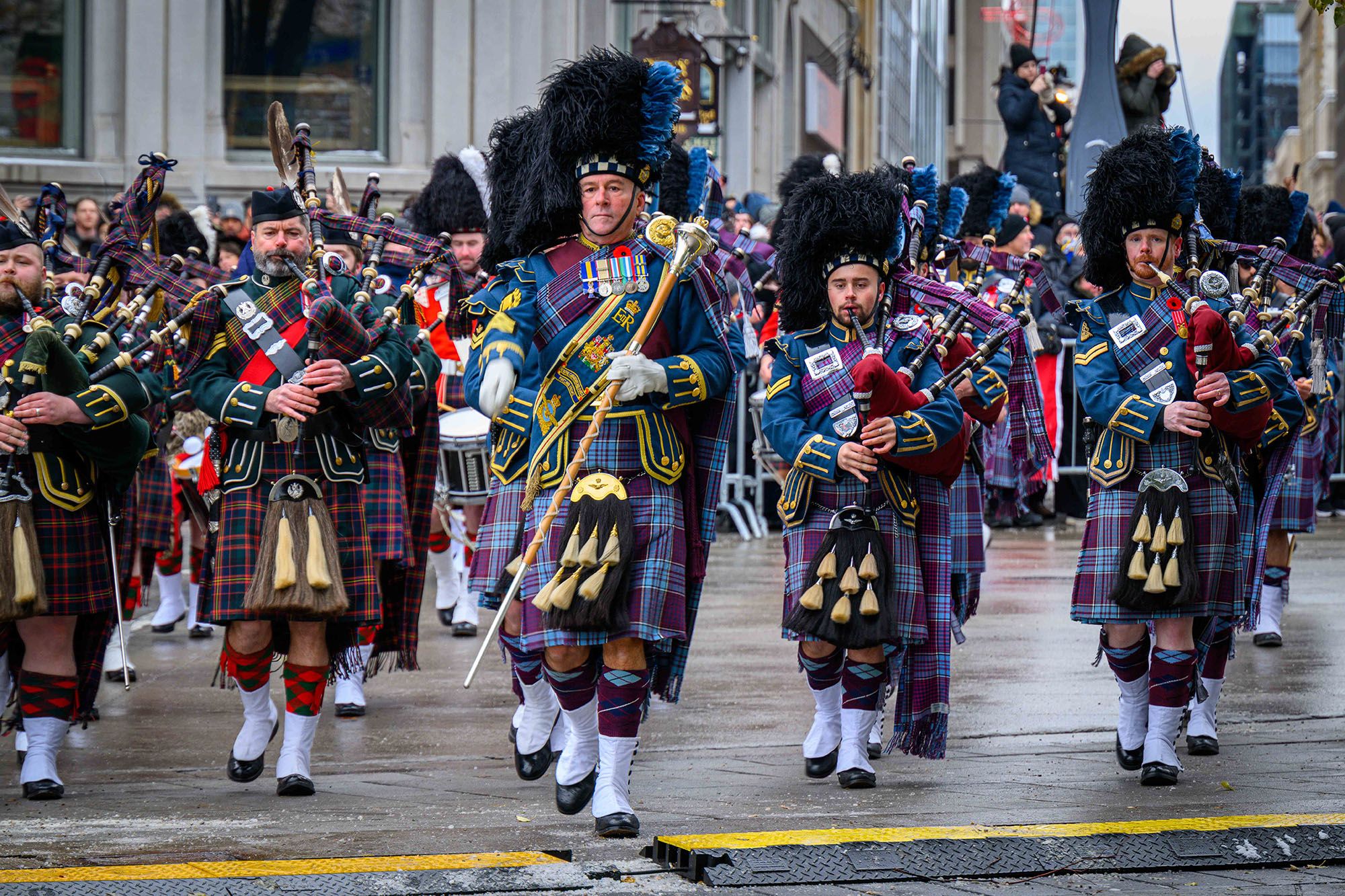
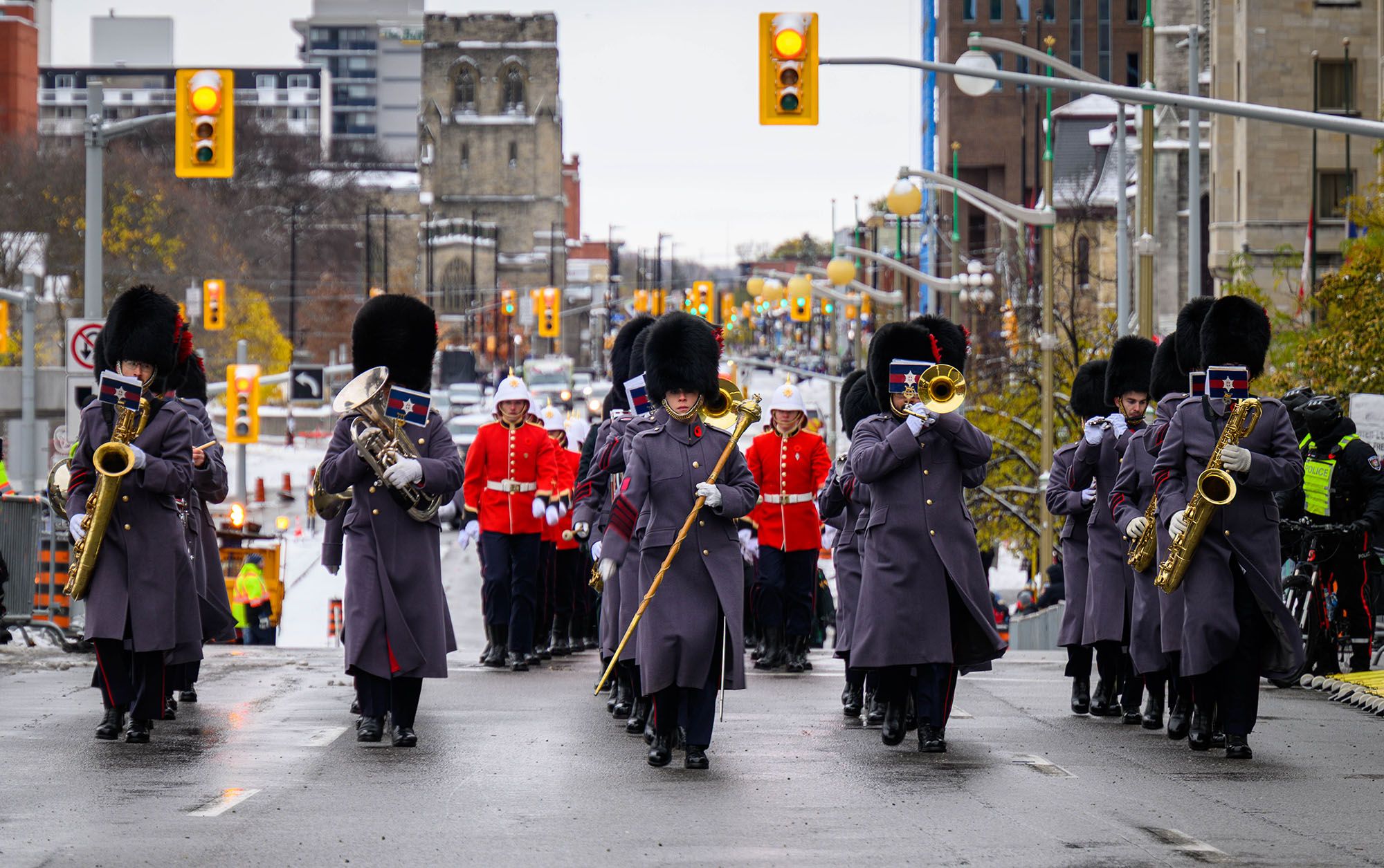
Canadians gathered at cenotaphs across the country today to honour the bravery and sacrifice of those who served and those who continue to serve. Here are some photos from the National Remembrance Day Ceremony in Ottawa. 🌺
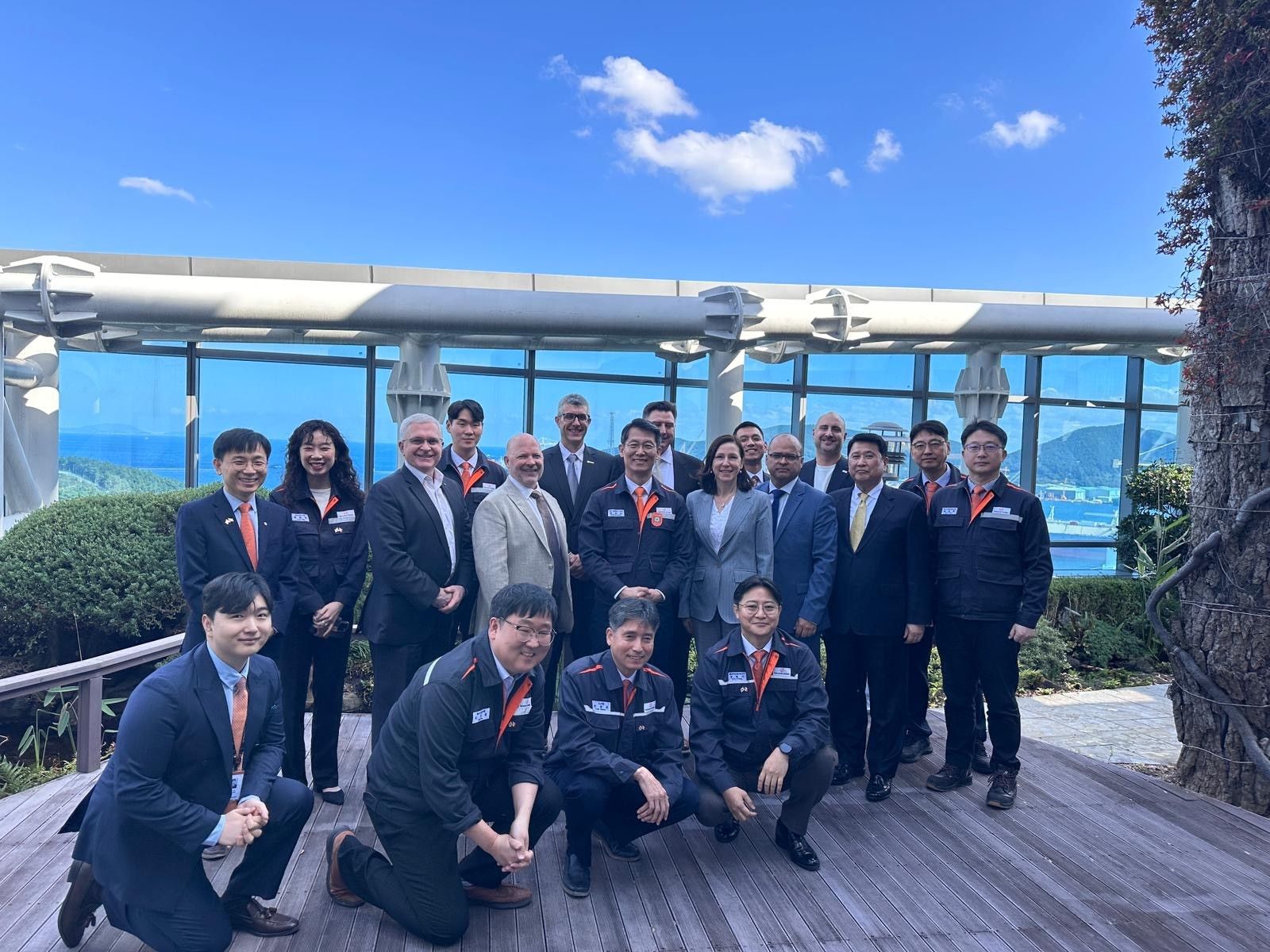
CAE was privileged to meet with Prime Minister Mark Carney and Defence Minister David J. McGuinty during their visit to Hanwha Ocean’s shipyard in Geoje, South Korea this week. The meeting marked a key moment in strengthening Canada’s presence in the region.
Representing CAE were France Hébert RMC 1992, Division President, CAE Defense & Security, Canada and Daniel Lauzon, Senior Director, Public Affairs and Policy (International), who highlighted CAE’s leadership in defence innovation.
As a global training and simulation partner to Hanwha Ocean, CAE brings unmatched expertise in full-spectrum training management to support Hanwha’s world-class shipbuilding capabilities. This collaboration reinforces CAE’s commitment to delivering integrated, mission-ready solutions for naval forces worldwide.
And judging by the baseball caps, we seem to have new fans rooting for the Toronto Blue Jays!

Analysis: How airspace violations threaten NATO and Europe’s security
https://www.aerotime.aero/articles/analysis-how-airspace-violations-threaten-nato-security
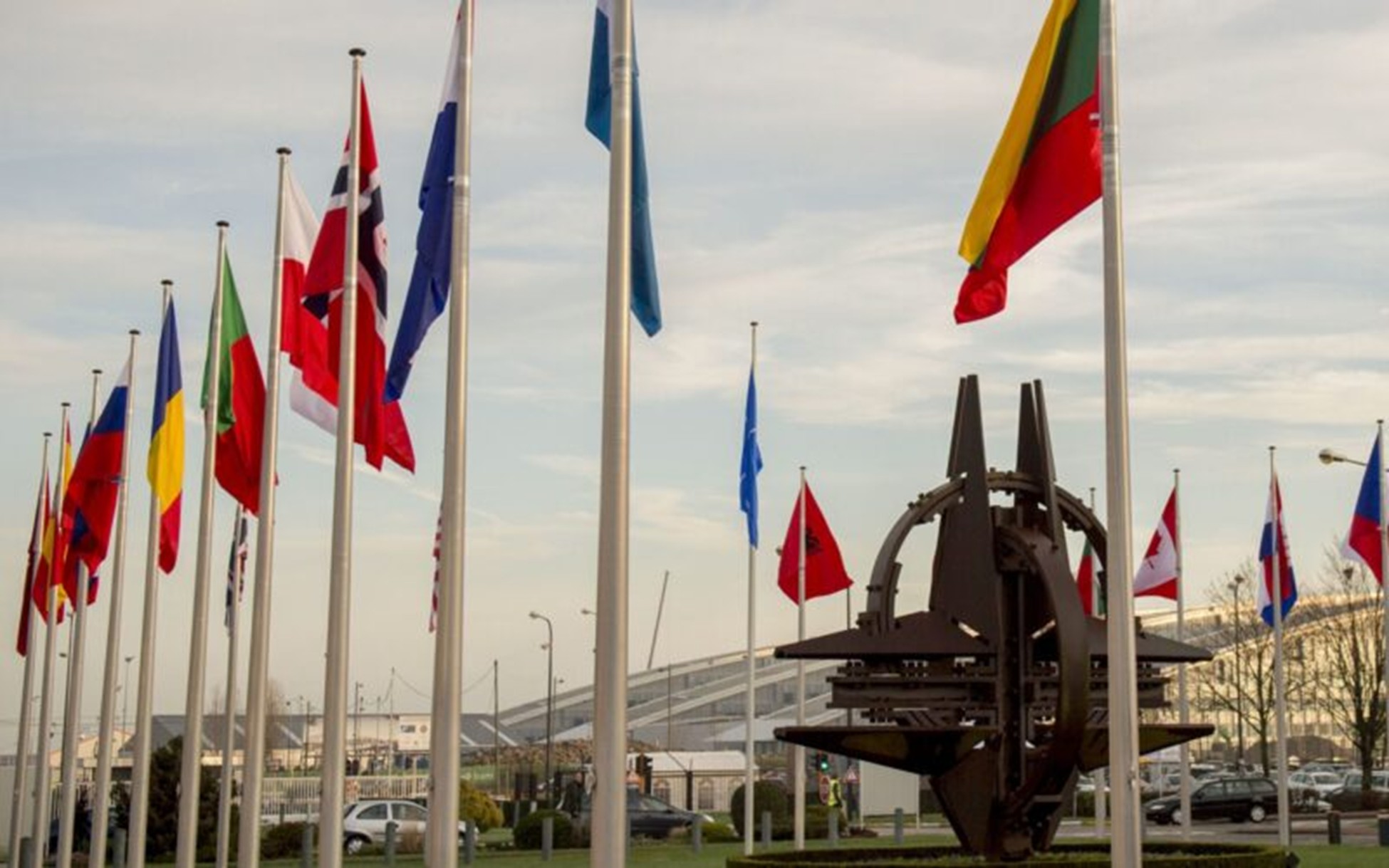 During the past year, the skies over Europe have turned into an arena of quiet conflict.
Unexplained drone intrusions and short airspace breaches by foreign military aircraft in several NATO countries have disturbed civilian activities and alarmed both officials and the public.
Although none of these events have resulted in direct conflict, their timing and coordination suggest they are more than a coincidence. Dr. Sean M. Maloney, a history professor at the Royal Military College of Canada, describes what we are seeing as grey zone warfare, the so-called space in between peace and war.
As a Cold War and modern military expert, Dr. Maloney has dedicated his career to studying international conflicts. He served as Historical Advisor to the Canadian Army in Afghanistan, becoming the first Canadian civilian military historian to enter combat since World War 2.
Using exclusive insights from Dr. Maloney, AeroTime explores the patterns, risks, and impact of the ongoing airspace violations in Europe.
Deep learning system could transform skin cancer detection with near-perfect accuracy
https://medicalxpress.com/news/2025-11-deep-skin-cancer-accuracy.html#google_vignette

Melanoma remains one of the hardest skin cancers to diagnose because it often mimics harmless moles or lesions. While most artificial intelligence (AI) tools rely on dermoscopic images alone, they often overlook crucial patient information (like age, gender, or where on the body the lesion appears) that can improve diagnostic accuracy. This highlights the importance of multimodal fusion models that can enable high precision diagnosis.
To bridge that gap, Professor Gwangill Jeon from the Department of Embedded Systems Engineering, Incheon National University, South Korea, in collaboration with the University of West of England (UK), Anglia Ruskin University (UK), and the Royal Military College of Canada, created a deep learning model that integrates patient data and dermoscopic images.
The study is published in the journal Information Fusion.
“Skin cancer, particularly melanoma, is a disease in which early detection is critically important for determining survival rates,” says Prof. Jeon.
“Since melanoma is difficult to diagnose based solely on visual features, I recognized the need for AI convergence technologies that can consider both imaging data and patient information.”
Prof. Jeon says, “The model is not merely designed for academic purposes. It could be used as a practical tool that could transform real-world melanoma screening. This research can be directly applied to developing an AI system that analyzes both skin lesion images and basic patient information to enable early detection of melanoma.”
In the future, the model could power smartphone-based skin diagnosis applications, telemedicine systems, or AI-assisted tools in dermatology clinics, helping reduce misdiagnosis rates and improve access to care.
Leave a Comment