
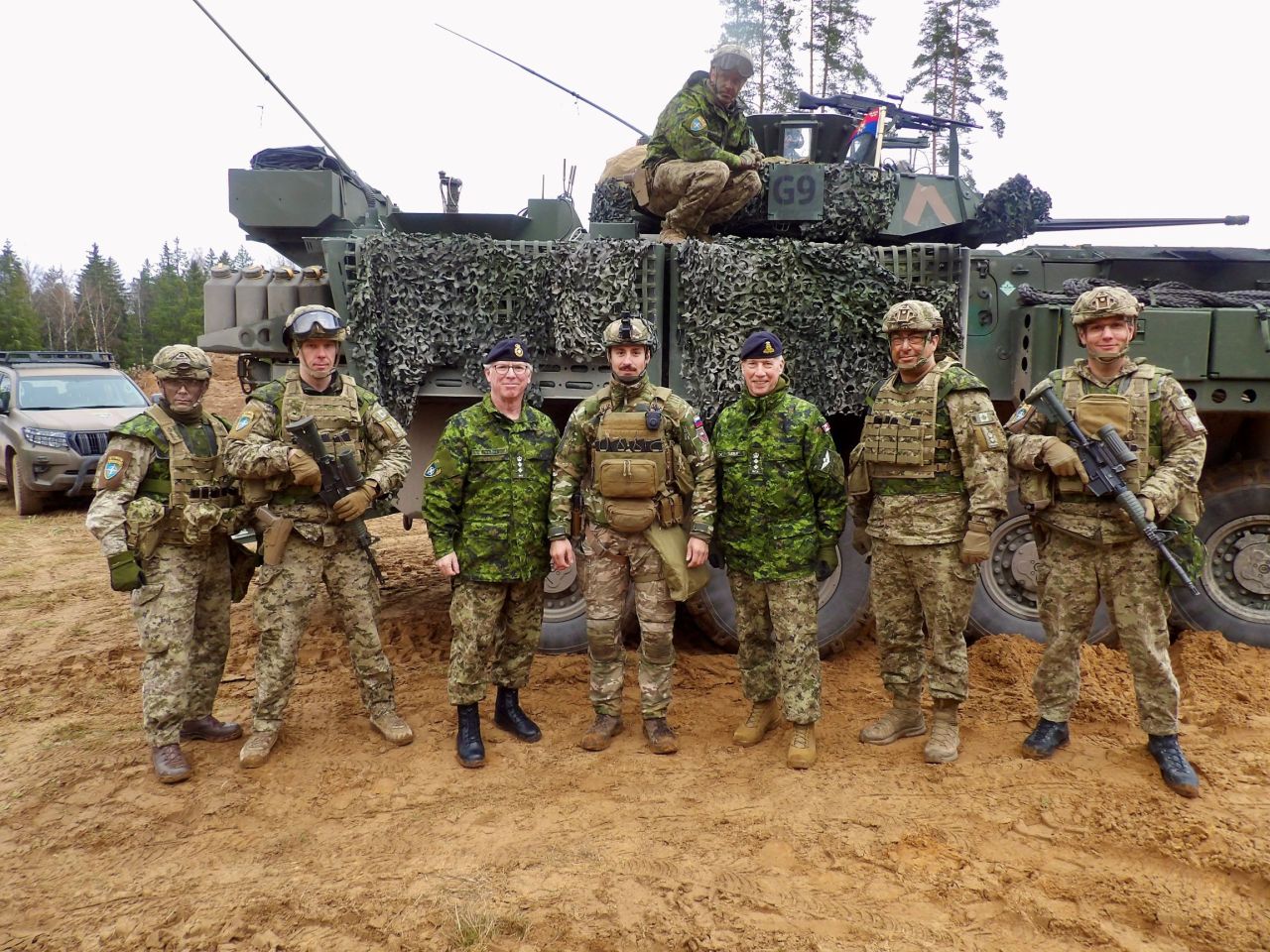
LGen (Ret’d) Andrew Leslie, Colonel Commandant of The Royal Regiment of Canadian Artillery, and LGen (Ret’d) Stuart Beare CMR RMC 1983, Colonel Commandant of the Intelligence Branch and proud Gunner, joined the Multinational Artillery Battalion Commander LCol Alex Prymack RMC 2008, RSM CWO Samuel Roy, and their G9 team during a visit to forward-deployed forces participating in a multinational exercise in Latvia.
Le LGen (à la retraite) Andrew Leslie, colonel commandant du Régiment royal de l’Artillerie canadienne, et le LGen (à la retraite) Stuart Beare, colonel commandant de la Branche du service du renseignement et fier artilleur, ont rejoint le commandant du bataillon d’artillerie multinational, le lieutenant-colonel Alex Prymack, SMR Adjc Samuel Roy, ainsi que son équipe G9, lors d’une visite aux forces déployées en première ligne participant à un exercice multinational en Lettonie.
Why Remembrance Day can be triggering for veterans, families and armed forces members
Retired Maj. Paul Hook, managing director of the Canadian Institute for Military and Veteran Health Research, discusses supporting Armed Forces members, veterans and families.
Whitehorse man on mission to map city’s ‘under-documented and under-explored’ mining history
https://www.cbc.ca/news/canada/north/mapping-old-whitehorse-mining-sites-9.7403456
Tim Green RMC 1997 has been studying survey plans and century-old maps to discover forgotten mining sites
Off the Copper Haul Road in Whitehorse, at the far side of the Valerie Trail, there are century-old remnants of mining activity. They’re not easily visible — it takes venturing off the beaten trail and into the forest. Old rock piles and deteriorating lumber lead the way to a few holes dug into rock faces, evidence of past attempts to find copper.
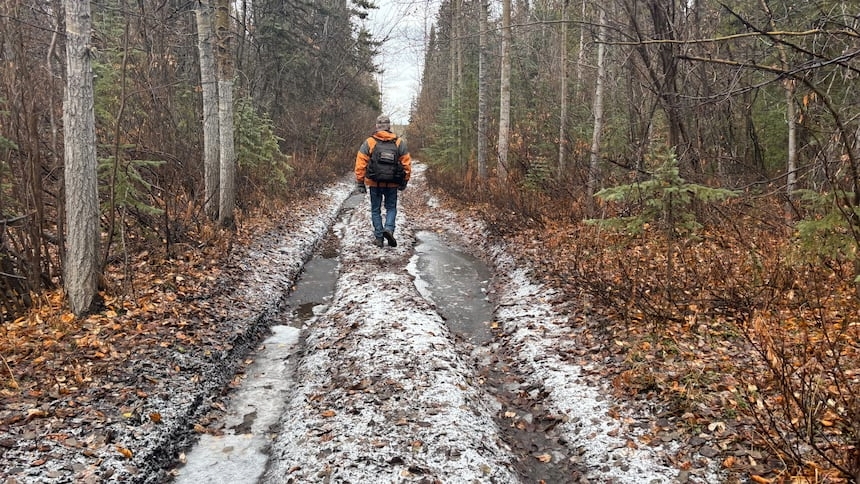
Tim Green, a Whitehorse resident and retired engineer, is mapping these forgotten sites around the city. “I like old stuff,” said Green. “In Whitehorse there are all these old copper mines that seem to be under-documented and under-explored.” To find them, he is pairing hand-drawn maps from 1907 with modern geospatial technology. Then, he steps off the beaten path and carefully treks through the soft, mossy forest floor and thick brush. “I don’t think anybody’s been in here in 120 years,” he said. So far, it’s been mostly a passion project for him as he blogs about his discoveries, but he’s also mused about putting markers on paths for others to explore the sites he’s found.
The method
A variety of maps from the early 1900s can be found at the Yukon Energy, Mines, and Resources library in Whitehorse, according to Green. That’s where he found the hand-drawn maps from a geologist named Richard George McConnell. One map indicated tunnels on the side of a few rock faces, explained Green, but those maps aren’t geolocated. He then pulled the original survey plans for the area, but those exploration sites aren’t identified on those plans. Using the hand-drawn map, survey plans, satellite imagery from the Yukon government, and geographical information from the City of Whitehorse, he made a map of his own. It’s quite useful to take all the old information, cross it with new information and make it so I can use it to wander today to find stuff from yesterday,” said Green.
More than mines
For Green, it’s not just a way to satisfy his own curiosity — it’s also about sharing some local history with others. Julie Ourom is a friend and fellow history buff who often joins Green on his explorations.
“I think it’s a good excuse to get out and see things that most people don’t even know exist,” she said. “You can feel slightly smug that way, because you’ve been able to learn things that are just so wonderful and such a big part of our history here.” Green has also brought school kids to show his findings and share a bit of Yukon history.
“They all went home with their pants falling down because their pockets were full of rocks,” said Green.
During the week of 19-23 October, participants in the Canadian Forces College’s National Security Program (NSP) completed a successful Experiential Learning Visit (ELV) to Ottawa, gaining valuable insights into leadership at the highest levels of government and the inner workings of Canada’s national security decision-making.
Through engagements with members of both the Senate and House of Commons, Deputy Ministers, leading think tanks, lobbyist organizations, and the heads of government security agencies, participants explored the complexities of public leadership, policy development, parliamentary processes, and the whole-of-government approach to national security.
The visit culminated in an engagement with the Minister of National Defence, the Honourable David J. McGuinty.
A special thank you to the Minister and to everyone who generously shared their time, experience, and wisdom with NSP participants. These candid exchanges are an essential part of developing the strategic perspective, critical thinking, and leadership capabilities required of Canada’s future senior military and national security leaders.
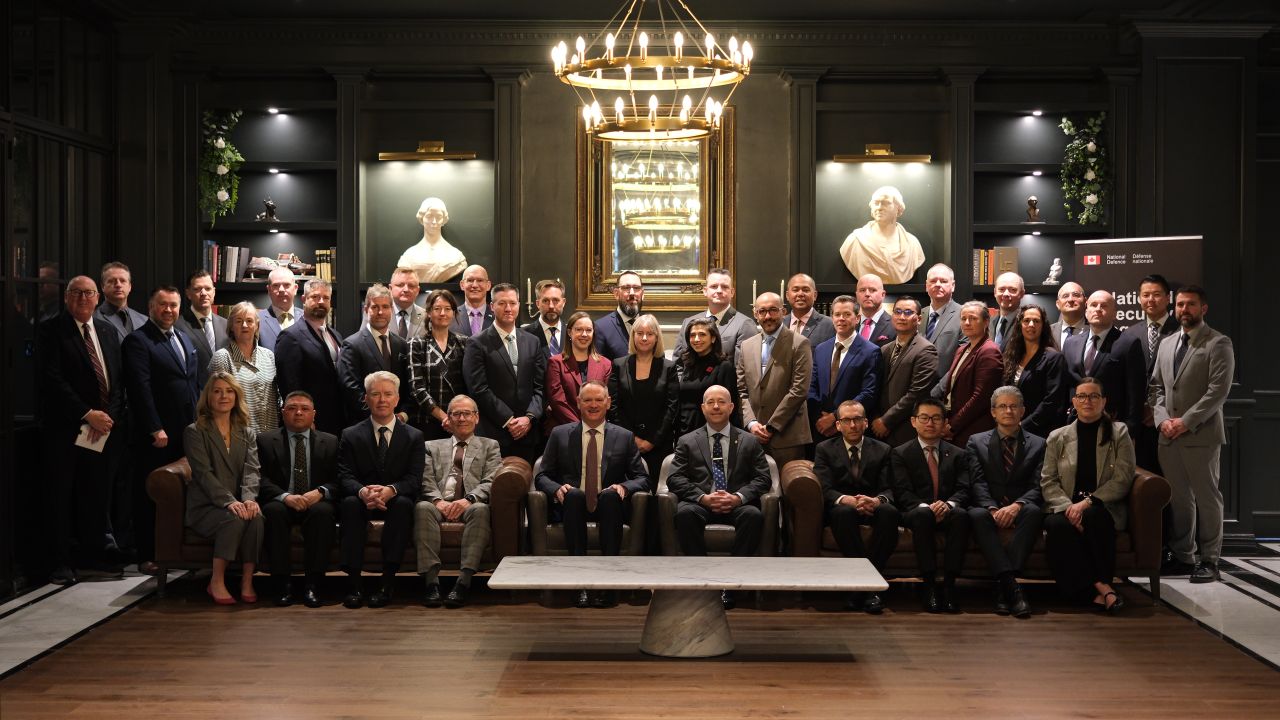
Du 19 au 23 octobre, les participants au Programme de sécurité nationale (PSN) du Collège des Forces canadiennes (CFC) ont effectué avec succès une visite d’apprentissage expérientiel (VAE) à Ottawa, qui leur a permis d’approfondir leur compréhension du leadership aux plus hauts échelons du gouvernement ainsi que des rouages du processus décisionnel canadien en matière de sécurité nationale.
Grâce à des échanges avec des membres du Sénat et de la Chambre des communes, des sous-ministres, des représentants de groupes de réflexion de premier plan et d’organisations de lobbying, ainsi qu’avec les dirigeants d’organismes gouvernementaux responsables de la sécurité, les participants ont exploré les complexités du leadership dans le secteur public, de l’élaboration des politiques, des processus parlementaires et de l’approche pangouvernementale en matière de sécurité nationale.
La visite s’est conclue par une rencontre avec le ministre de la Défense nationale, l’honorable David J. McGuinty.
Nous tenons à remercier tout particulièrement le ministre ainsi que toutes les personnes qui ont généreusement consacré leur temps aux participants du PSN et leur ont fait bénéficier de leur expérience et de leur expertise. Ces échanges francs et enrichissants jouent un rôle essentiel dans le développement de la perspective stratégique, de la pensée critique et des capacités de leadership dont auront besoin les futurs hauts dirigeants militaires et responsables de la sécurité nationale du Canada.
Journey to the stars: the 2026 RCGS Geographica Gala celebrates Canada’s legacy of space exploration
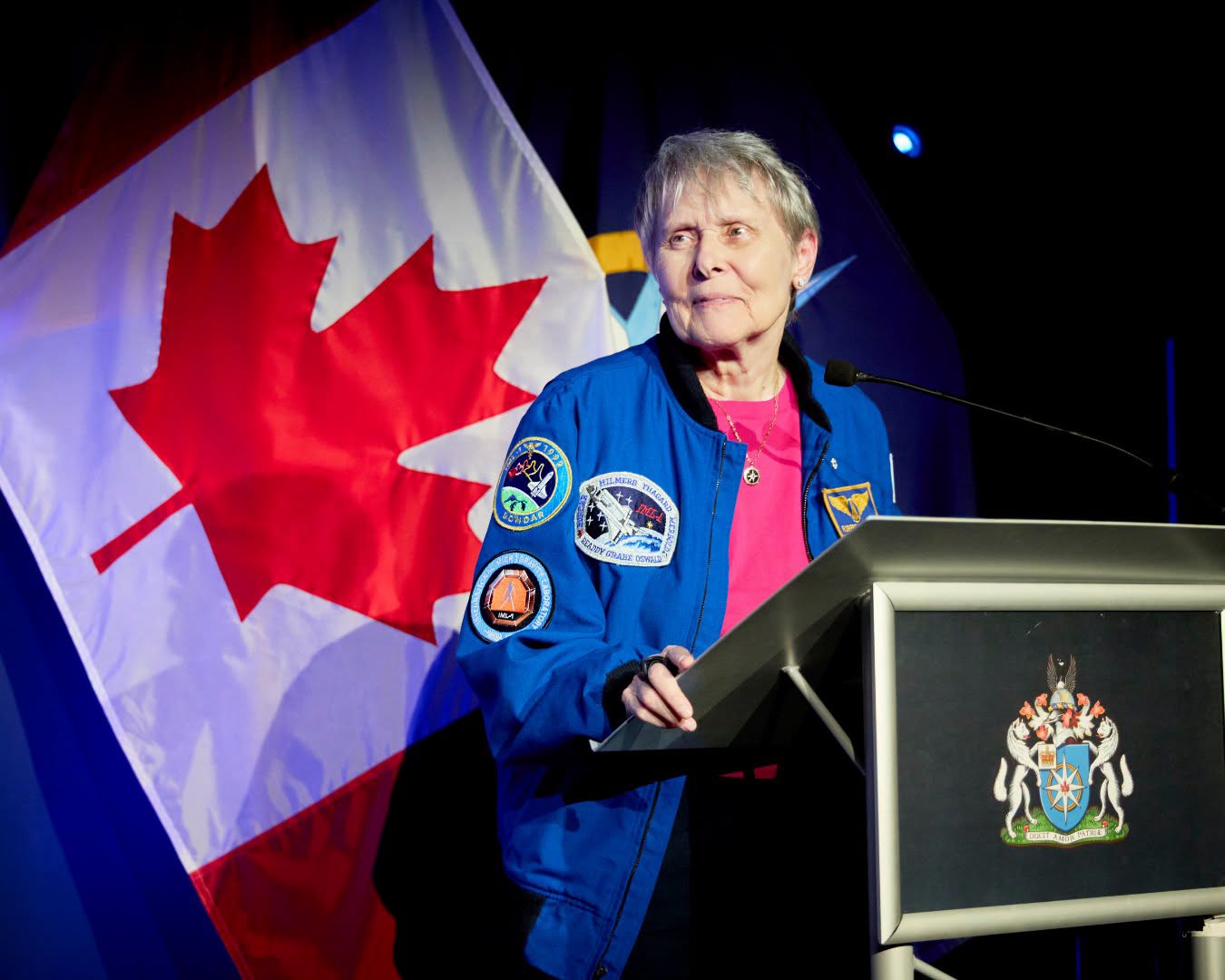
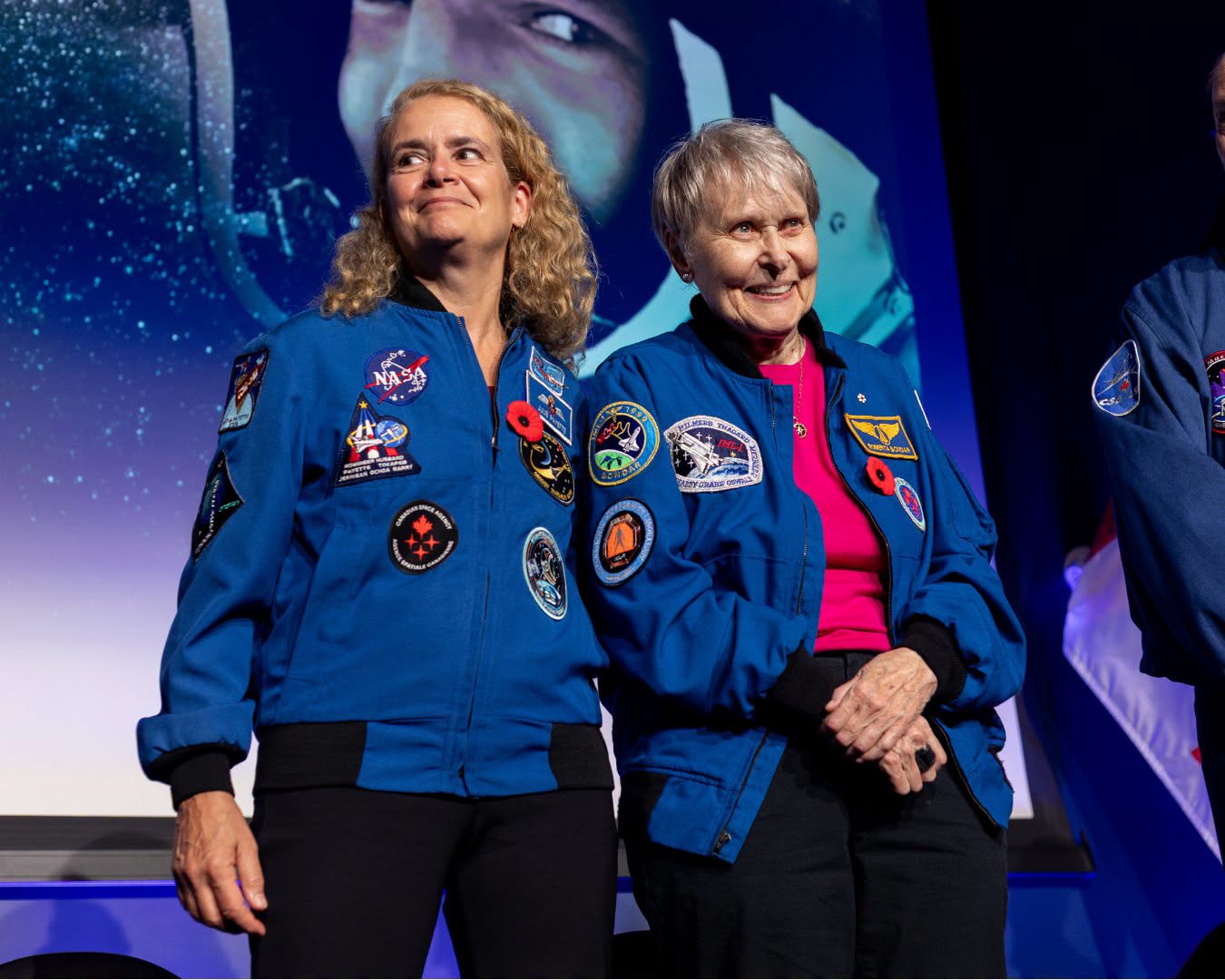
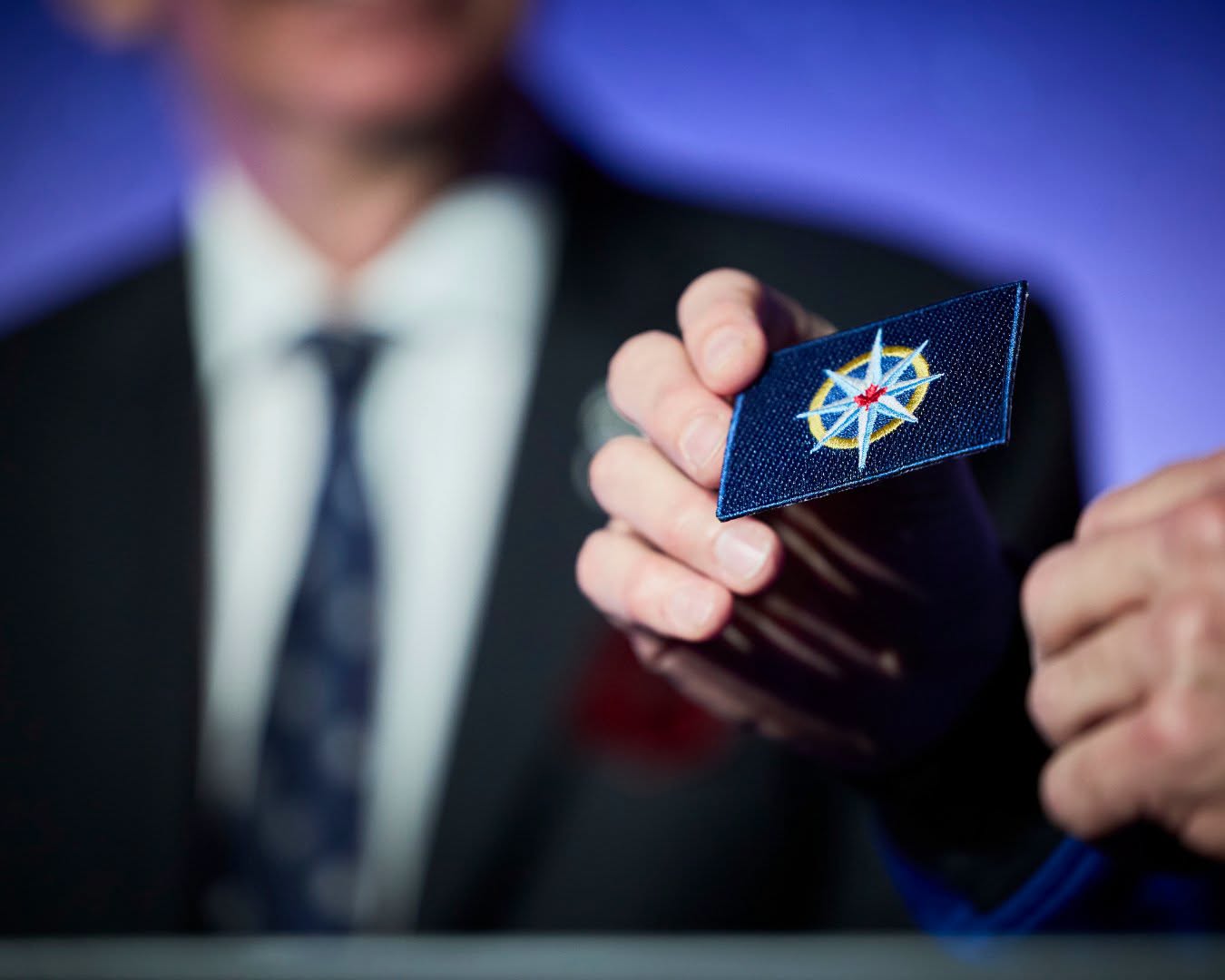
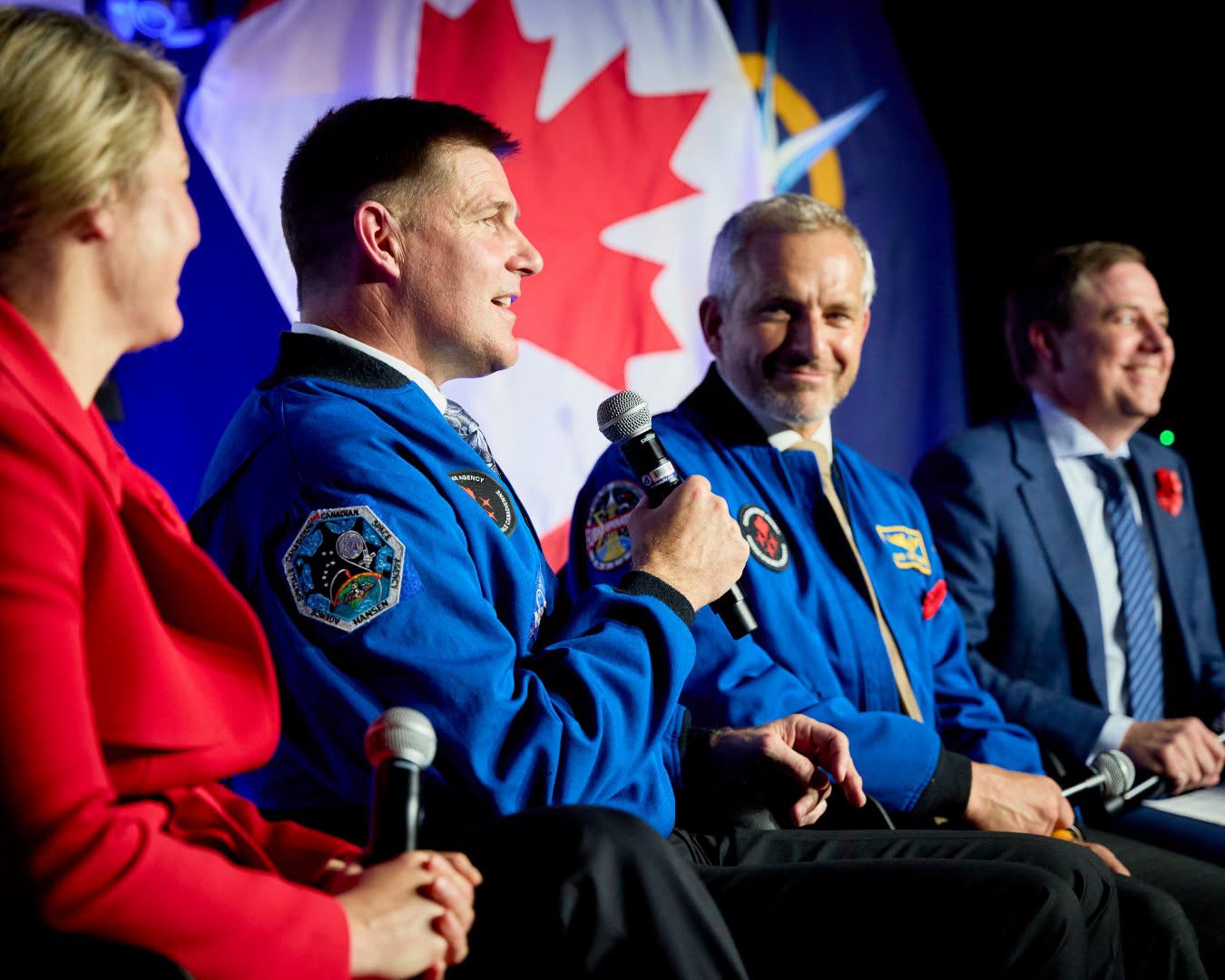
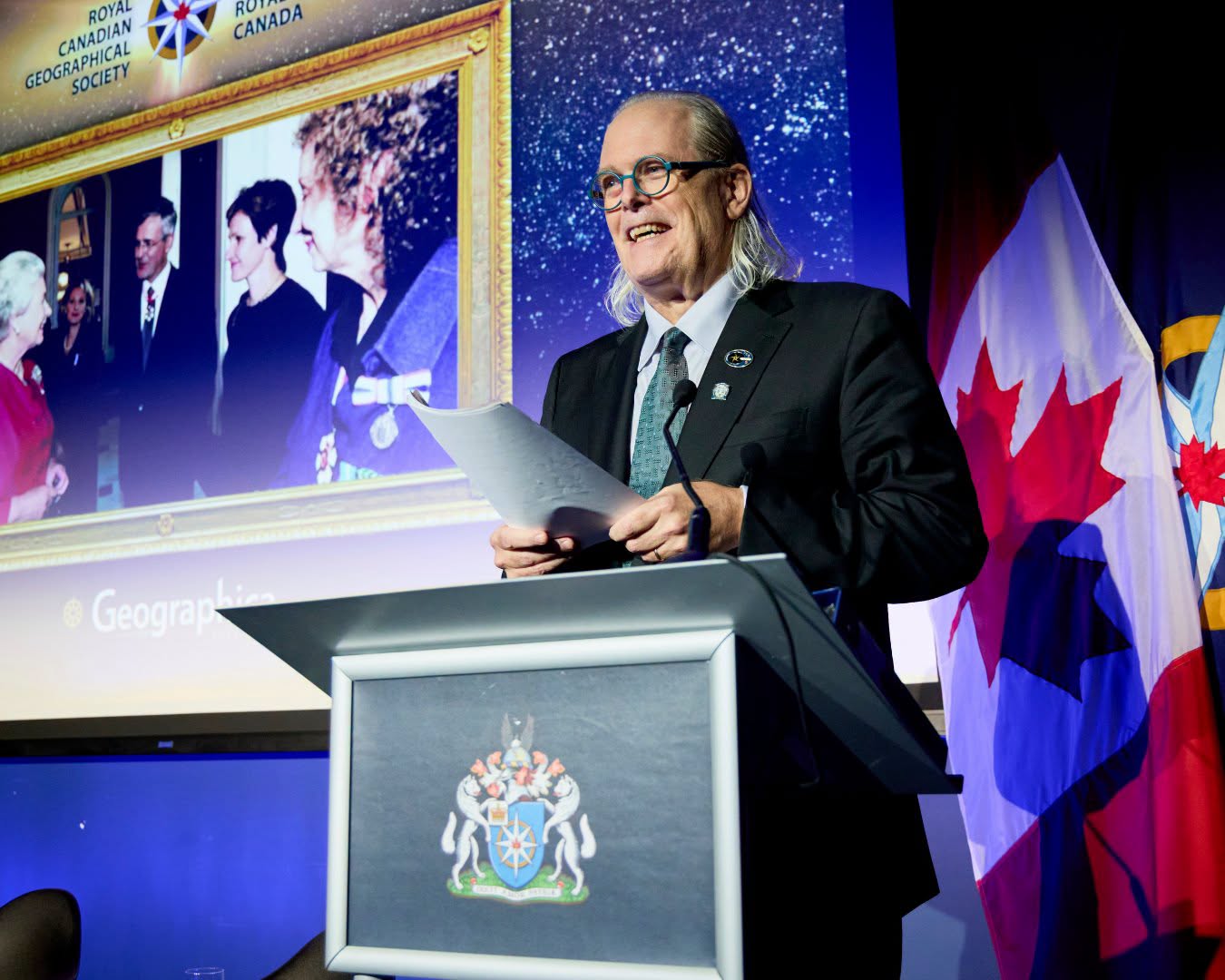
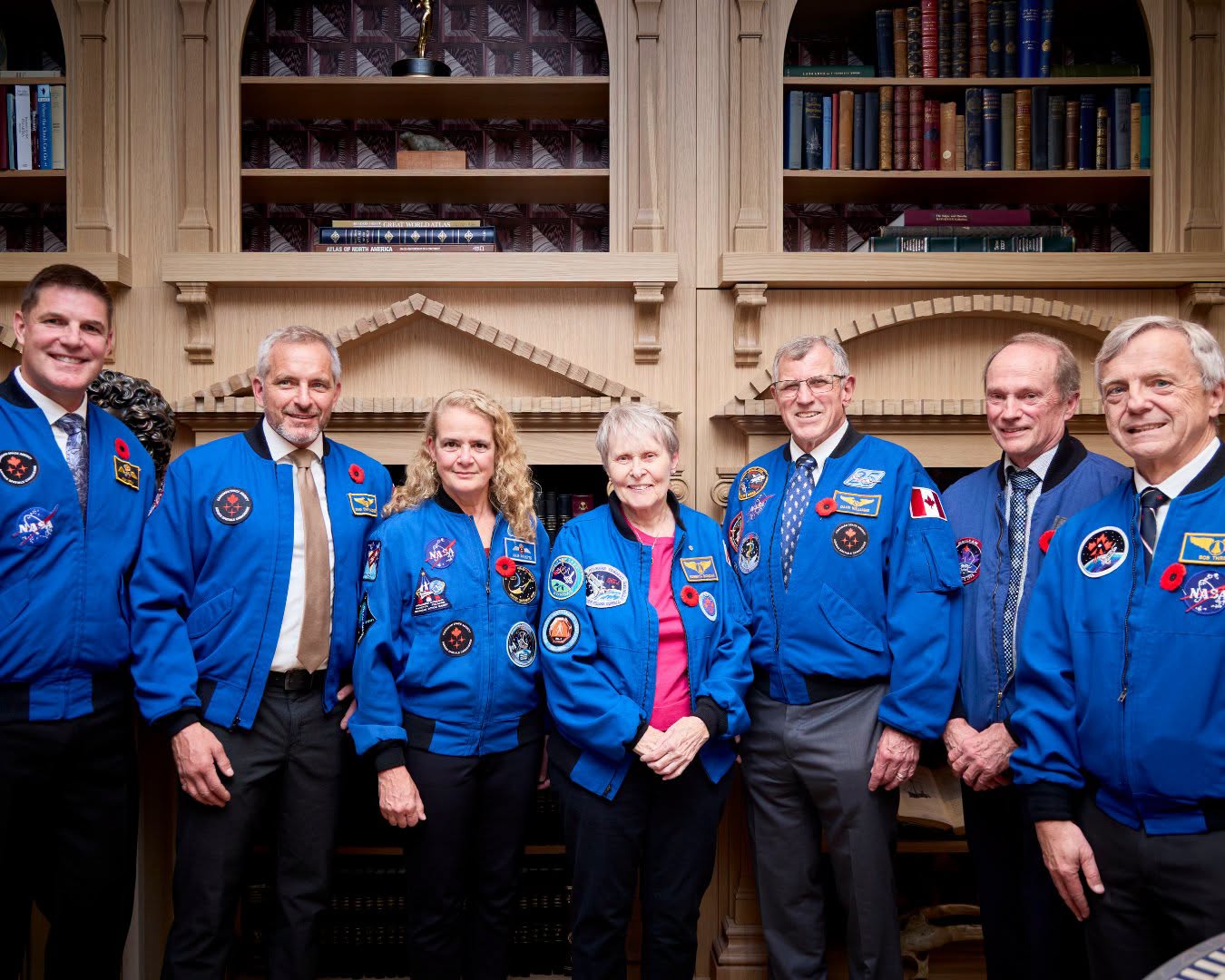
On a night that evoked wonder and awe at the extent of human achievement, the Royal Canadian Geographical Society’s 97th annual Geographica gala took more than 400 attendees on a “journey to the stars.” The evening was a celebration of Canada’s space exploration legacy, in particular paying tribute to the late Marc Garneau, the first Canadian to go to space.
All three floors of the Society’s headquarters at 50 Sussex Drive in Ottawa were transformed into a cosmic showcase with a prototype lunar rover parked outside the front doors, Garneau memorabilia on display and a timeline of Canadian spaceflight leading guests to the Alex Trebek Theatre, where the walls sparkled with a projection of stars. Local vendors served up Canadian fare, including tourtière, lobster rolls and oysters from Atlantic Canada, while the bars were stocked with made-in-Canada spirits, wine and beer. Notable guests in attendance included Marc Miller, Minister of Canadian Identity and Culture; Karim Bardeesy, Parliamentary Secretary to the Minister of Industry; Mona Fortier, Member of Parliament for Ottawa—Vanier—Gloucester; and Mike Bonner, head of personal and business banking at BMO.
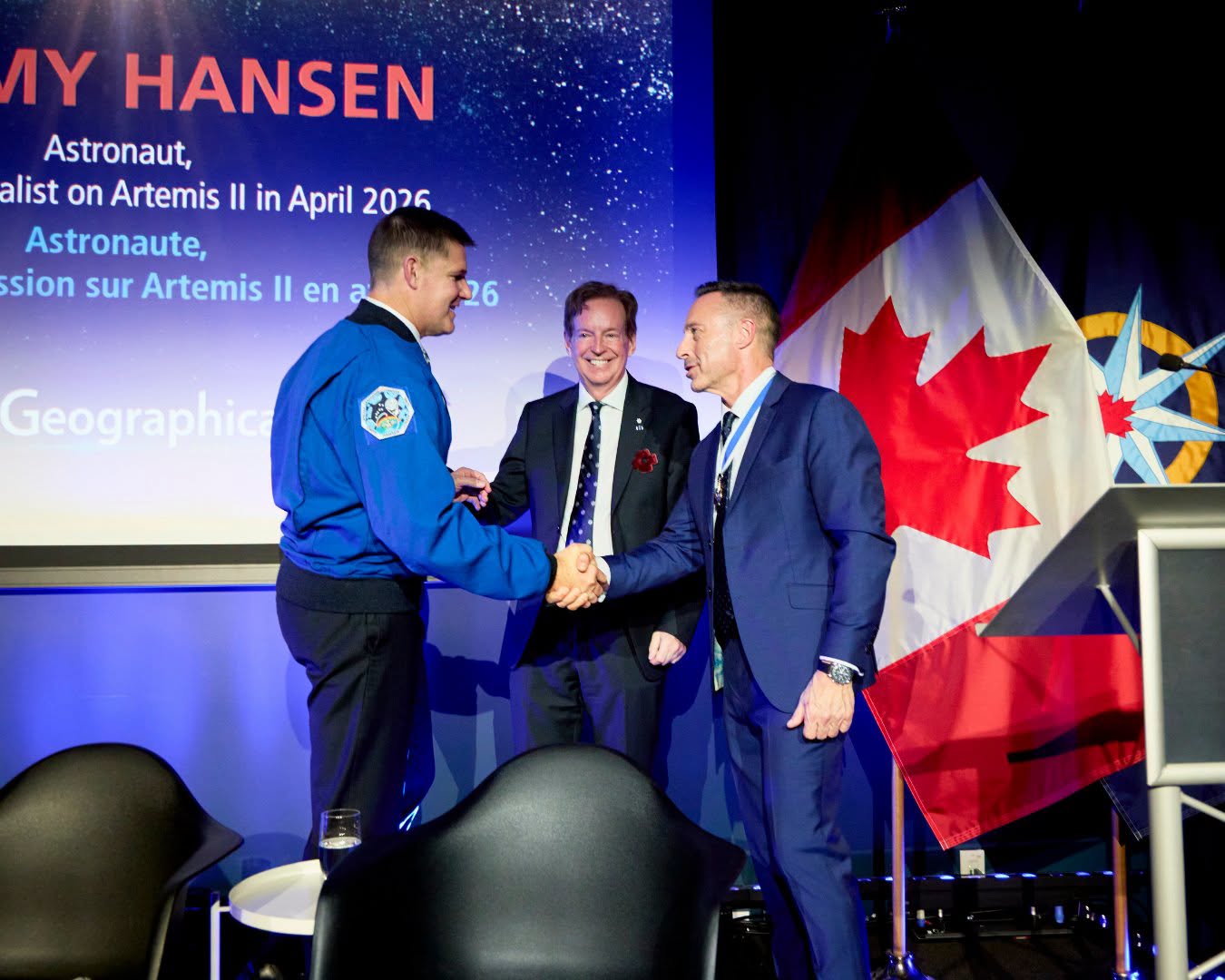
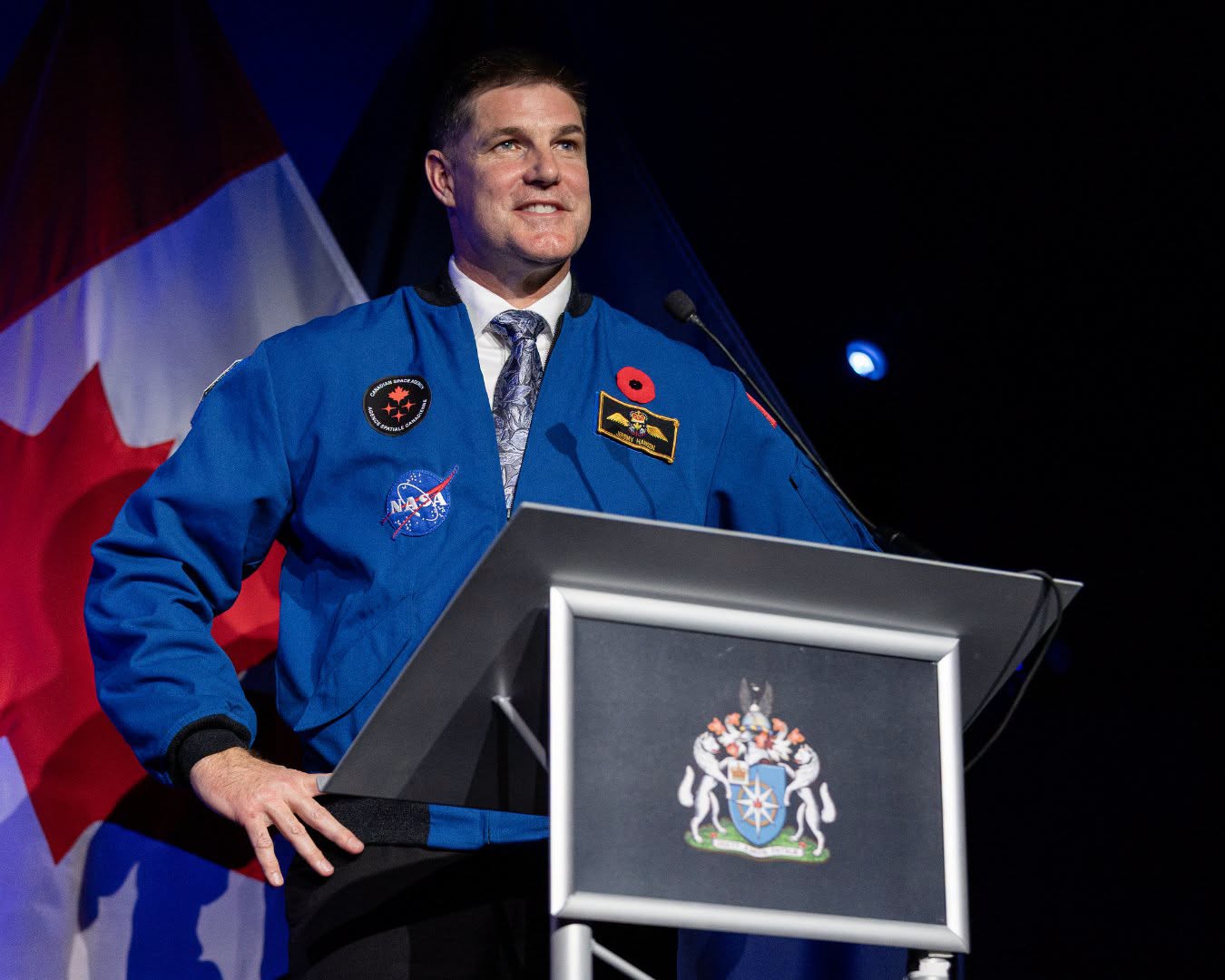
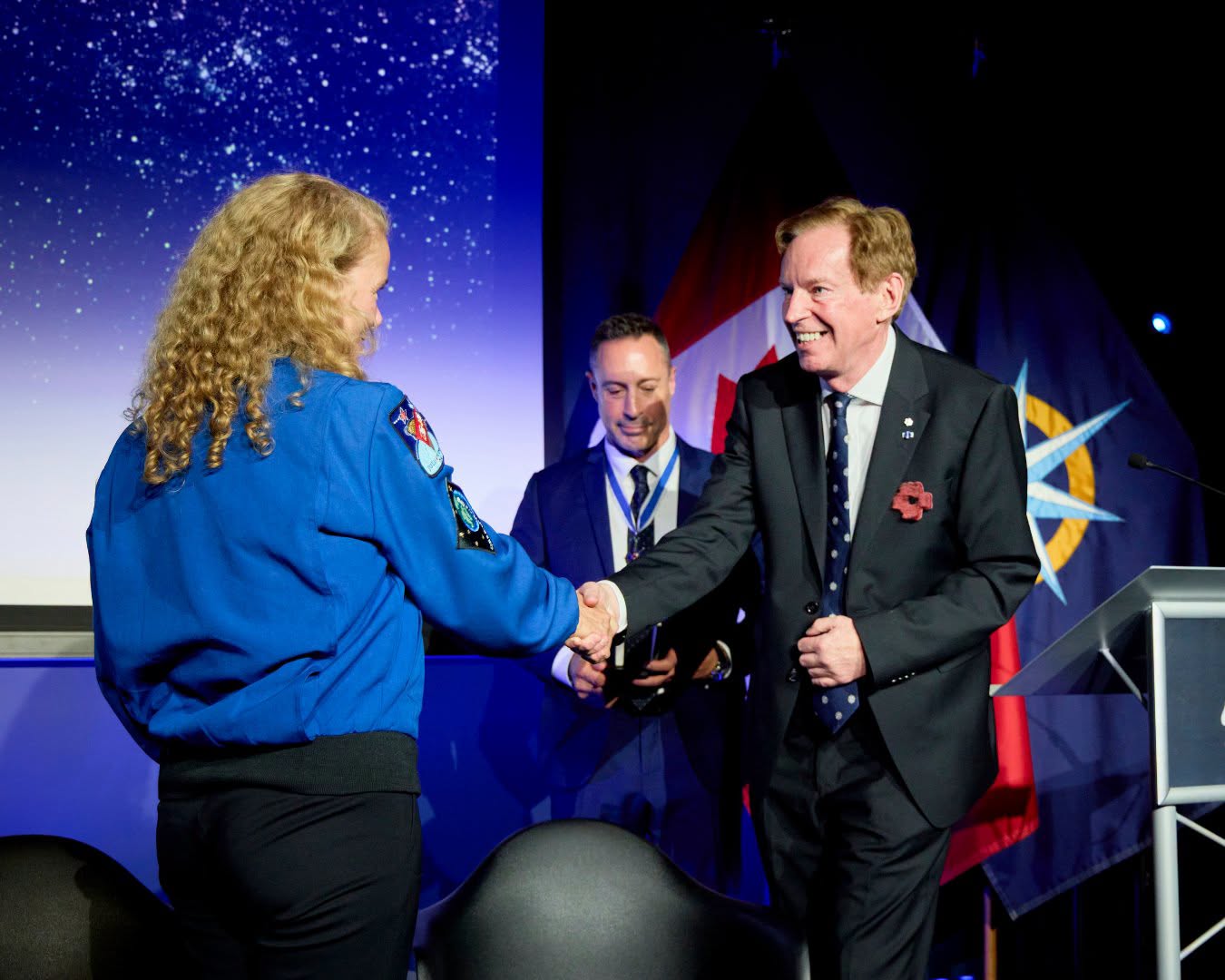
The evening saw Mélanie Joly, Canada’s Minister of Industry, surprise attendees with two big announcements. The first: that Alexander MacDonald, formerly NASA’s first chief economist, will be the next president of the Canadian Space Agency. MacDonald, an internationally-recognized space policy and economics expert who helped establish NASA’s Moon to Mars strategy and the Artemis program, then took to the stage.
Shared from Eleanor Taylor RMC 1998 LinkedIn – I am delighted to report that I have taken a new full-time role with the Business Development Bank of Canada (BDC), supporting its Defence Platform in Atlantic Canada.
BDC’s roots go back to 1944, when its predecessor, the Industrial Development Bank, was established to support Canada’s transition from a wartime to a peacetime economy and help returning Canadian soldiers build businesses. Since then, BDC has evolved into Canada’s bank for entrepreneurs.
Today, in alignment with Government of Canada priorities, BDC is renewing its focus on defence and has an important role to play at this critical moment in Canada’s history. I am grateful for the opportunity to contribute to BDC’s commitment to strengthening our economic sovereignty, national resilience and domestic defence supply chains.
Shared from Chung Leung Wong RMC 2004 LinkedIn –
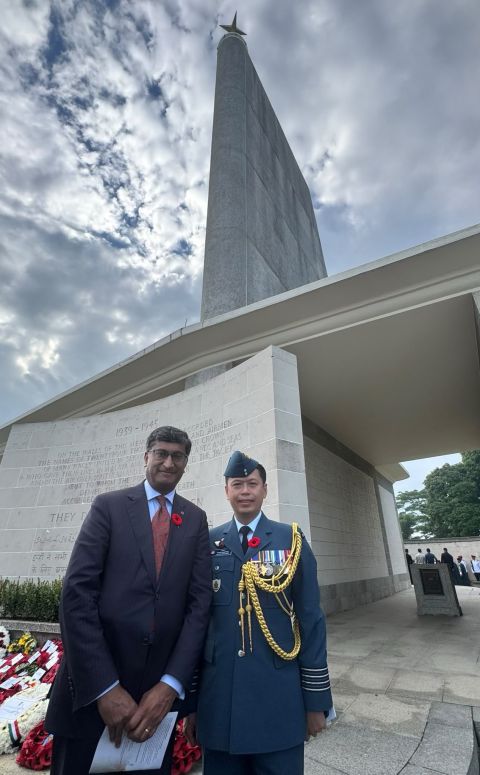
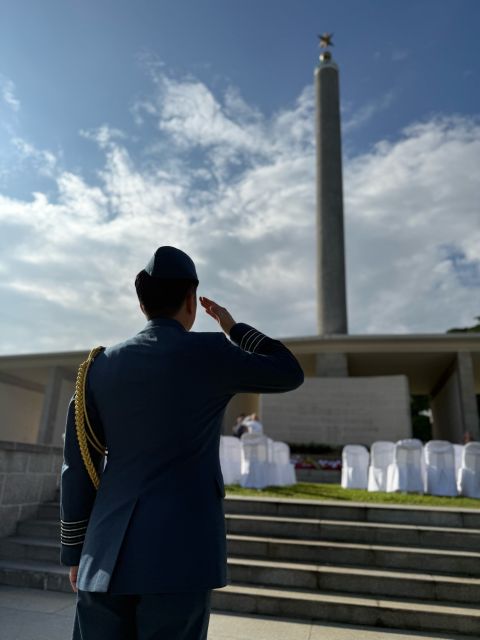
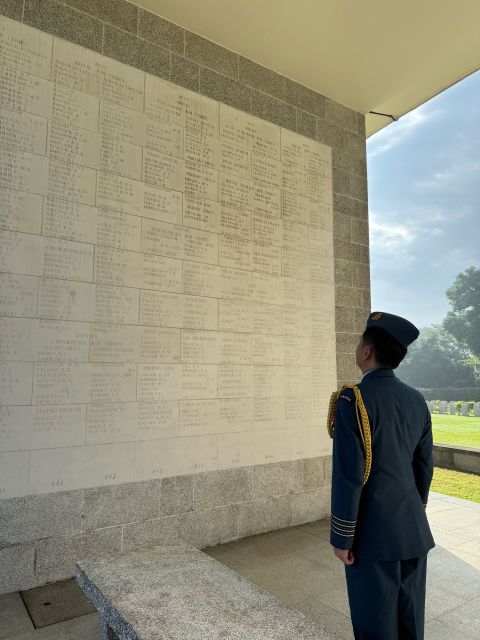
Honoured to attend my first Remembrance Day ceremony in Singapore at Kranji War Cemetery, alongside His Excellency Paul Thoppil, Canada’s High Commissioner to Singapore.
A solemn occasion to remember and honour the Canadians and all Commonwealth servicemen and women who made the ultimate sacrifice in the defence of freedom. Though far from home, we remain united in remembrance. Lest We Forget.
A walk in the forest: Canadian military veteran Leigh Cullen remembers the sacrifices
https://www.pentictonherald.ca/spare_news/article_fa11fb93-d66d-530f-a464-8368580a5474.html
At 89 years of age, Niverville resident James (Leigh) Cullen is still as sharp as he was the day he joined the Canadian military in 1955. Leigh and his wife Nancy moved to the Niverville Heritage Life Personal Care Home a year ago. In his room adjoining hers, a frame hangs on the wall containing a collection of medals and badges which he received while in service between 1955 and 1979.
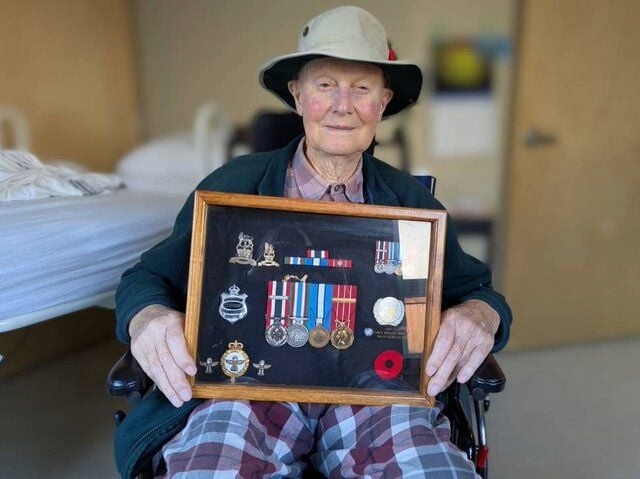
Every year since his retirement from the military, Leigh has spent Remembrance Days walking in the forest. Many times, he’d take his family with him. “We always talked about World War I and II [in our home],” says daughter Megan Cullen. “My father would always go into the forest and spend the day enjoying the lakes and forest and rivers on Remembrance Day because of the knowledge that it was the young farmers and [woodsmen] who went to sacrifice themselves for peace.”
With mobility that’s now waning, Leigh says he still takes the Remembrance Day forest walks, but only in his head. Leigh grew up near Pickle Lake, Ontario, not far from Red Lake. “In Red Lake, a man came around and talked me into joining the Armed Forces,” Leigh says. “His pitch was, I could get a free education and I would be paid. It was a pittance, but I’d be paid.”
To 17-year-old Leigh, accepting the offer was a way to ensure that his younger sister could go to high school, which cost money in those times. Leigh was accepted to the Royal Military College in Kingston, but his inability to perform well in calculus prevented him from graduating from military college. The next best option, he says, was joining the Provost Corps, or military police. He trained at the Shiloh military base in Manitoba. It was during his service in Churchill that Leigh met the woman of his dreams. Nancy was there to fill a temporary teaching position at the grade school.
Top Aces is pleased to welcome Lieutenant-General (Ret’d) Eric “Slice” Kenny CMR RMC 1994, former Commander of the Royal Canadian Air Force (RCAF), as Senior Advisor for our Canadian operations.
With 36 years of RCAF service, more than 2,900 flying hours as a CF-18 pilot and leadership experience at every major level of the Air Force, LGen Kenny brings extensive operational expertise to the team. His experience leading the RCAF’s modernization and transition to a fifth-generation air force will be invaluable as Top Aces continues to support the RCAF and allied forces around the world. Welcome to the team, Slice!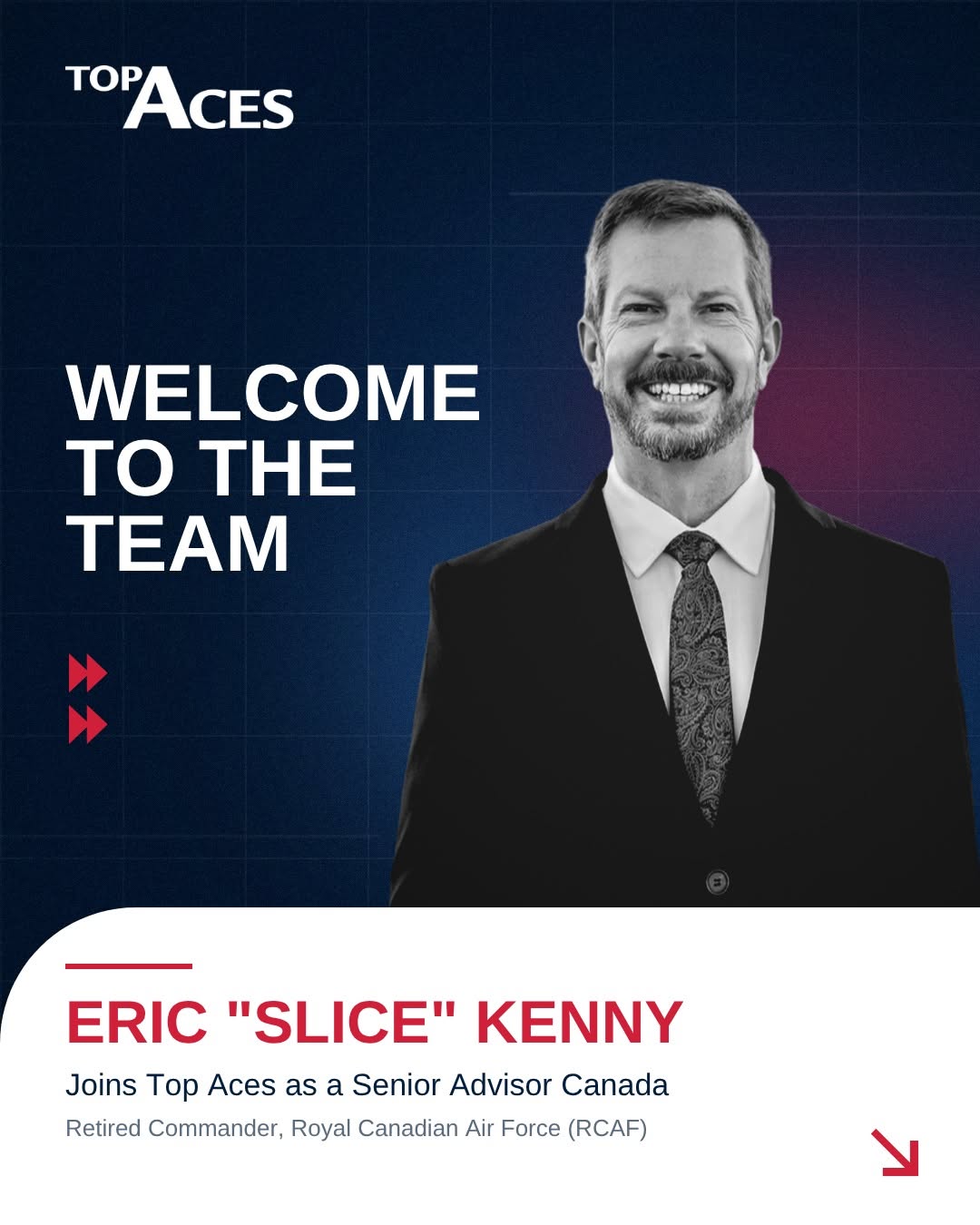
Retirement: Lieutenant-Colonel Trevor Traxler-Semeniuk, CD
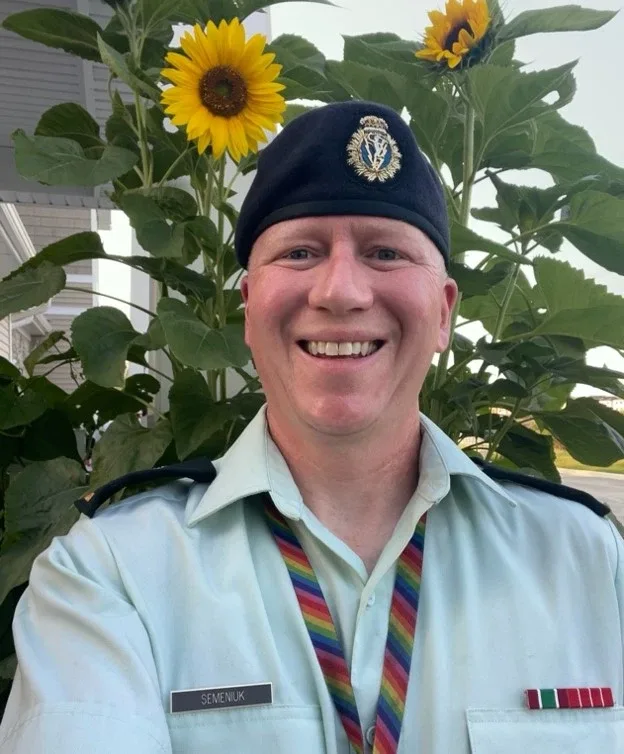
1. ON 21 OCTOBER 2026, LIEUTENANT-COLONEL TREVOR TRAXLER-SEMENIUK RETIRED FROM THE CANADIAN ARMED FORCES AFTER 23 YEARS OF SERVICE AS A SIGNAL OFFICER. 2. TREVOR GREW UP IN EDMONTON, ALBERTA, AND EMBARKED ON A CAREER AS A CABINET MAKER IN 1995 AFTER COMPLETING HIGHSCHOOL AS AN ADULT DUE TO DROPPING OUT OF SCHOOL AT 15-YEARS-OLD. HE SUBSEQUENTLY ENROLLED IN UNIVERSITY IN 1997 AND OBTAINED HIS BACHELOR OF ELECTRICAL ENGINEERING DEGREE IN 2002. AFTER SPENDING A FUTILE YEAR TRYING TO FIND A JOB IN HIS FIELD OF ELECTRICAL ENGINEERING, TREVOR CHOSE TO ENROLL IN THE CANADIAN FORCES IN AUTUMN OF 2003 WITH SHORT-TERM PLANS OF MILITARY SERVICE. 3. ONCE FULLY TRAINED AS A SIGNAL OFFICER, TREVOR BEGAN HIS CAREER IN KINGSTON, HOLDING A NUMBER OF TROOP COMMANDER ROLES, STARTING AT THE CANADIAN FORCES SCHOOL OF COMMUNICATIONS AND ELECTRONICS (2005-2007), AND THE JOINT SIGNAL REGIMENT (2007-2011). IN 2009, HE DEPLOYED TO THE AFGHANISTAN AIRFIELD FOR 7-MONTHS TO LEAD THE NATIONAL REAR LINK DETACHMENT. UPON HIS RETURN, HE ENROLLED IN THE ROYAL MILITARY COLLEGE OF CANADA AND OBTAINED HIS MASTER OF APPLIED SCIENCE IN ELECTRICAL ENGINEERING DEGREE IN 2013. THIS PREPARED HIM FOR FUTURE ENGINEERING ROLES IN OTTAWA, FIRST WITH THE DIRECTOR OF LAND COMMAND AND CONTROL SYSTEMS (2013-2016), FOLLOWED BY THE STRATEGIC JOINT STAFF (2016-2018). IN 2018, TREVOR WAS PROMOTED TO MAJOR AND SELECTED TO LEAD THE KINGSTON CRYPTO MAINTENANCE UNIT, AS OC 767 SQUADRON (2018-2020), AND THEN AS G6 OF THE CANADIAN ARMY DOCTRINE AND TRAINING CENTRE (2020-2024). 4. IN 2024, HE WAS PROMOTED TO LIEUTENANT-COLONEL AND RETURNED TO OTTAWA TO ASSUME COMMAND OF THE JOINT COMMUNICATIONS AND INFORMATION SYSTEMS BRANCH AT THE CANADIAN FORCES JOINT WARFARE CENTRE (2022-2024). HIS FINAL POST WAS WITH THE CHIEF OF PROFESSIONAL CONDUCT AND CULTURE, WHERE HE LED POLICY DEVELOPMENT WITHIN THE DOMAIN OF ADDRESSING AND PREVENTING ONGOING HARMFUL, HATEFUL AND VIOLENT BEHAVIORS IN THE CANADIAN ARMED FORCES (2024-2026). DURING THIS POSTING, TREVOR OBTAINED HIS MASTER OF BUSINESS ADMINISTRATION FROM THE ROYAL MILITARY COLLEGE OF CANADA (2025), WITH A RESEARCH FOCUS OF STUDYING AUTISM AND LEADERSHIP WITHIN THE CANADIAN ARMED FORCES.
Quebec’s next lieutenant governor should be a soldier, not a symbol: Patrice Dutil in the National Post
This article originally appeared in the National Post.
By Patrice Dutil, October 29, 2026
The Parti Québécois (PQ) has barely won an election and is already training its fire on the Crown. Premier Paul St-Pierre Plamondon has vowed to defund the office of the lieutenant governor, said he will seek legal advice on keeping the Crown’s representative out of the opening of the legislature and has promised to cut Quebec’s ties to the monarchy. Constitutional experts rightly note that abolishing the office unilaterally is nearly impossible, since the amending formula requires the consent of every province. But the legal wall is not the whole story. An institution can survive on paper and still wither in public esteem. That is the real danger in Quebec, and Ottawa needs to answer it with its most underused tool: the power to choose who wears the office.
In December 2023, the day after the appointment of the current Lieutenant Governor Manon Jeannotte, the National Assembly voted unanimously, with all 100 members present, for a motion suggesting that the office lacked democratic legitimacy and was a reminder of a colonial past. The motion was non-binding and, by its own terms, not aimed at the incumbent. But it revealed something important: in Quebec, the Crown is not defended, only tolerated. Its representative is introduced to the public as a relic and has little in the way of a ready-made reputation to counter that story.
Shared from Ryan Stewart RMC 2024 LinkedIn
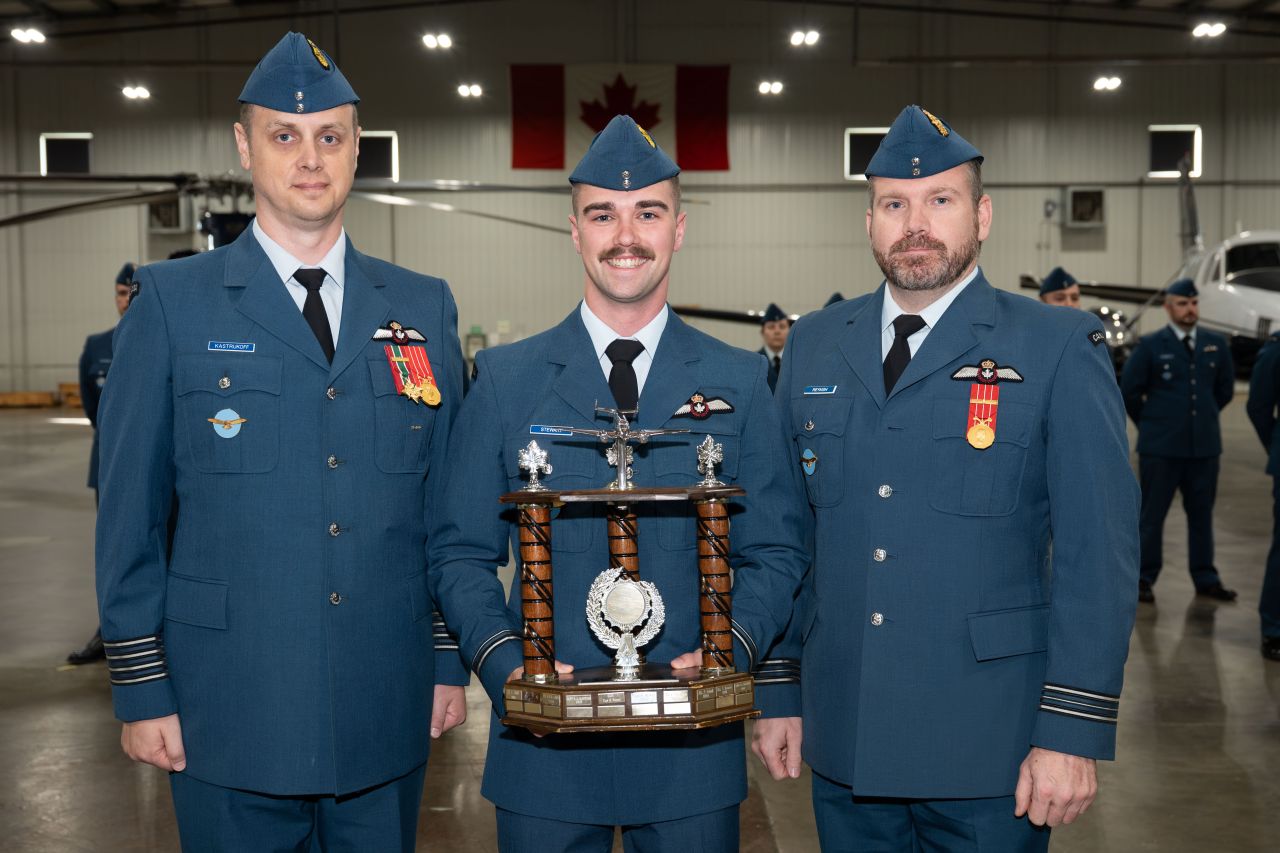
Extremely excited to share that on October 16th, I had the honour of receiving my pilot wings after completing two years of flight training at 3 CFFTS in Portage la Prairie, Manitoba. I would like to extend my sincere thanks to the many civilian and military instructors who provided outstanding instruction, mentorship, and guidance throughout the journey. I was also honoured to receive the Sqn Ldr H.A. Wishart Award at graduation for finishing as the top multi-engine graduate. I’m fortunate to be returning to 429 Squadron in Trenton, Ontario, where I look forward to continuing my development as a pilot and, eventually, flying the CC-177 Globemaster III. Proud to have reached this milestone and grateful to everyone who helped make it possible. Looking forward to what comes next!
Last week members of the RMC History Department were pleased to welcome back their former colleague, Dr. Asa McKercher. Dr. McKercher is currently the Steven K. Hudson Research Chair in Canada-US Relations and Associate Professor of Public Policy in the Brian Mulroney Institute of Government, St. Francis Xavier University (Nova Scotia). On Thursday 5 November, Dr. McKercher, an expert in the history of Canadian-American relations, gave a public lecture at Currie Hall, entitled “From 14th Colony to 51st State: Canada in American Grand Strategy.” Based on his forthcoming book entitled Sleeping with an Elephant How America Shaped Since 1776, the well-attended lecture situated the current crisis in Canada-US relations in a broader historical context. Attendees learned that there have been many ups and downs in the continental relationship since 1776 and that the present moment is both similar to previous eras of tension but, at the same time, unique. The lecture was followed by an interesting question and answer discussion. The following day, Dr. McKercher attended Dr. Kenny’s senior seminar on Canadian-American relations where he again answered questions and provided insights into Canadian-American relations in both the past and present.
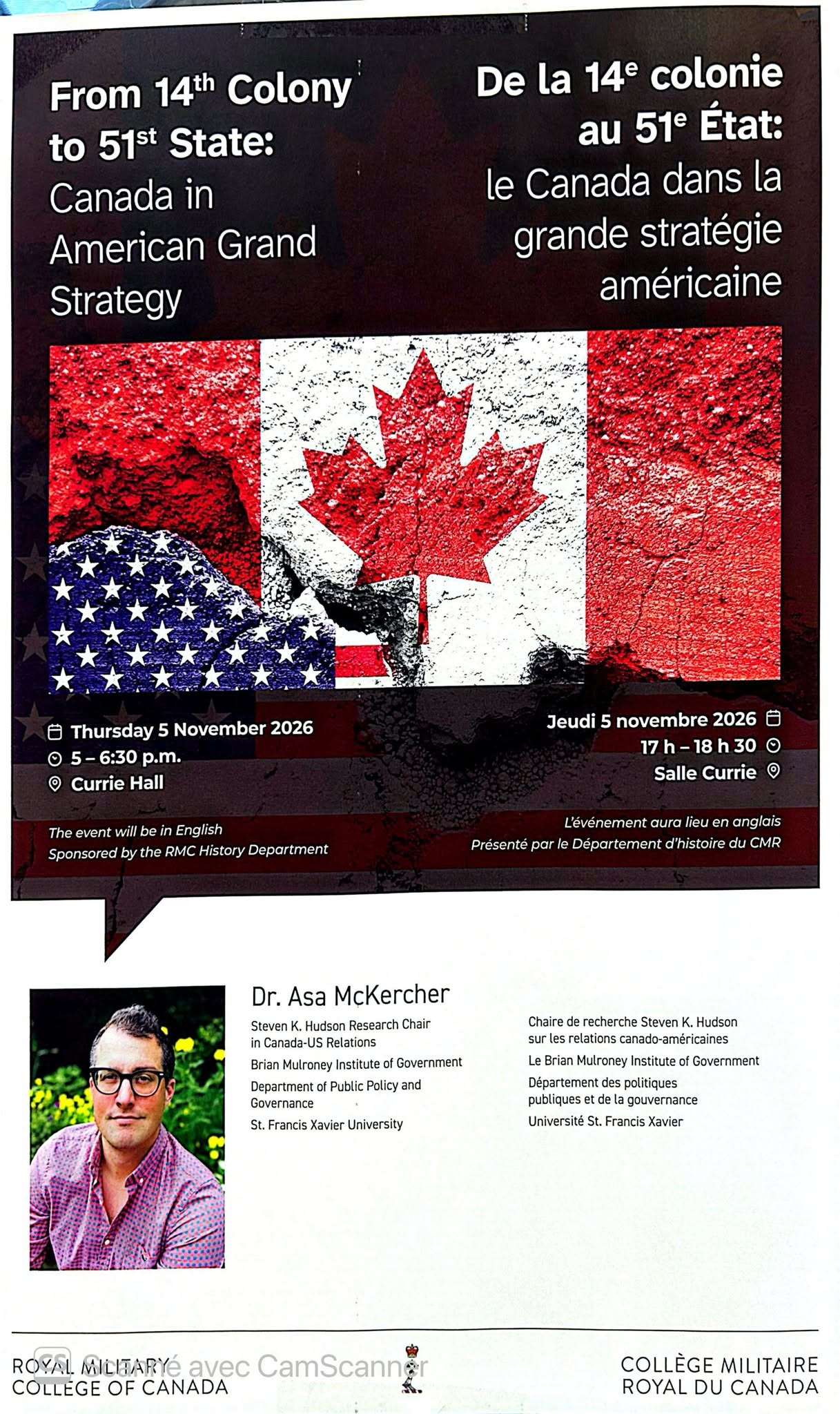
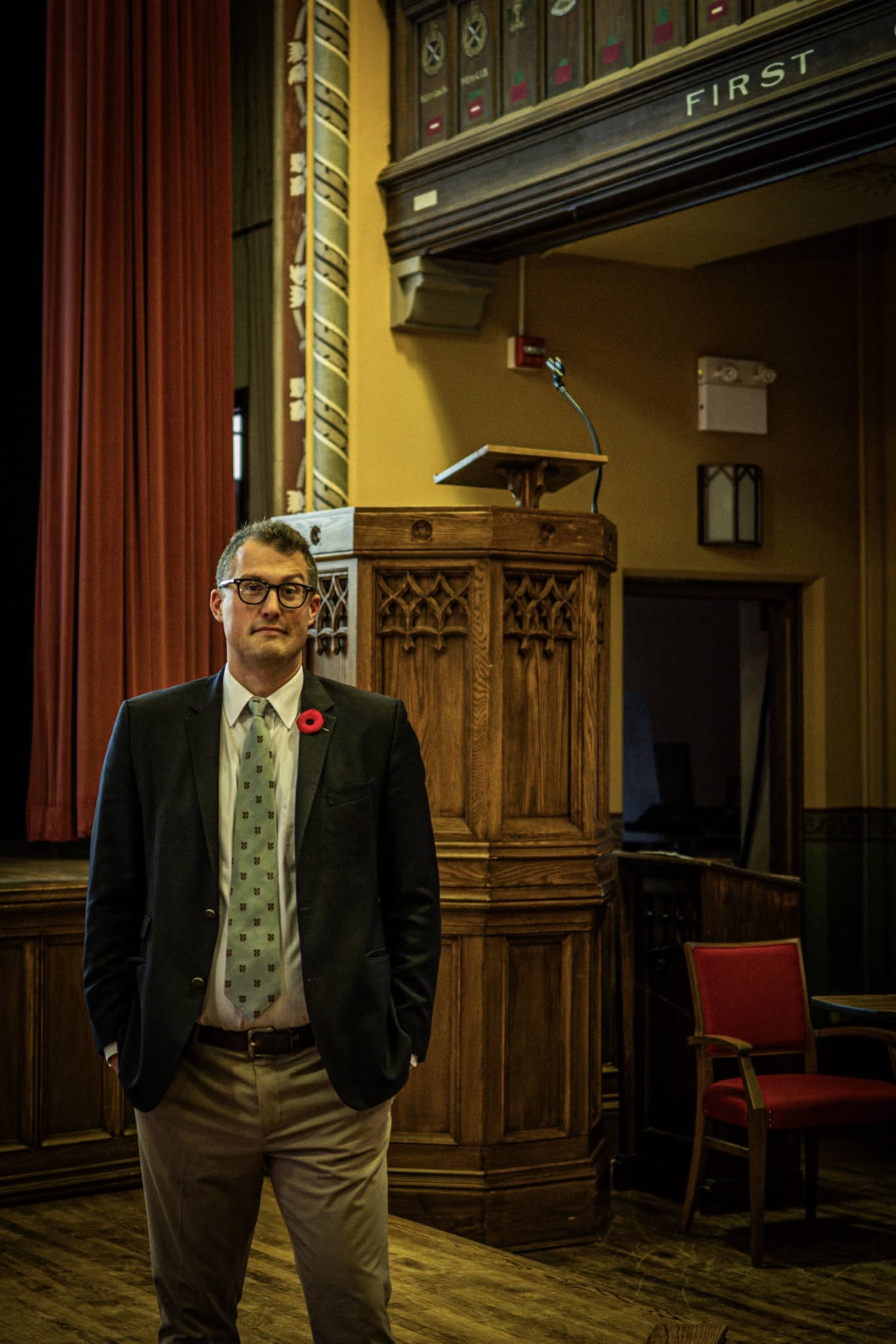
La semaine dernière, les membres du Département d’histoire du CMR (Kingston) ont eu le plaisir d’accueillir de nouveau leur ancien collègue, le Prof. Asa McKercher. M. McKercher occupe actuellement la chaire de recherche Steven K. Hudson sur les relations Canada-États-Unis et est professeur agrégé de politiques publiques au sein du Brian Mulroney Institute of Government, à l’Université St. Francis Xavier en Nouvelle-Écosse. Le jeudi 5 novembre, le Prof. McKercher, un expert en histoire des Canada-États-Unis, a donné une conférence publique au Currie Hall, intitulée « From 14th Colony to 51st State: Canada in American Grand Strategy ». S’appuyant sur son prochain ouvrage intitulé Sleeping with an Elephant: How America Has Shaped Canada Since 1776, la conférence, qui a attiré un public nombreux, a replacé la crise actuelle des relations Canada-États-Unis dans un contexte historique plus large. Les participants ont appris que la relation continentale a connu, depuis 1776, de nombreux hauts et bas, et que la situation actuelle, tout en présentant des similitudes avec des périodes de tension antérieures, demeure unique. La conférence a été suivie d’une séance de questions avec le public. Le lendemain, le Prof. McKercher a assisté au cours du Prof. Kenny sur les relations canado-américaines, où il a de nouveau répondu aux questions et donné son point de vue sur les relations Canada-États-Unis passées et présentes.
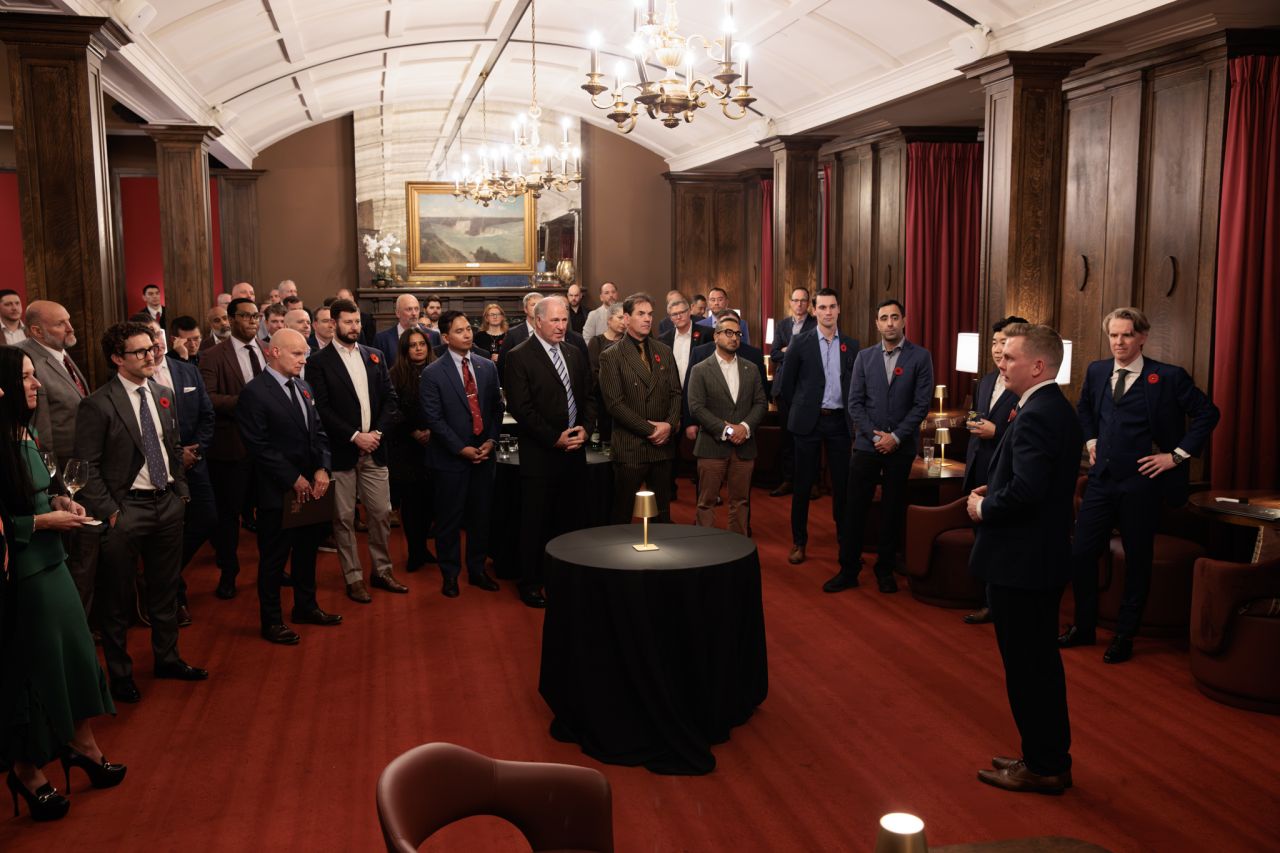
On October 28, Treble Victor Group welcomed leaders from across Canada’s banking, institutional capital, defence industry, government, entrepreneurial, and veteran communities for Veterans on Bay Street 2026: From Capital to Capability. The evening brought together diverse institutional perspectives to examine how Canada can translate growing defence investment into sustainable industrial growth, economic opportunity, and national capability.
At the centre of the evening was a candid, fact-based fireside discussion featuring Brice Scheschuk, CPA, CA (Globalive), Alex Robinson (Roynat Capital), and Paul Carroll (BDC). The discussion explored the financial, industrial, and institutional requirements for scaling Canada’s defence economy, moving beyond broad ambitions to examine the practical challenges of capital formation, risk, commercialization, and execution.
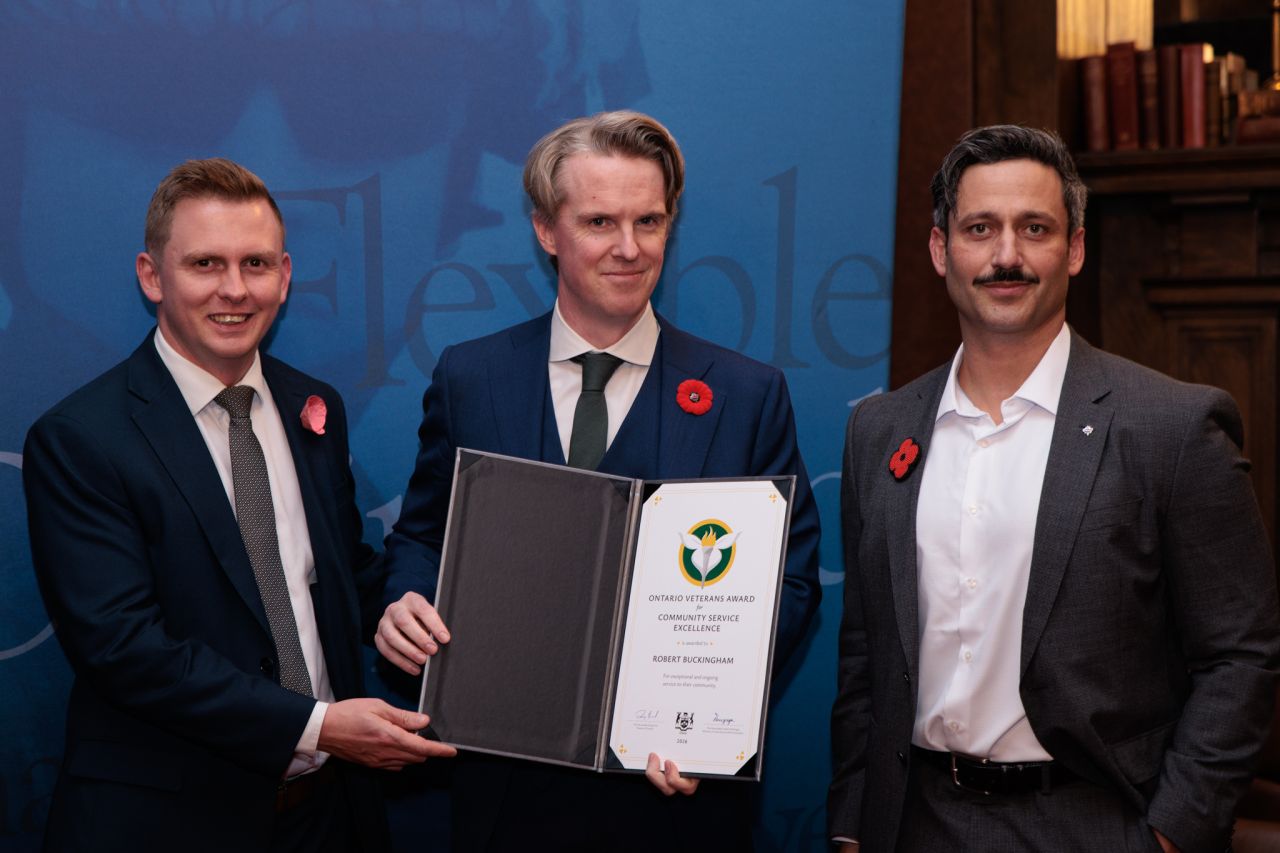
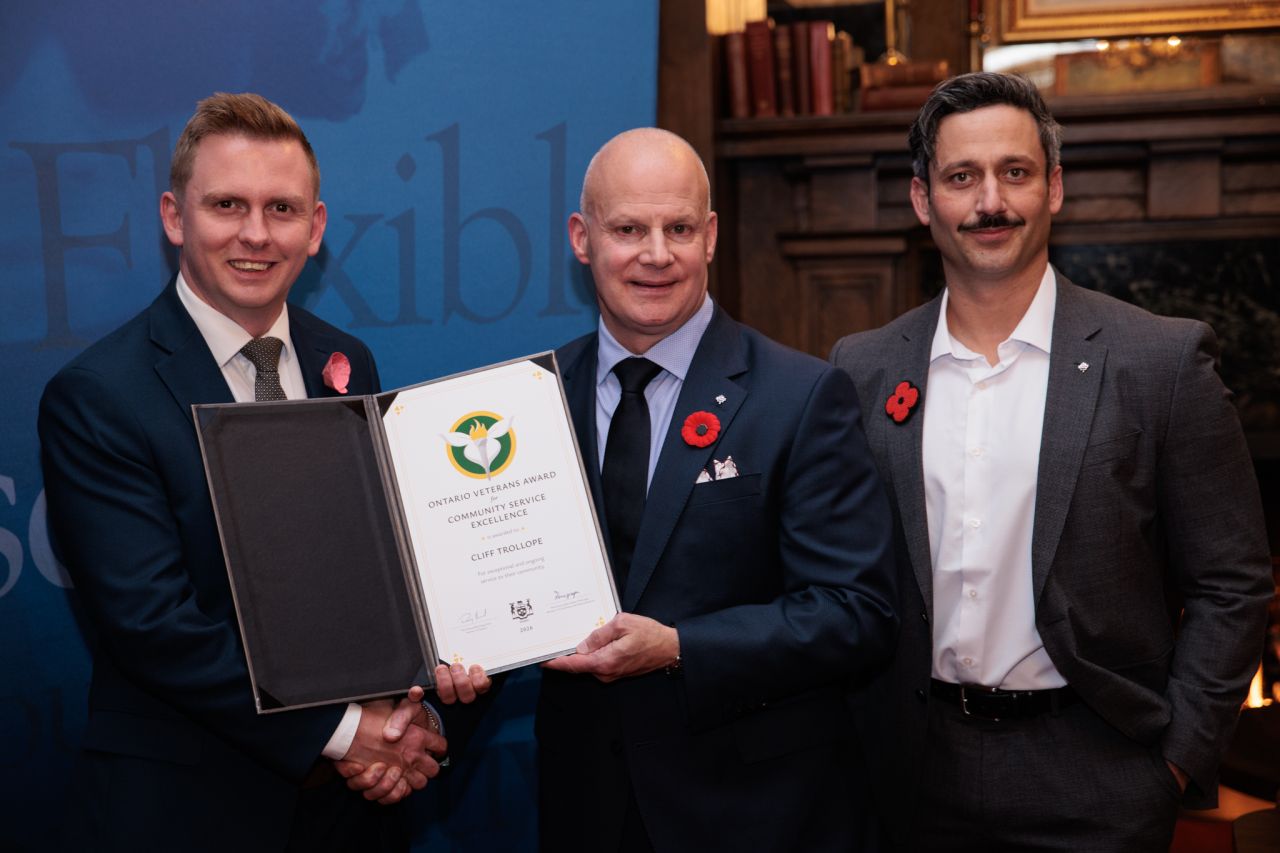
We were also honoured to welcome Minister Graham McGregor and recognize Cliff Trollope and Robert Buckingham with the Ontario Veterans Award for Community Service Excellence, celebrating their longstanding leadership and commitment to Canada’s veteran community.
Our sincere thanks to everyone who joined us, our distinguished panellists, and our generous sponsors, CIBC, KPMG Canada, Origin Merchant Partners, and Regional One, Inc., for making the evening possible.
Veterans on Bay Street demonstrated the value of bringing people and institutions together on issues of national importance. Treble Victor Group intends to build on this momentum, creating further opportunities for banking, government, industry, entrepreneurs, non-profit organizations, and veteran leaders to engage in meaningful dialogue and collaboration. We welcome those interested in contributing to future discussions to connect with us as we continue to turn relationships, ideas, and opportunities into meaningful outcomes.

Shared from Derron Bain Linkedin
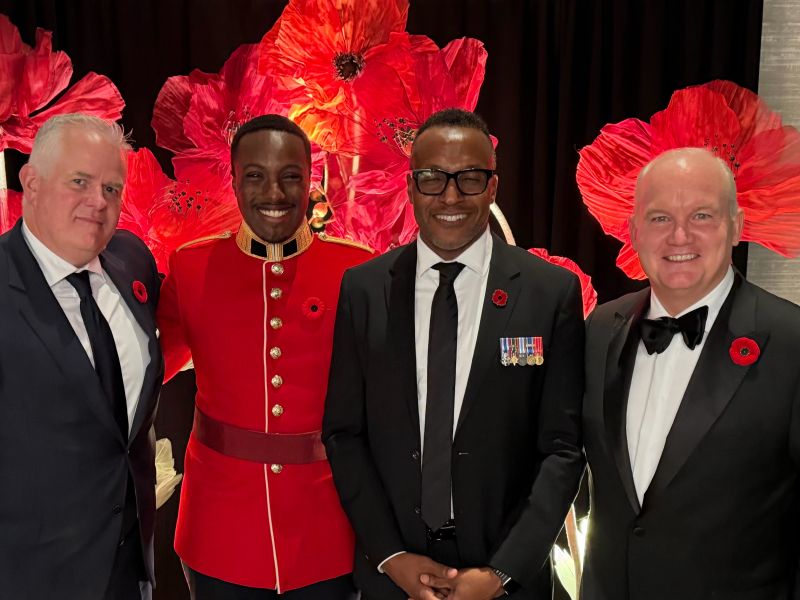
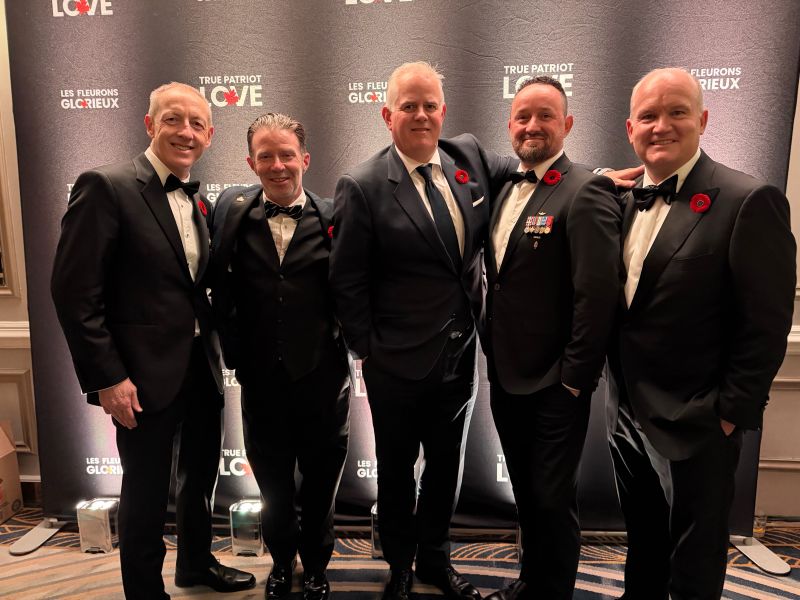
The front of Veterans’ Week, spent in the company of several friends who have served Canada has been nothing short of inspiring. All Canadian patriots and each the best example of strong and principled leadership both in and out of uniform.
True Patriot Love Foundation continues to lead as Canada’s foundation for serving members of the Canadian Armed Forces | Forces armées canadiennes, Veterans and their families. I was privileged to attend the annual Toronto National Tribute Dinner as a Board member and in the company of friends and alumni from the Devil’s Brigade expedition.
Earlier in the week I had the opportunity to reconnect with Royal Military College of Canada/Collège militaire royal du Canada and Royal Military Colleges of Canada Alumni Association Inc. hockey program Class of 1994 teammates in Vancouver.
Last night we celebrated the retirement and dedicated service of a close friend from our RMC Class of 1995. A remarkable 35-year career in the Canadian Armed Forces and in service to Canada.
As Remembrance Day approaches, we come together to honour the memory of the brave men and women who made great sacrifices to defend our freedom. Their courage and commitment continue to inspire us, and their legacy remains in our hearts and minds. We also re-commit to honour, value and support our serving members of the Canadian Armed Forces, veterans and their families.
My thoughts and gratitude are directed to family members and friends who through their service set the foundation for the character and values of generations that have followed them.
Take some time Wednesday morning to attend a Remembrance ceremony near you. Our work can wait an hour.
Shared from the Campbellford Memorial Hospital Facebook Page
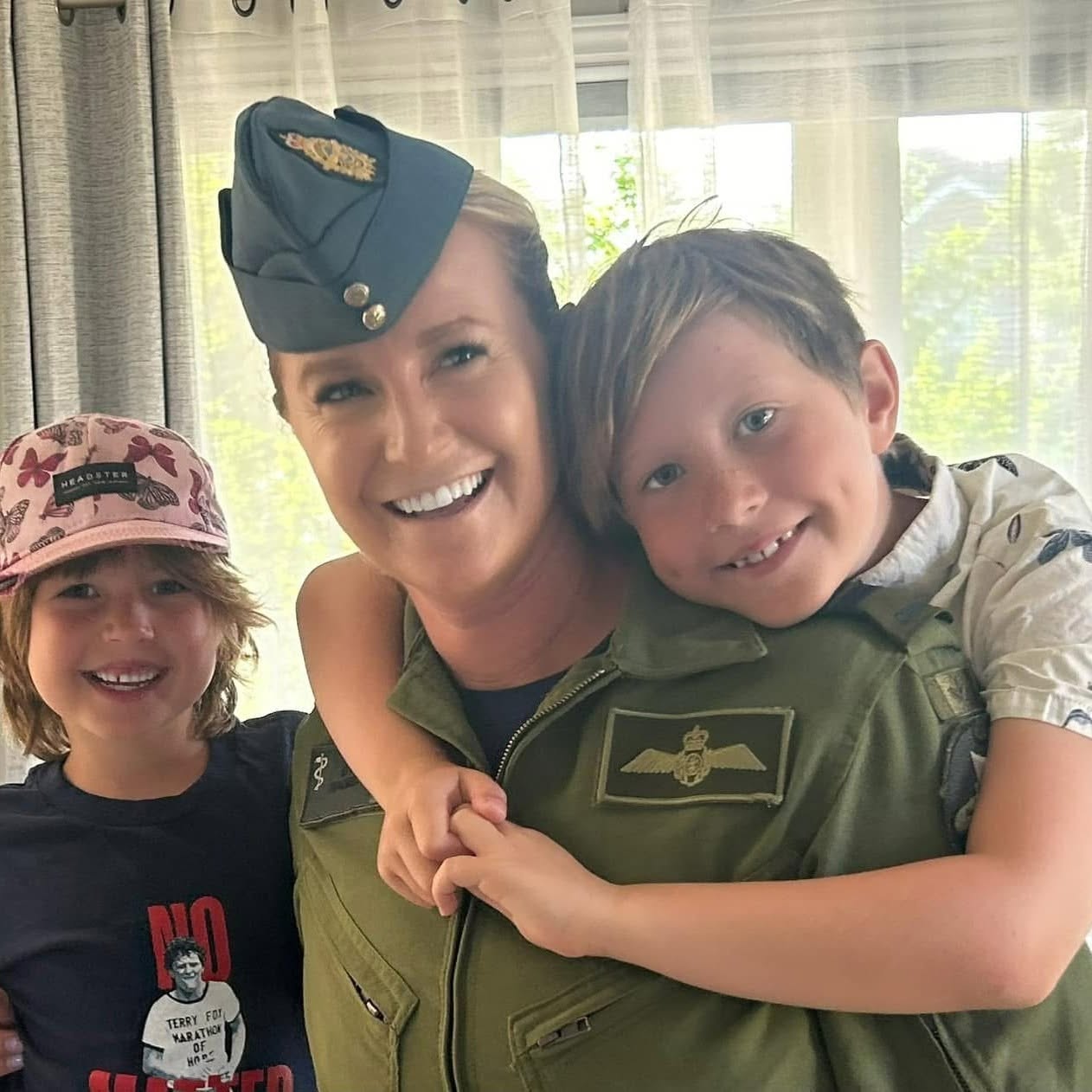
Today, on Remembrance Day, we’re taking time to recognize members of the CMH team who have served, or continue to serve, in the Canadian Armed Forces.Dr. Stephanie Bigelow has dedicated more than 22 years to serving her country while also caring for patients here at CMH.
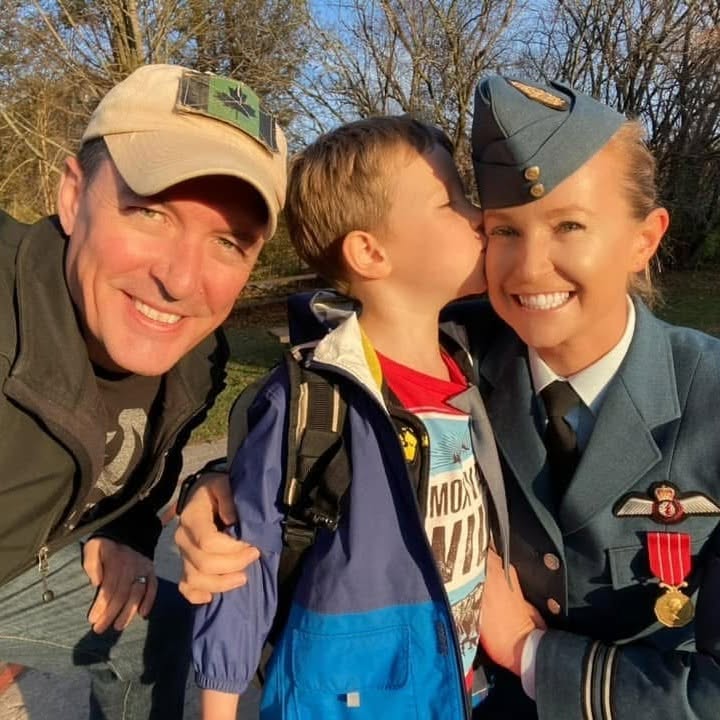
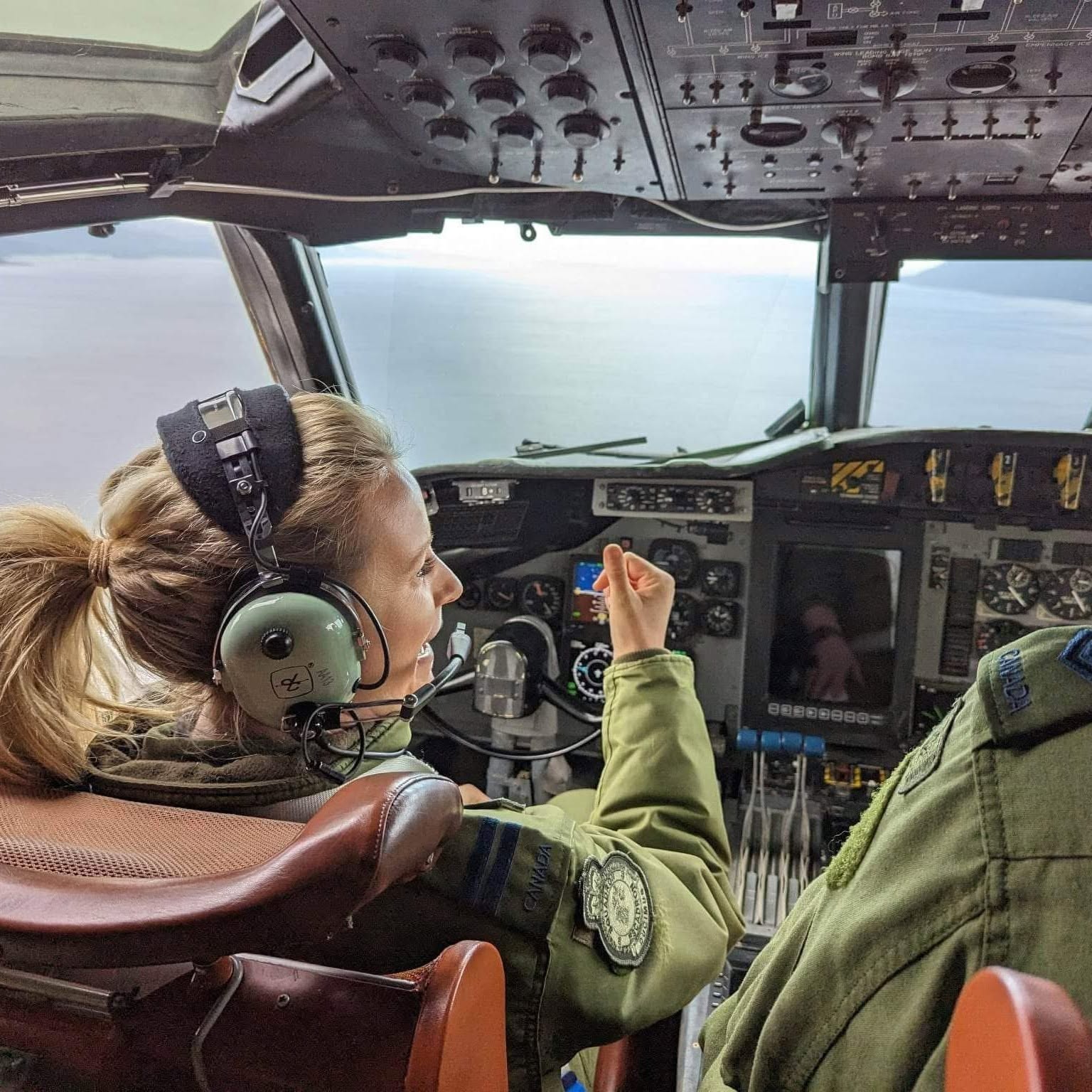
From uniform to university: leveraging military connections to serve the U of A
 Glen Cuming, DEFENDS program manager in the Faculty of Engineering at the University of Alberta, often draws on his former military experience in his current role. In 1988, Glen joined the Canadian Armed Forces as a reservist infantry officer while completing his engineering degree, before transferring to the Regular Force as a combat engineer officer in 1997.
The people and organizations Glen worked with in the army almost 30 years ago are important connections in his work for DEFENDS (Dual-Use Ecosystem for Future Engineering, National Defence and Sovereignty), a research and innovation platform led by the U of A that brings together university researchers, businesses and the Canadian Armed Forces.
Glen’s role involves ensuring DEFENDS meets the requirements of its existing funding agreements, and networking is central to that work. Funding for DEFENDS comes from multiple organizations, so the largest challenge is making those connections and then building collaborations, explains Glen. “It’s about finding a gap, doing the research, and then supporting the commercialization and eventual operationalization of that technology, so the Canadian Armed Forces can use it,” he says.
There are a lot of networking opportunities at defence conventions, such as CANSEC – Canada’s largest global defence and security trade show – and aerospace, defence and security events DEFSEC Atlantic and DEFSEC West. “I really enjoy reconnecting with people I’ve worked with in the past and making a difference for the military,” says Glen, adding a part of networking is helping U of A colleagues navigate and understand the military’s social subsystem, including ranks, which can be complex.
Currently, Glen is working on connecting the Canadian Defence Academy (CDA) with the U of A to offer military training. “With the military expanding, the Royal Military College [a degree-granting military university that operates under the CDA] may not have the capacity to train or provide education to everybody, and we’re willing to help,” he says. The Canadian Armed Forces offers the Regular Officer Training Plan (ROTP), which pays for a person’s undergraduate degree while they train during the summertime to become a commissioned officer; it also runs the Post-Graduate Training (PGT) program that aligns advanced studies with subsequent military postings.
Shared from Nic Vlachopoulos LinkedIn
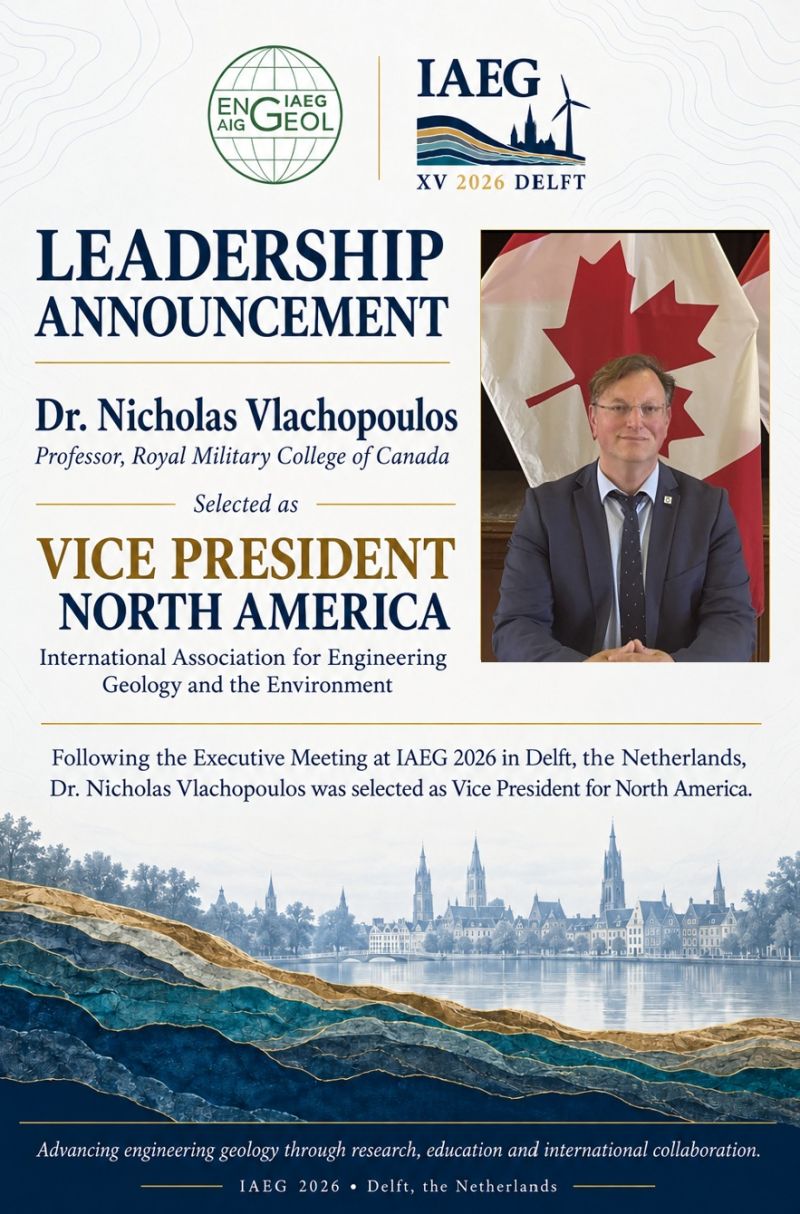
I am honoured to have been selected as IAEG Vice President for North America at IAEG 2026 in Delft.
My sincere gratitude to the CGS – The Canadian Geotechnical Society / La Société canadienne de géotechnique (CGS) for their trust and support of my nomination, and to the International Association for Engineering Geology and the Environment (IAEG) Executive for their confidence. Thank you also to the XV IAEG 2026 World Congress Organizing Committee for creating such a valuable opportunity to exchange ideas and reconnect with colleagues.
I look forward to working with the new Executive and our national groups to strengthen collaboration across North America, connect research with practice, and create opportunities for students and early-career professionals. It is a privilege to serve a community that has been an important part of my professional journey. The journey continues…
Kingston brought together national defence leaders to discuss military readiness, national priorities and industry collaboration.
The sold-out, 2026 Kingston Defence and Security Forum welcomed over 150 industry representatives, serving and retired senior military leaders, government officials and academic institutions to explore the future of Canada’s defence readiness, with discussions focused on modernization, procurement, personnel and mobilization.
Kingston Economic Development was proud to partner with the Royal Kingston United Services Institute (RKUSI) to host the 2nd Annual Defence and Security Forum: RACE to Readiness – Revitalization of the Canadian Armed Forces
The event featured keynote addresses from:
- Lieutenant-General Mike Wright, Commander of the Canadian Army
- Lieutenant-General Jamie Speiser-Blanchet, Commander of the Royal Canadian Air Force
- Major General Erick Simoneau, Chief of Military Personnel
- General (Ret’d) Walt Natynczyk
- General (Ret’d) Tom Lawson
Defence procurement was a key focus of the forum, with a panel featuring Patrick Kelly, Director General at the Defence Investment Agency, Troy Crosby, former Assistant Deputy Minister (Materiel), and BGen (Ret’d) Ross Ermel. The discussion was led by Stefanie Von Hlatky, Queen’s University and provided valuable perspectives on Canada’s evolving procurement priorities, the need to accelerate defence investments and opportunities to strengthen Canadian industrial capacity.
Kingston is at the heart of Canada’s defence and dual-use ecosystem, where military end users, industry, research and innovation intersect in one city. The diversity of participants at the forum demonstrated the value of this connected ecosystem, where understanding operational needs, connecting research and innovation with industry capabilities, and fostering collaboration create opportunities for commercialization, investment and business growth.
For defence and dual-use companies looking to establish or expand operations, Kingston combines these strengths with tangible investment advantages, including available serviced business park lands, strategic access to markets, and 100% waived development charges for industrial development. These advantages, supported by a city that is proud to serve Canada, makes Kingston a competitive location for defence investment.
Thank you to the event sponsors, MREL Group of Companies, MetalCraft Marine, Calian, Babcock Canada, Commissionaires, Queen’s University’s Centre for International and Defence Policy (CIDP), and the Conference of Defence Associations (CDA) and Conference of Defence Associations Institute (CDAI), for their generous support.
We also thank our partners at RKUSI, our speakers, panellists and attendees for contributing to a day of meaningful discussions and connections supporting Canada’s evolving defence priorities and Kingston’s role in the defence and security sector.
To learn more about Kingston’s defence assets, visit: investkingston.ca/defence
(Kingston City) Council calls on federal government restore both English and French as languages of work at the Royal Military College
Mayor-elect Conny Glenn brought the motion before Council at their last meeting
Council is calling on the federal government to preserve bilingualism at the Royal Military College of Canada. A motion brought forward by mayor-elect Conny Glenn asks the federal government to restore both English and French as the languages of work at RMC.
The motion comes in response to changes to the Canadian Armed Forces’ language-of-work policy, introduced in January 2025. The changes removed the English, French and bilingual designations for military units, instead determining their language of work based on the region where they are located. Kingston is currently considered an English-only region.
The Minister of National Defence has already ordered a review of language-of-work designations in Canadian Armed Forces units following widespread criticism, but no fixed timeline for the completion of the review has been announced.
The motion was unanimously supported by Council, and the resolution was sent to federal and provincial officials, RMC’s commandant, and francophone organizations.

