Article written by: LCol Paul Johnson, PhD – Adjunct Professor, History Department, RMC
You may have heard the news about the new ROTP program at Royal Roads University (RRU). And if so, you may have been trying to figure out exactly what this means. It is not the re-opening of the third military college, but it is a new and exciting program – one that is intended to serve as a model to spread to other universities across the country.
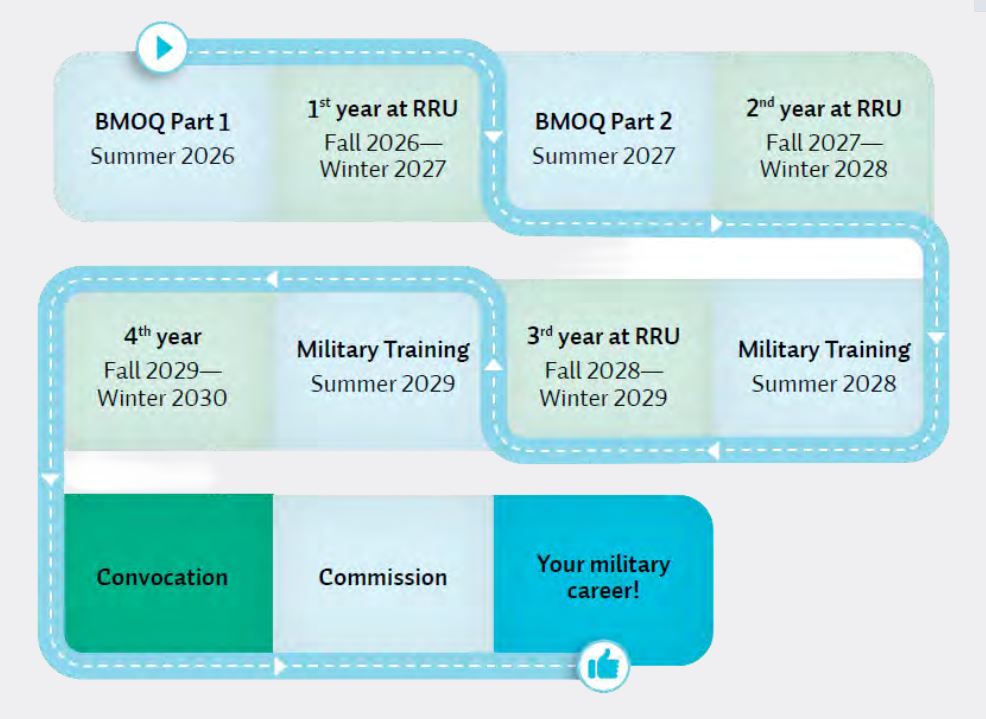
The new program is already underway. Classes started in September. It is in essence an enhanced version of the long-standing ROTP (CivU) model with which e-Veritas readers are likely familiar. Candidates are enrolled in the ROTP and attend civilian university to obtain their undergraduate degree over four years, doing military training during their summers. A similar civilian university pathway exists for the University Training Plan for Non-Commissioned Members (UTPNCM). The difference between the classic ROTP/UTPNCM-CivU model and the new RRU program is how the Naval and Officer Cadets (N/OCdts) are supported during the academic year. Essentially, what is being called the Enhanced Pathway (EP) the N/OCdts will wear uniforms – that is CAF not CMC uniforms – to class, benefit from a small Regular Force (RegF) support staff in location, and undertake some Professional Development (PD) during the academic year. There is a military staff already in place at RRU that make up the CDA HQ Det Victoria, established for a Captain/Lieutenant(N) and a senior NCO or PO, with a clerk as well as a PSP civilian sports and fitness coordinator. There are 42 N/OCdts in the inaugural cohort, with intake intended to be some 40 students annually, which will thus eventually total some 160 N/OCdts over their four years. The CDA HQ Det will grow proportionally to support the growing number of students.
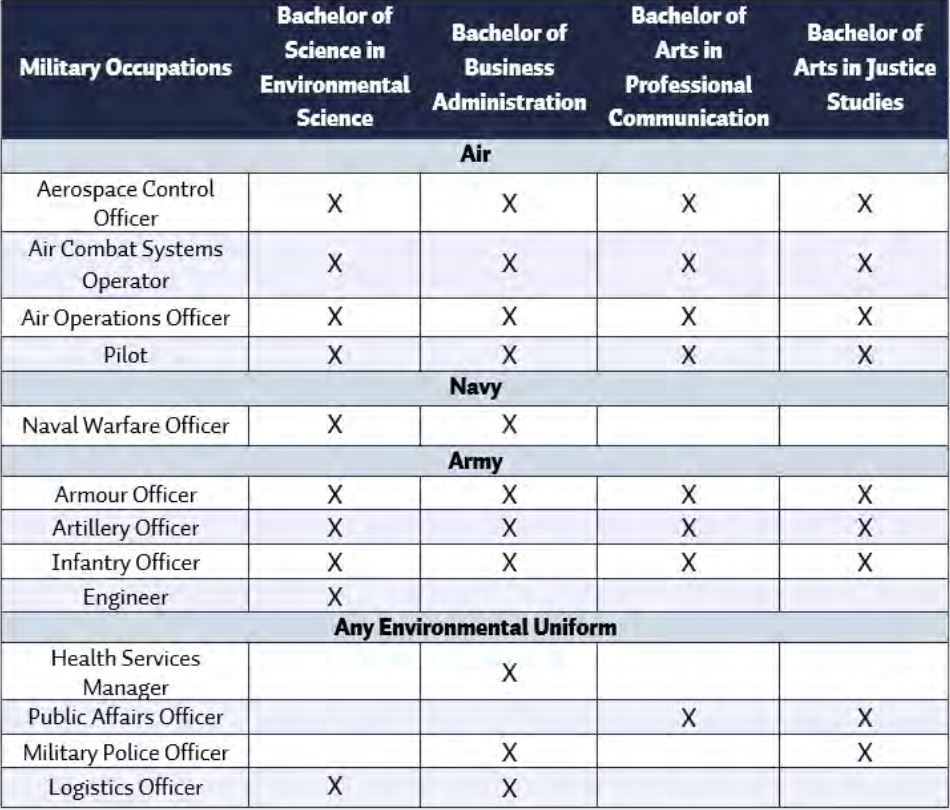
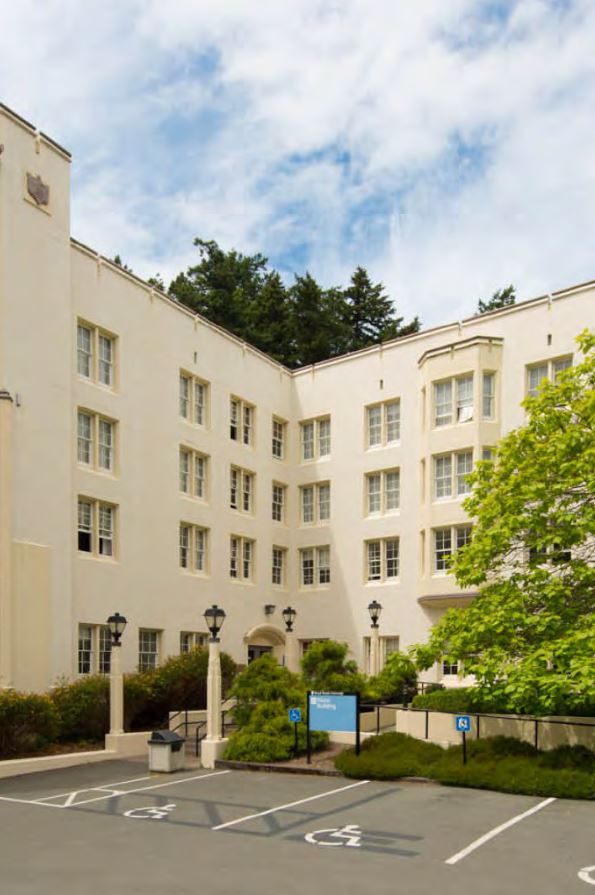
The degree programs on offer at RRU include a BA in communications, justice studies, and business administration, as well as a BSc in environmental science, which are open to many military occupations in all environments (see diagram). For the EP N/OCdts (which includes both ROTP and UTPNCM), the degree requirements will also include not just their RRU classes, but also some military courses including fitness/health and second language instruction. Accommodations are in the old Nixon block, where generations of Roadents lived throughout the life of the College, and which has been a student residence since RRU opened. 14458 Dr Harry Kowal, Principal Emeritus of RMC Kingston, has been a key adviser on this new program, and as he said, “The goal of this initiative is for N/OCdts attending civilian university to gain the most from their experience so that they are best prepared for their responsibilities as junior officers. It has been very satisfying to be part of this initiative and to see it come to fruition and with such great support.”
The military training will also include second language training, a sports and fitness program, as well as elements identified by the Integrated Officer Development Program (IODP), including general military training and professional development sessions. The Alumni Association Branch in Victoria (the Vancouver Island Ex-Cadet Club) has been engaged to source members to provide some of the lectures on Leadership and Ethics and other professional development topics. 18254 MGen(retd) Mike St-Louis and his wife Capt(retd) 18494 Julie Low, now both (semi)retired in Victoria, are two of the alumni in the area excited to give back by providing some of this training to the N/OCdts. As they put it, “It’s an honour to pass on our knowledge and experience in leadership, especially together as a dual military couple who had very different experiences in the military. For Julie, it’s a full circle moment, having started at RRMC in 1988.”
When fully up to speed and running, this should provide for a program of approximately 160 N/OCdts generating roughly 40 new junior officers annually. Furthermore, the plan is that this model (or versions of it) will be replicated at other selected other universities across the country, supporting and increasing new officer production as the CAF builds up its strength, and also strengthening ties between the military and civilian communities. So while this is not the rebirth of the old RRMC, in a way it could be viewed as something like the old civilian university Canadian Officer Training Corps (COTC) that used to exist from 1912 to unification in 1968 and produced individuals like Generals Harry Crearar, and Charles Belzile, journalists Peter C. Newman and Pierre Berton, and even former Prime Minister Pierre Trudeau.