
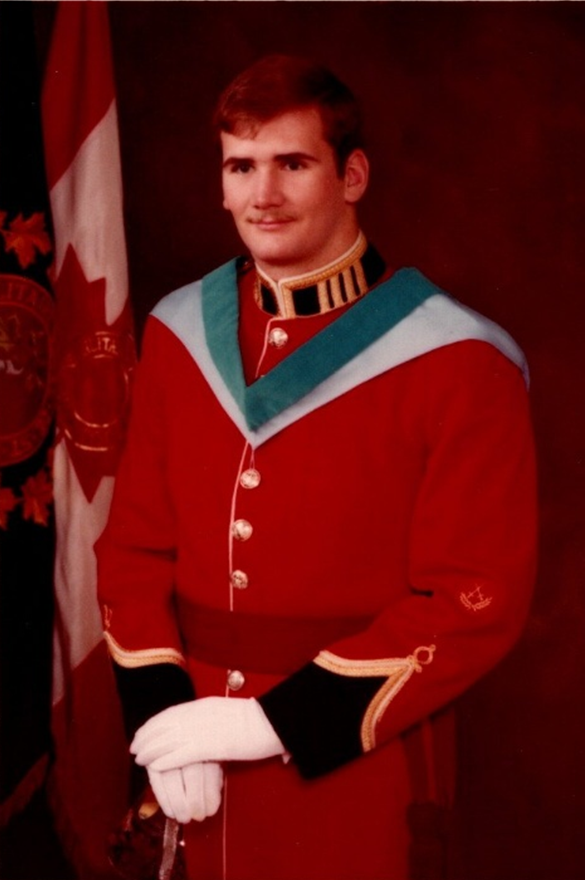
Colonel (ret’d) Gregory D. Burt, OMM, MSM, CD is a graduate of the Collège Militaire Royal de Saint-Jean in 1985 and served 35 years in the Canadian Armed Forces. An infantry officer of the Royal 22e Régiment, he held command and senior leadership appointments in Canada and overseas, including operations in Cyprus, Somalia, the former Yugoslavia, Bosnia, and Afghanistan. He became the first Commander of the Canadian Forces Intelligence Group before retiring in 2015. Now an Integral Master Coach™ and consultant, he supports leaders navigating complexity and organizational change, drawing on four decades of operational, strategic, and institutional experience.
A reflective leadership essay for Cadets by Colonel (ret’d) Gregory D. Burt, OMM, MSM, CD
Walk the hallways of any Canadian military college — Saint-Jean or Kingston — and you walk through time itself. Faces look down from every wall: cadets in crisp scarlets and pressed DEUs, lined up in mess halls, gymnasium corridors, dormitory floors, headquarters buildings, and classrooms. Hundreds of young men and women frozen in time — their stories compressed into a single frame.
You pass them every day, often without noticing.
I walked by them too.
Most days I was in a hurry — late for class, overwhelmed by competing priorities, trying to become the officer the College demanded. And I rarely stopped long enough to truly look at the faces staring back at me.
Only much later did I understand what I had missed.
Those photos are not decorations.
They are mirrors.
The next time you walk by them — slow down. Look closely. Really look.
Those cadets were once exactly where you are now: proud, hopeful, sometimes anxious, often tired, occasionally silly, always striving. They laughed in the same messes, played on the same sports fields, marched on the same parade squares, and endured the same inspections. Their eyes hold the unmistakable spark of someone standing at the beginning of something that matters.
Many of them are gone now — time has claimed many.
But in those photos, they are forever on the cusp of a journey they could not yet imagine.
And that is the quiet truth the College carries in its walls: leadership is fleeting. You only get a limited window to become the leader you intend to be. Not someday. Not “after your first posting.” Not when you feel ready.
Now.
Because years from today, someone will pause in front of your class photo and wonder who you became.
This letter is written with that future moment in mind. From one ex-cadet to another — from someone who has marched the same squares, worn the same stress, carried the same pride — these are the lessons shaped by four decades of service, offered in the hope that they ease the path ahead for you.
1. The College Prepared You More Than You Realize
It may not feel like it now.
You may feel tired, stretched, humbled, or uncertain. Every cadet does at some point. But military college has already shaped you in deeper ways than you can yet appreciate.
You learned teamwork by living it — not as a concept, but as a necessity. Your peers became your first platoon. You depended on each other through exhaustion, deadlines, inspections, and pressure. You discovered early that no mission succeeds alone and no leader succeeds without a team.
You learned to prioritize when everything felt urgent. Every day at the College forced you to choose: what matters now, what can wait, what can be dropped. You learned that when everything is a priority, nothing is.
You learned to lead and to follow.
You have carried rank and surrendered rank. You have given orders and received them. You learned humility in following and grace in leading. You learned that leadership is not about authority — it is about responsibility.
You learned endurance and grit.
You were cold, tired, hungry, stressed, and overwhelmed — and still found a way. That is not hardship. That is seasoning. Leadership often begins where comfort ends.
You learned the beginnings of self-awareness.
Your triggers, your strengths, your blind spots — all of them began to reveal themselves here. You began the lifelong work of learning how you show up under stress, under pressure, under scrutiny.
And you formed relationships you cannot yet grasp the value of.
Your classmates — and the cadets a year or two ahead or behind — will reappear throughout your career in unexpected ways: on operations, in staff jobs, in headquarters, in commands. These are the roots of a lifelong network of trust.
Whether you noticed it or not, every hallway you walked down — lined with those class photos — whispered something to you every day:
You are part of something larger than yourself.
A lineage, a tradition, a responsibility.
The College gave you the tools.
The unit will ask you to hone them.
2. When You Arrive at Your First Unit, the Real Test Begins
Everything you learned at the College matters.
But leadership becomes real the day you first walk into a unit wearing the King’s commission.
That is where theory becomes practice.
Where the ideas you absorbed here meet the expectations of real soldiers, real missions, real consequences.
Nothing I write here will remove the learning curves ahead — nor should it.
But these guiding principles will help you navigate them with clarity and confidence.
3. Show Up Grounded — Humility, Humanity, Presence
Humility is your strongest asset on Day One.
You do not need to prove how smart you are.
You do not need to demonstrate competence in every area.
You certainly do not need to pretend.
Your troops will see through inauthenticity instantly.
What they want is presence — a grounded leader who listens, observes, and takes responsibility seriously.
Humility builds credibility.
Arrogance destroys it.
Remember the timeless truth:
“If you’re too important to pick up pucks, you’re too important to lead.”
Ground yourself in respect: for the role, for the people, for the craft.
That simple posture will open more doors than knowledge ever will.
4. Show Up Authentic — Real Leadership, No Corners Cut
Field Marshal The Right Honourable Viscount Slim said it best:
“Leadership is intensely personal… It’s just plain you.”
Your unit does not want a performance.
They want a leader who is real.
Authenticity earns trust — and trust is the currency of leadership.
Cutting corners erodes credibility.
Pretending erodes confidence.
Faking erodes respect.
Lead with your values, not someone else’s expectations.
Your soldiers will follow the real you — not the masked version.
5. Show Up Accountable — Responsibility Over Rank
Your rank gives you authority.
Your actions give you credibility.
Accountability is not a rule — it is a posture.
It is the quiet discipline of doing what must be done, especially when no one is watching.
It is the understanding that:
Respect isn’t pinned on.
It’s earned, daily, through responsibility.
You will make decisions some people disagree with.
You will be pressured to please everyone.
You will not succeed.
Your role is not to be popular.
Your role is to be fair.
A leader who avoids responsibility to maintain approval will lose both.
6.Show Up Curious — Learn Fast, Ask Smart, Stay Adaptable
This pillar will save you more than any other.
The officers who struggle early are not the ones who lack intelligence — they are the ones who lack curiosity.
Curiosity is courage in another form:
The courage to ask, to admit you don’t know, to learn publicly, to adapt quickly.
Assumptions are invisible tripwires.
Questions dissolve them.
You can’t see the whole battlefield from your desk.
Presence reveals it. Walk the unit lines early and often.
To understand your people and your environment, you must go see for yourself.
Slow is smooth, smooth is fast.
Understanding before action prevents the worst mistakes.
Curiosity strengthens competence, confidence, and credibility.
It keeps you from becoming rigid, defensive, or blind.
A junior officer who learns quickly becomes valuable quickly.
Curiosity is learning agility — the skill that keeps you relevant your entire career.
7. Your Warrant Officers and Sergeants Will Be Your First Teachers
This may be the most important practical advice you will ever receive.
Your NCOs do not expect you to know everything.
But they absolutely expect you to be willing to learn.
They are experts in the craft of soldiering.
They understand:
- the culture
- the rhythms
- the unwritten rules
- the real expectations
- the difference between what should happen and what actually happens
Observe how they influence a platoon.
How they sense morale.
How they deliver hard messages.
How they protect the standard while caring for their people.
You have the commission.
They have the craft.
Together, you form the command team.
Learn from them.
Listen to them.
Trust them.
You will become a far better leader because of them.
8. You Are Part of a Legacy Larger Than Yourself
Those photos on the walls — the ones you walk past every day — carry a message that becomes clearer with age:
Leadership is not about the era you inherit.
It is about the responsibility you accept.
The classes of 1914 and 1939 — like many others — marched straight into global uncertainty Their world changed almost overnight.
Both graduated on the cusp of world war — they stepped from the parade square to the battlefield.
Both classes carried a mix of duty, uncertainty, and youthful confidence into conflicts whose scale they could not imagine four years earlier.
They did not choose the moment. But they chose the standard to which they would rise.
You cannot choose the world you will graduate into.
But you can choose the leader you become.
When the time comes — and it will — your soldiers will look to you for steadiness, clarity, decisiveness, and humanity.
Rise to meet it.
9. One Day, Someone Will Look at Your Class Photo
Long after you have moved on, long after your uniforms have faded and your postings have multiplied, someone will stop in front of your class photo. A young cadet. A future officer. Someone standing where you once stood.
And they will wonder what became of you.
They won’t ask how many medals your year earned.
They won’t ask what equipment you trained on.
They won’t ask how many followers you had online.
They will ask the questions that matter:
- What did you stand for?
- How did you lead when it counted?
- Whose trust did you earn?
- Whose life did you make better through your leadership?
Because leadership is not about the symbols you wear — it is about the responsibility you accept.
General Jean-Victor Allard, one of Canada’s most respected Chiefs of Defence Staff, said it best:
“Officers are not followed because of their rank, but because they fully assume the responsibility of leadership, earning the respect of those they lead.”
This truth will meet you the moment you arrive at your first unit.
Your soldiers will read your character long before they read your résumé.
Legacy isn’t a plaque on a wall —
Legacy is the echo your leadership leaves in the lives of others.
Make it one worth remembering.
10. A Final Word: “Carpe diem” – Seize the Moment
“Carpe diem” is often misunderstood.
It is not a call to chase excitement or personal glory.
It is a call to seize your duty.
To step fully into the privilege of leading Canada’s sons and daughters.
To answer the weight of the King’s commission with humility, courage, and presence.
And part of that duty — perhaps the most overlooked part — is keeping communication alive.
General Colin Powell once warned:
“Leadership is solving problems. The day soldiers stop bringing you their problems is the day you have stopped leading them.”
Your troops’ silence is not a sign of success — It’s a Warning
In the Royal 22e Régiment, my NCOs taught me a lesson I never forgot:
« En autant que ça bougonne, ça va bien. C’est quand ça ne bougonne plus qu’on a un problème. »
“As long as they’re grumbling, things are fine — it’s when they stop grumbling that you have a problem.”
Grumbling means they are still engaged.
Still invested.
Still trusting you enough to speak.
Silence means they’ve retreated —
and a leader must never let their people feel alone.
So talk with them.
Listen to them.
Learn from them.
And remember:
Your job is not to command perfect soldiers.
Your job is to build a climate where good soldiers can thrive.
This is your moment.
Don’t let it slip unnoticed.
Make your class photo one that future cadets will look at and whisper:
“That’s the kind of officer I want to become.”
Not for glory, but for service.
Truth – Duty – Valour / Vérité – Devoir – Vaillance
-
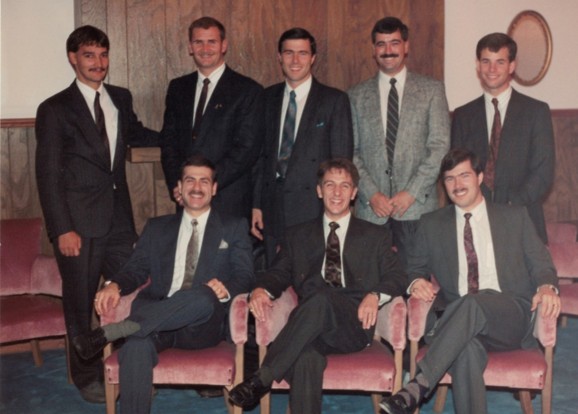
- CMR 1983
-
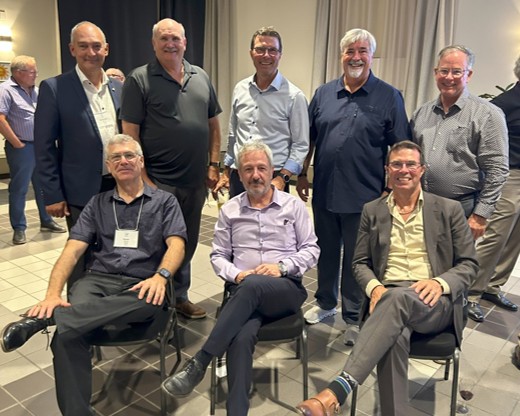
- CMR 2025
2 Comments
Leave a Comment


très bien Greg et surtout très inspirant
Merc MF!