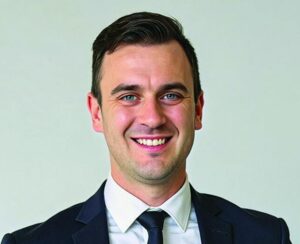
 Phill Perron (RMC 2012) is a retired Royal Canadian Air Force Logistics Officer, having served nearly a decade with distinction. A proud alumnus of 8 Squadron, Phill comes from a multi-generational Canadian Armed Forces family. His father, Russell Perron (RMC 1993) is a UTPNCM RMC graduate from Otter Squadron who served 21 years in uniform, followed by two decades as a civilian in the Department of National Defence.
Phill currently serves as Vice President of Project Development and Delivery at The Crossing Group, a Canadian-owned trenchless construction corporation. He resides in New York with his family.
Leadership is often discussed but rarely taught. In today’s corporate landscape, especially within the echo chamber of LinkedIn, it can feel like executive leadership coaches are everywhere. Yet in my lived experience, few professionals have received formal training in leadership itself. We teach and train management, which is undeniably important, but leadership and management are not the same.
One of the greatest advantages I’ve carried into the private sector is having deliberate, structured leadership training. Not only through my time as an officer in the Canadian Armed Forces, where leadership development is intentional and embedded in every stage of progression, but also through my education at the Royal Military College, an institution with over a century of experience in shaping leaders.
When I transitioned out of the military and into the world of trenchless construction, I had mentally prepared to leave many of my military tools behind. I had seen veterans thrive in the private sector, but in my own early transition, I quickly realized how little I understood about how business truly operates. Real money and real decisions came fast, and they came hard.
I made mistakes and learned quickly. Our business was highly technical, figuratively and literally worlds apart from the Air Force. I found myself immersed in horizontal directional drilling (HDD), a specialized method of trenchless construction. HDD involves using steerable drill pipe to bore horizontally beneath obstacles like roads, rivers, and environmentally sensitive areas. Think of it as downhole drilling, repurposed to cross features rather than extract resources.
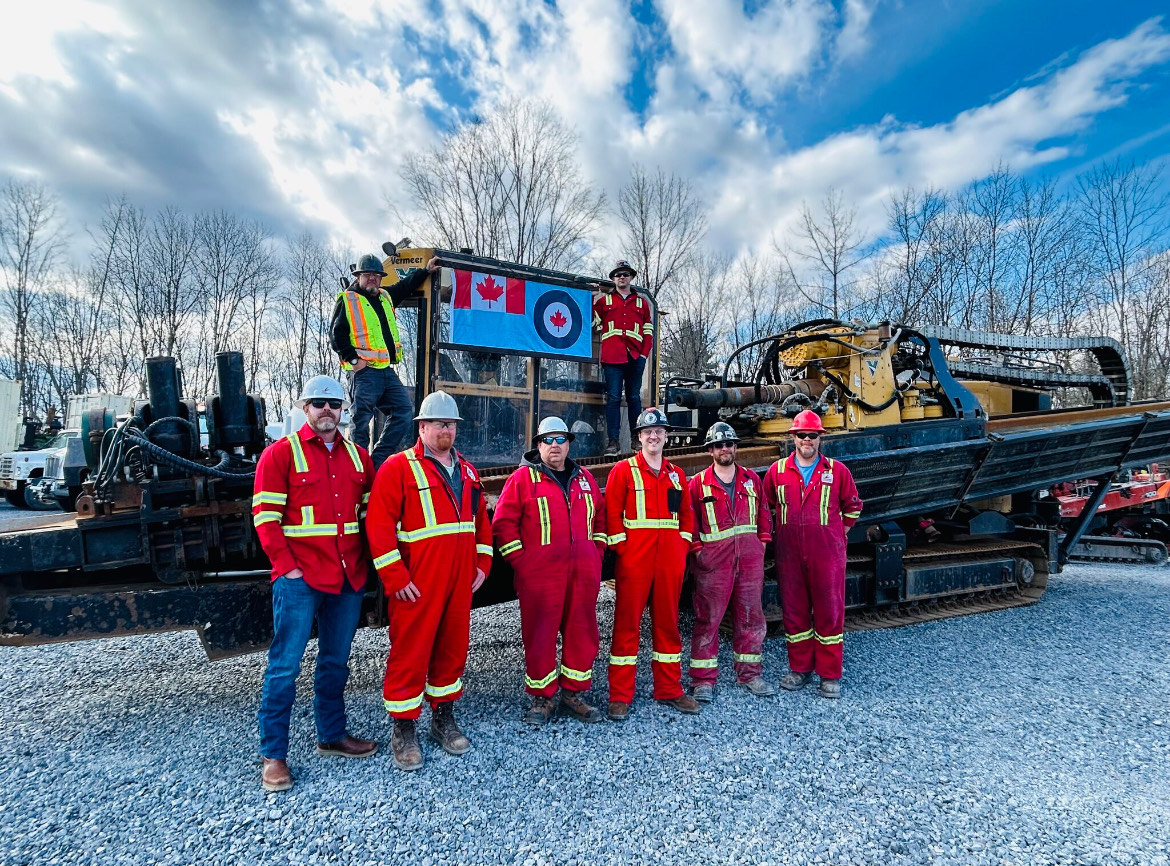
As infrastructure becomes more complex and congested, traditional open-cut trenching becomes increasingly difficult. HDD is one of several advanced tools used to navigate these challenges. In practice, it’s a crew of 6 to 10 highly skilled professionals operating multi-million-dollar spreads of equipment across Canada and the United States.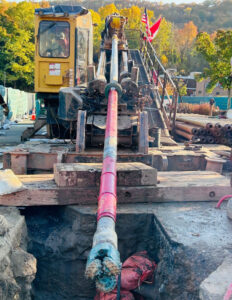
Despite the technical complexity and unfamiliar terrain, I began to feel something surprisingly familiar. In 2021, I relocated to the United States and assumed leadership of one of our business units. By late 2023, we were awarded a substantial project in New York: the Champlain Hudson Power Express (CHPE), a high-voltage direct current (HVDC) transmission line spanning approximately 339 miles (546 km) from the U.S.-Canada border to Astoria, Queens in New York City.
It was the largest trenchless construction project in U.S. history, involving hundreds of crossings, and we were tasked with building more than half of them.
For Crossing Group, this marked the most significant consolidated deployment of personnel and equipment in our history. Multiple divisions, each with distinct capabilities and cultures, were now operating under a single banner. It was something we had never done before. From my Royal Canadian Air Force days, I likened it to joint operations in a coalition environment, different nations, units, and doctrines, all working toward a common goal.
As we moved closer to execution, I realized this wasn’t just a technical challenge. Two constraints stood out: logistics and leadership. We were deploying rigs into a concentrated area of responsibility and mobilizing a diverse workforce of Canadians and Americans, each from different provinces and states, each from different divisions, with unique skill sets, biases, and operational philosophies.
It was then that I looked back to my time in uniform and recognized that the leadership frameworks and tools I had learned, both through service and my studies at RMC, were exactly what I needed to succeed.
I want to go through a few of these in the hope that others can see that the skills that you’ve learned or are learning, are valuable!
Command Teams: Trust Over Titles
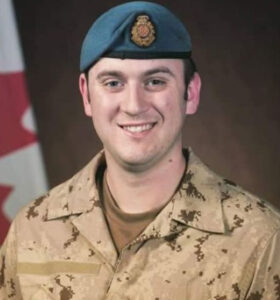 The command team model isn’t unique to the military. It exists everywhere, in business, healthcare, education, but what is unique, and something I believe the private sector could benefit from, is how deliberately and openly it’s discussed in the military. From my earliest days in the RCAF, and throughout my family’s long military history, I was constantly mentored on the dynamics of command teams.
This model is especially impactful for junior officers: pairing a young, broadly trained leader with a seasoned, technically proficient non-commissioned member. My first posting to 8 Wing Supply was as the Material Controls Officer (Technical) at 10 Hangar. I was a 21-year-old Second Lieutenant, and I was paired with a sergeant who had nearly 40 years of service. She was sharp, intense, and firm. The trust and respect we built quickly became foundational to my understanding of leadership, the value of an effective command team, and to my career.
So when I sat down with my Operations Team, our Vice President of Operations, two General Field Superintendents, and key Rig Managers. I told them plainly: to build something of this scale, we would need to trust each other. I wasn’t a technical expert like they were. I was a project leader. And for this to work, we had to understand and respect each other’s value.
I explained the military model: the VP of Operations was my “Chief,” the General Superintendents were “MWOs,” and the Rig Managers were “Warrants.” I laid out what that meant, how we support each other, how we communicate, and how we lead. I expected pushback. None of them had military experience, and I’ve often seen attempts to inject military structure into civilian environments fall flat. Surprisingly, they took too it well.
A command team isn’t just an org chart. It’s not about stripes or titles, it’s about aligned purpose, clear communication, and mutual respect between those who lead and those who execute. In the military, the stakes are life and death. In the civilian world, the stakes are livelihoods. That distinction matters, but the principle remains the same: whether you’re conducting high-risk air ops in combat zones or crossing a river with a million-dollar bore in progress, people need to know who’s making the call, who’s backing them up, and who’s watching the blind spots.
The private sector often emphasizes hierarchy but overlooks cohesion. What RMC and the Armed Forces taught me that authority alone isn’t enough, trust is what holds a command team together under pressure. When leaders and technical experts understand and support each other’s roles, when disagreements are surfaced with honesty and resolved with clarity, you unlock something greater than command: you create confidence. Not just in the plan, but in each other.
And in this industry and others, where risk, complexity, and consequence are always in play, that confidence is everything.
Mission Beyond Profit
I’ve never fully wrapped my head around the sheer volume of books, papers, and speeches dedicated to the importance of understanding the mission. From Simon Sinek’s Start With Why, to Patrick Lencioni’s The Advantage, to Jocko Willink’s Extreme Ownership, the message is clear: knowing the mission matters. These works offer frameworks and tools to define and communicate purpose. Yet in my experience, this remains one of the most glaring shortfalls in the private sector.
Mission statements are often vague, or default to “do what feels right” or “make money.” I understand that profitability is the primary KPI, and rightly so. It’s a clear, measurable indicator of success. Coming from the Armed Forces, where success metrics were sometimes ambiguous or politically shaped, I welcomed the clarity of profit.
But profit alone isn’t enough. People need more than “make money.” They need The why.
In the military, we start with the basics: operational orders, mission statements, and commander’s intent. I vividly remember training exercises where we had to write tiered intents, Commander’s Intent, Supreme Command’s Intent, One-Up and Two-Up Intent, followed by a mission statement. Everyone failed the first time. The mission wasn’t clear enough. The statement didn’t reflect the intent. You’re tired, hungry, frustrated, but it’s drilled into you.
Because in the military, the “why” is usually straightforward: secure the town, win hearts and minds, establish a safe operating environment, insert forces to enable operations.
In the private sector, the mission is often more ambiguous, which makes clarity even more critical. We can’t just say “be safe,” “do your job,” or “make money.” We need to define the purpose behind the work, what success looks like, why it matters, and how each person contributes to it.
This project unfolded over nearly 18 months. At its peak, I had nearly 200 men and women, from Canada and the United States, working far from home. In many ways, it felt like a deployment. We were away from what we knew, working together on something unfamiliar.
At the outset, I underestimated the value of a mission statement. We mobilized quickly, overcame early challenges, and found success. But as the adrenaline of “roto zero” wore off and we transitioned into “roto one” and “roto two,” fatigue set in. Mistakes started to creep in. We felt it in the command team. We needed something to galvanize the crews.
Over Christmas, during a brief operational pause, I sat down and wrote a mission statement. I printed it on large plastic boards and, on the first day back, gathered the entire field operations team. I gave them the why.
It was direct and unapologetic: yes, we were here to make money, but more importantly, we were here to operate safely and inspire confidence in the prime contractor. That confidence would lead to more work. The prime had a reserve of scope to award, and everyone wanted it. I made it clear: we earn that work by being the team they trust.
I also acknowledged my own failure, openly and directly, for not defining the mission sooner. That moment mattered. It wasn’t just about introducing a statement; it was about showing accountability and a commitment to lead better.
It didn’t take immediately. But over the following weeks, the message began to resonate. It came up in safety meetings. Our operational support teams, welders, fuel and water crews, sustainment staff, started referencing it. They were pitching the mission up and down the chain of command.
We expanded our scope significantly. The team succeeded and kept succeeding.
Clarity of mission isn’t a motivational tool; it’s a leadership requirement. That’s one of the first lessons I learned at RMC, and it was reinforced every day I wore the uniform. We were taught to define the mission, write it clearly, understand the commander’s intent, and communicate it up and down the chain.
That discipline wasn’t about bureaucracy; it was about alignment. Because when things go wrong, and they will, clarity of mission is what holds the team together.
The military taught me that ambiguity is the enemy of execution. In the private sector, we often have the luxury, and the risk, of ambiguity. But when people don’t know the why, they default to the how. And that’s not leadership, that’s compliance.
What I’ve seen, both in uniform and on the jobsite, is that mission clarity doesn’t just drive performance, it builds culture. A shared mission transforms a crew into a team. It turns projects into campaigns. And when that mission is real, when people believe in it and see how they fit into it, you don’t have to chase excellence. They bring it.
Culture as a Force Multiplier
The final lesson I want to emphasize is the importance of community and team culture. In my experience, the military is one of the most effective organizations at building teams. Yes, some veterans and alumni may roll their eyes, it’s not always perfect in practice, but the reality is that shared hardship, common language, and forced camaraderie create strong, effective bonds. These bonds lead to better teams.
I left the military in 2017, and many of my closest friends today are still those I served with or trained alongside at RMC. The military taught me, more indirectly than directly, that camaraderie and cooperation are products of kinship. We may not always agree, but that kinship is essential.
In the Armed Forces, it’s easier. Shared hardship is everywhere. We have our own language, customs, and environments, like mess culture, that foster connection. At RMC, that was instilled from day one. You went to the mess not just to eat, but to spend time with your peers.
In the private sector, especially in upstate New York, I quickly realized we needed something to unify our crews. I leaned on what I knew from the service. We had Canadian and American teams, different business units, and a mix of specialties, directional drillers, tunneling foremen, microtunneling engineers. It felt like joint operations in a coalition environment.
We started small: standardizing language, and deploying a framework based on the Joint Task Force Support Component (JTFSC) doctrine from my RCAF days. It gave us a flexible, mission-specific structure with defined operational and tactical support nodes.
Then we gave those nodes names. Camps. Camp Canuck for our Canadian crews. Camp Alice, our southern outpost, named after the industry’s first HDD rig. Camp Perkins, our main base, named in honour of a teammate who had recently passed.
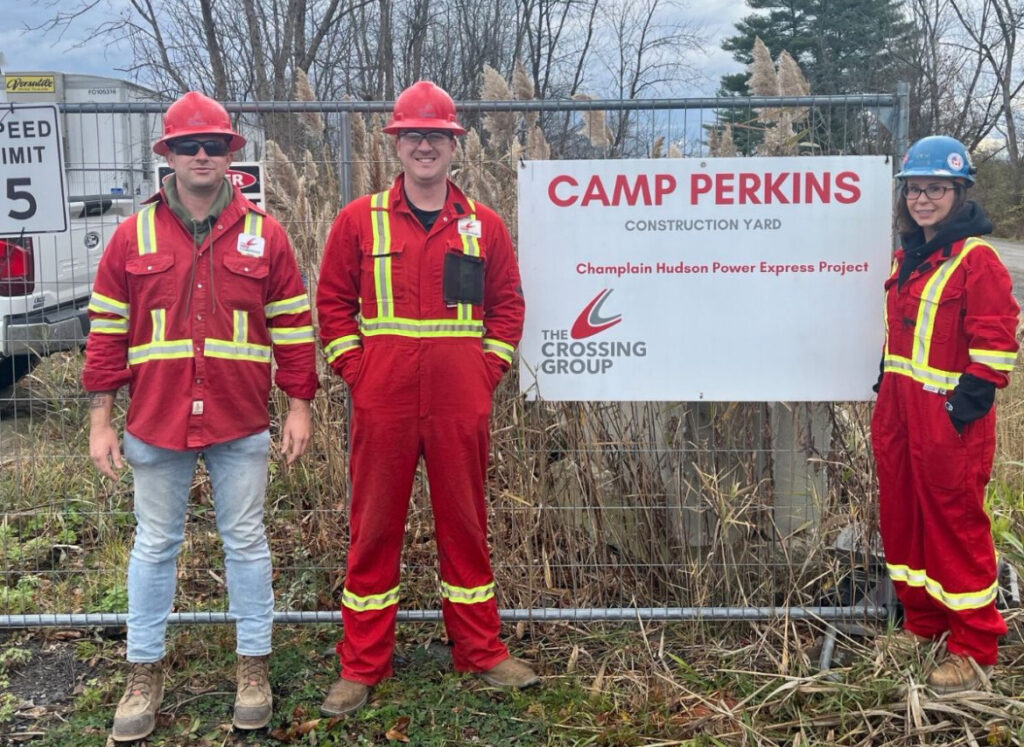
We introduced command team coins for exemplary service, hosted barbecues, and pulled in cooks from Newfoundland, Louisiana, California, and Alberta. We even rolled out stickers and zappers, one for each camp and project milestones. The airman in me couldn’t resist.
None of these things alone build teams. But together, they created a culture of kinship and shared purpose. That connection enabled real change.
As a former logistician, I’ve always been wary of the divide between operations and support: what the construction sectors calls staff vs. craft. In construction, this divide can be costly. HDD rigs are expensive, and downtime between bores; waiting on fuel, water, parts, or personnel, needs to be minimized.
People will make mistakes. What matters is how we respond. The military taught me that when you need support, you get it, without judgment or scorn.
So, I worked to eliminate silos. We created common ground, opportunities for collaboration, and even a semblance of our own mess environment. It brought people together across disciplines, nationalities, and backgrounds. And those bonds, built on shared culture, became the foundation for everything we achieved.
The military taught me that strong teams aren’t built by chance, they’re built through shared experience, clear structure, and a culture of belonging. At RMC and throughout my service, I learned that camaraderie isn’t a byproduct, it’s a leadership responsibility. When people feel part of something bigger than themselves, they show up differently. They own the mission.
In the private sector, that same principle holds. Culture can’t be an afterthought. Whether it was naming camps, handing out coins, or hosting barbecues, we were building something more than just a project, we were building kinship. And in that environment, people backed each other up, broke down silos, and delivered. Because when culture leads, performance follows.
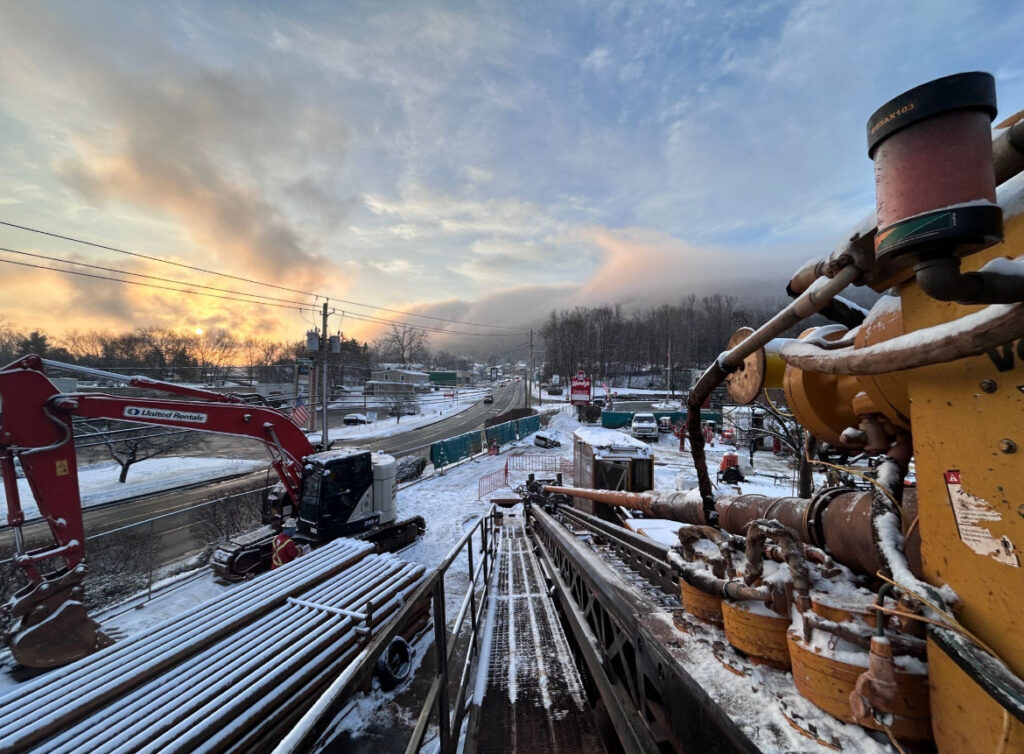
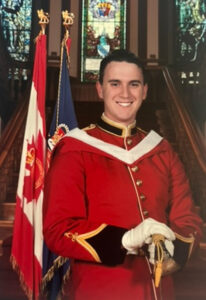 If there’s one takeaway I’d leave with fellow RMC grads and service members, it’s this: don’t underestimate the value of what you’ve learned.
The private sector will challenge you. It’ll ask different questions, measure success differently, and expect outcomes on unfamiliar timelines. But the fundamentals, clarity of mission, strength of team, trust between leaders and doers, those don’t change. In fact, they become even more important when the structure isn’t handed to you.
RMC and the Canadian Armed Forces gave me a foundation in leadership that continues to serve me well. The terminology may be different, orders become scopes, commands become crews, but the core principles endure. Mission clarity, trust-based command teams, and a culture of belonging are not just military ideals. They’re tools that transfer. They’re needed. And they work.
So whether you’re still in uniform or long since hung it up, know this: the skills you built in service aren’t just relevant: they’re an advantage. You don’t need to reinvent yourself to succeed. Sometimes, you just need to translate.
Editors note: Perron was recently named the 2025 Ralston Young Trenchless Achievement Award Winner
“Phill Perron never set out to be one of this year’s two 2025 Ralston Young Trenchless Achievement Award winners, let alone vice president of projects with The Crossing Group in Albany, New York. In fact, the Canadian-born Perron began his professional life as a supply chain operations officer in the Royal Canadian Air Force, after graduating with a Bachelor of Arts from the Royal Military College of Canada and then earning a master’s degree from the University of Hull in the United Kingdom. The NASTT’s Ralston Young Trenchless Achievement Award applauds savvy members under 36 who demonstrated excellence early in their careers by making valuable contributions to the trenchless technology industry, achieving noteworthy professional success and actively participating in NASTT.” Read more here.