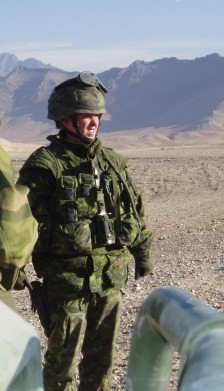
Jennifer Causey grew up in a tiny village on the southwest coast of Newfoundland, in a place where the land meets the sea and communities are woven together more by grit than by roads. Codroy Valley was not the sort of place that promised grand ambition, but it quietly shaped one. From an early age, Jennifer was driven, competitive, structured, and unapologetically herself. She was a tomboy, a rule‑follower, and someone who wanted to be good at whatever she committed to. In hindsight, the Army was not an unlikely destination. It was inevitable.
At seventeen, long before she fully understood what she was stepping into, Jennifer left home in the dark. At 0400 hours, dressed in brand‑new officer clothes and burdened with more confidence than experience, she began a journey that would carry her across the country to Chilliwack, British Columbia, and into the Canadian Army. The trip itself felt like a warning—missed connections, late‑night buses, confusion upon arrival—but she pressed on anyway certain she could handle whatever came next.
And she did.
By 1999, Jennifer had graduated from the Royal Military College of Canada as a fully trained Field Artillery Officer, a Combat Arms role few women occupied at the time. When people asked what that meant, her answer was always simple and unapologetic: I make big guns go bang. Long‑range, indirect fire support. One of the Army’s combat arms. It wasn’t a role she had once dreamed of as a teenager, but it became a defining chapter of her life.
Like many young people, Jennifer didn’t leave high school with a master plan. She thought she might become a teacher. She headed toward university without certainty, only momentum. Then the military offered her a path, structured, challenging, and demanding and once she stepped onto it, she stayed. Inertia is powerful that way. For twenty‑five years, the Army shaped her leadership, her worldview, and her sense of responsibility. It gave her opportunities she knows she would never have found in civilian life, and for that, she remains deeply grateful.
Still, gratitude and fulfillment are not always the same thing.
Jennifer led soldiers early in her career, as most military officers do. As a newly commissioned Second Lieutenant, she was responsible for a platoon of thirty soldiers, their training, well‑being, readiness, and equipment worth more than most people’s homes. She arrived competent and eager, but cautious. She was also one of very few women in her unit, and the second female officer to ever serve there. Blending in was never going to be an option.
She wanted what every junior officer wants: to be good at her job, to earn respect, and to lead well. For months, she second‑guessed herself, hyper‑aware of every decision, every interaction. Then one quiet moment changed everything. A soldier broke down in her office, overwhelmed by personal struggles. Later, when she shared the situation with her Troop Sergeant Major, she admitted she hadn’t seen it coming. His response stayed with her for the rest of her career:
“I’m not surprised, Ma’am. The troops will talk to you. They’re not afraid of you. They can relate to you.”
In that moment, Jennifer was given permission to stop trying to fit an imagined mold and instead lead as herself. It lifted a weight she hadn’t realized she was carrying.
That realization—be yourself—became a cornerstone of her leadership philosophy and a recurring theme in her writing. Years later, as she stepped partially away from the Regular Force and into contract work and reserve service, Jennifer felt a void she couldn’t name. She began writing, first as an outlet, then as a way to reclaim her voice. She had earned the right to contribute to conversations about leadership, communication, and gender integration, but more than that, she needed to reflect.
That reflection became An Army Girl’s Perspective.
Through her blog, Jennifer explores the realities of leadership in a male‑dominated environment, the quiet moments that shape confidence, and the damage caused by well‑intentioned but limiting messages like “you don’t have to be one of the guys.” She challenges assumptions, reframes conversations, and advocates for authenticity, not just for women, but for everyone navigating organizational culture. Her writing is thoughtful, candid, and deeply human, shaped by decades of leading people and learning from them.
Jennifer also draws heavily on lessons from team sports, another constant in her life. To her, leadership is never about the individual it’s about the collective. It’s about effort, accountability, adaptability, and respect. Whether on a field, in a unit, or in a workplace, she believes success is always tied to how well we work with others, especially when conditions are less than ideal.
Now, Jennifer Causey is doing something she didn’t always allow herself to do: she is stepping fully off the path laid out by inertia. She is thinking out loud, sharing her experiences, and inviting others into the conversation. Her story isn’t about having all the answers, it’s about asking better questions, staying true to oneself, and having the courage to reflect.
Through her blog, An Army Girl’s Perspective (https://anarmygirlsperspective.com/) Jennifer invites readers to explore her reflections on leadership, identity, and service and to join the conversation.
This is Jennifer’s story. And through An Army Girl’s Perspective, she’s still writing it.