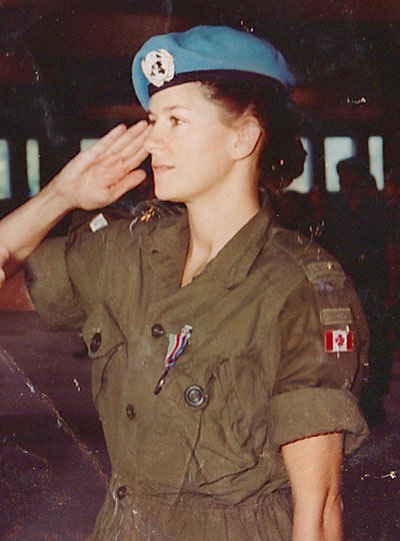
History is often shaped not only by victories on battlefields abroad, but by quieter, harder-fought battles at home. Battles against exclusion, prejudice, and deeply entrenched systems resistant to change. Few lives embody this truth more powerfully than that of Sandra Perron, Canada’s first female infantry officer. Her career in the Canadian Forces was not merely a professional achievement; it was an act of sustained courage that reshaped the institution itself.
Sandra Perron’s journey began long before she donned an infantry uniform. Raised in a military family and inspired as a cadet in her youth, she developed an unwavering desire to serve. Yet when she entered the Canadian military in the late 1970s and early 1980s, women were categorically excluded from combat units. The path she envisioned simply did not exist. Rather than accept those limits, Perron committed herself to breaking them.
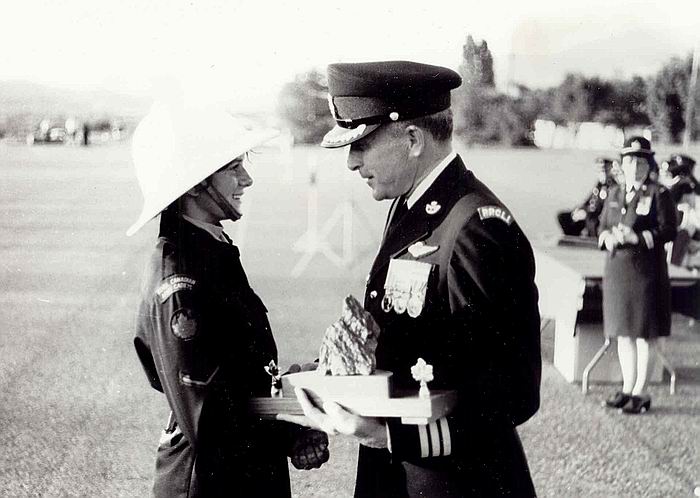
Cadet Sandra Perron receives the Best Rock Climber Trophy at the Vernon Army Cadet Camp in British Columbia, summer 1982.
She joined the Canadian Forces in 1984 through the Regular Officer Training Plan, undertaking basic training at CFB Chilliwack before studying at the University of Winnipeg. From the outset, her service was marked by sacrifice. In the summers, she took logistics courses at CFB Borden. During her first summer in Borden, Perron endured a sexual assault by a senior student, an experience that left her pregnant and compelled her to make an agonizing decision in silence. Fearing blame rather than justice, she did not report the crime. This moment, deeply personal and traumatic, foreshadowed the broader institutional failures she would confront throughout her career.
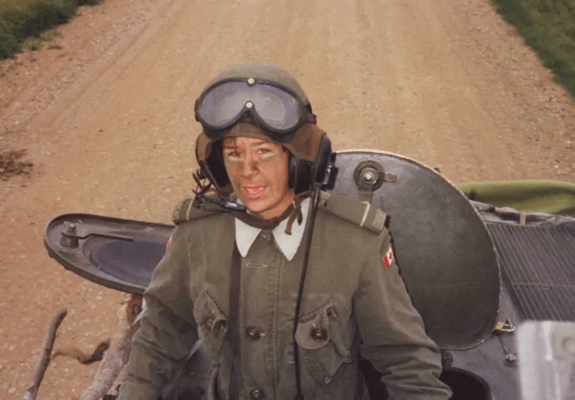
Sandra Perron, takes part in a training exercise in Wainwright in 1987 (Credit: Cormorant Books Inc).
Despite these hardships, Perron persisted. She graduated with a Bachelor of Arts in Economics and was posted to CFB Valcartier as a lieutenant, earning an early promotion to captain in 1989. That same year, when combat arms were finally opened to women, she seized the opportunity she had waited for her entire life: a transfer to the infantry. What followed would test not only her physical endurance, but her moral and emotional resilience.
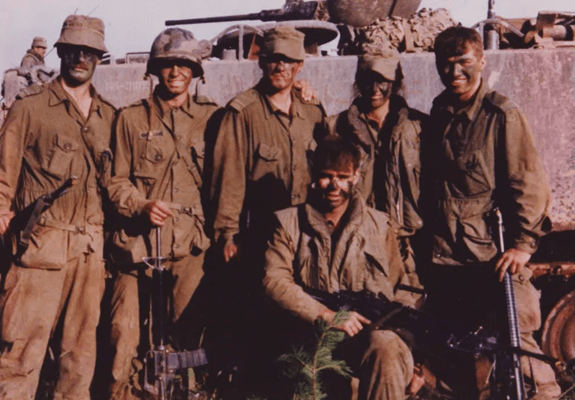
Captain Sandra Perron during Phase 4 Infantry Training at CFB Gagetown with supportive fellow students, summer 1991
Infantry training at CFB Gagetown was brutal not because of the demands of soldiering, but because of the hostility she faced from her peers. Perron was subjected to relentless harassment: her equipment was sabotaged, essential information deliberately withheld, and vulgar comments became routine. During a winter exercise in 1992, she was taken “prisoner,” tied to a tree, beaten, and left exposed in the snow for hours. These were not isolated incidents of misconduct; they were sustained efforts to force her out. Yet she refused to leave.
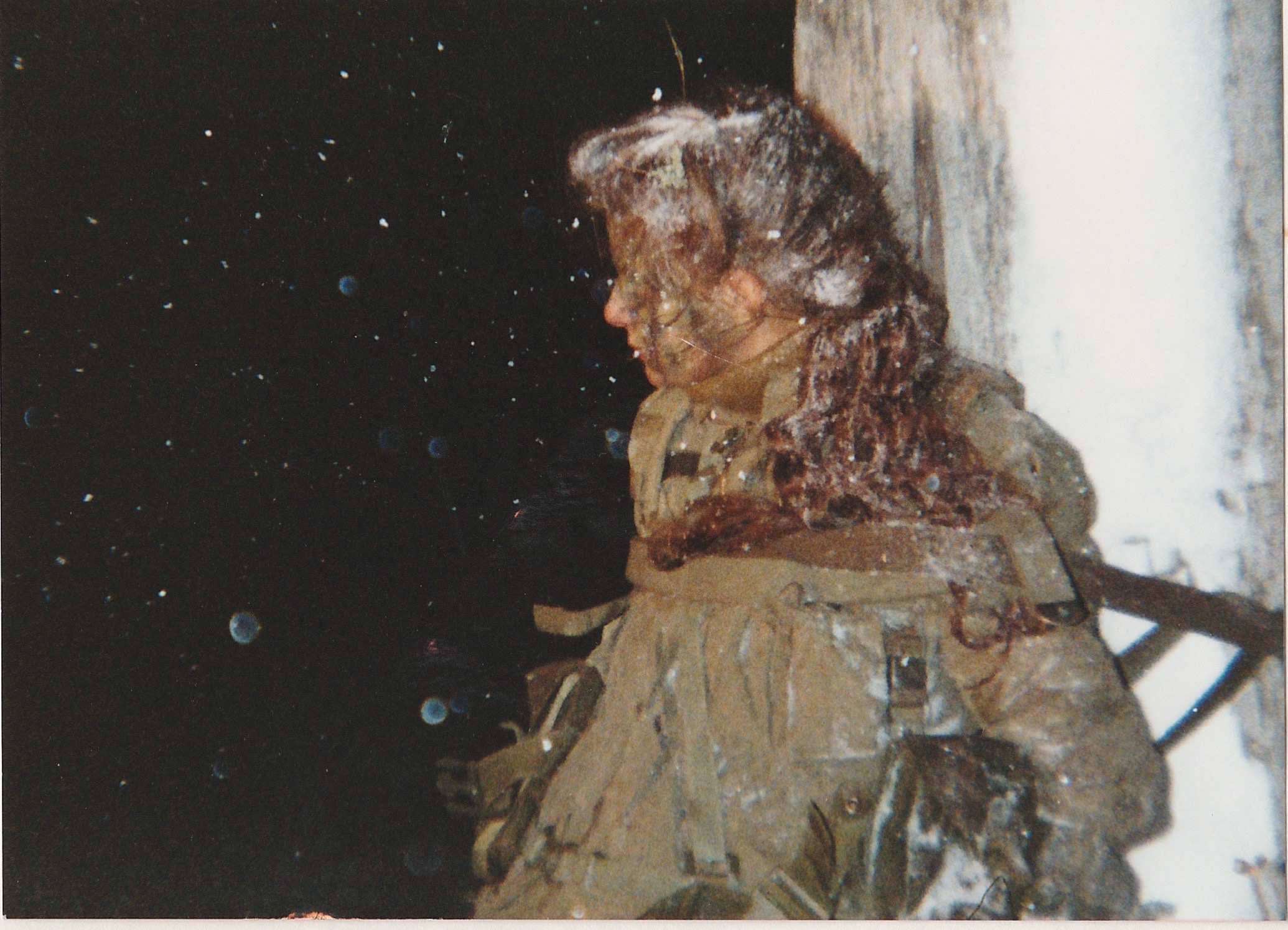
Captain Sandra Perron was tied to a tree during a prisoner of war exercise during Phase 3 Infantry Training at CFB Gagetown, spring 1991. When photographs of this incident appeared on the front page of several newspapers a few years later, they caused universal outrage.
What sustained her was not denial of the injustice, but a profound sense of duty and loyalty to the institution she loved and to the future soldiers who might follow her. Perron completed her infantry training in 1992 and was posted to the Royal 22e Régiment, Canada’s only francophone Regular Force infantry regiment. In doing so, she fulfilled a lifelong dream that had once seemed unattainable.
Her service overseas revealed another dimension of her leadership. Perron deployed twice on peacekeeping missions in the former Yugoslavia, serving in Bosnia in 1993 and later in Croatia. In Bosnia, while assigned as an assistant operations officer, she encountered an abandoned hospital filled with orphaned children. Recognizing both their vulnerability and the moral obligation to act, she helped organize a convoy to deliver food, medical care, and security. Her leadership was not abstract, it was human, compassionate, and decisive.
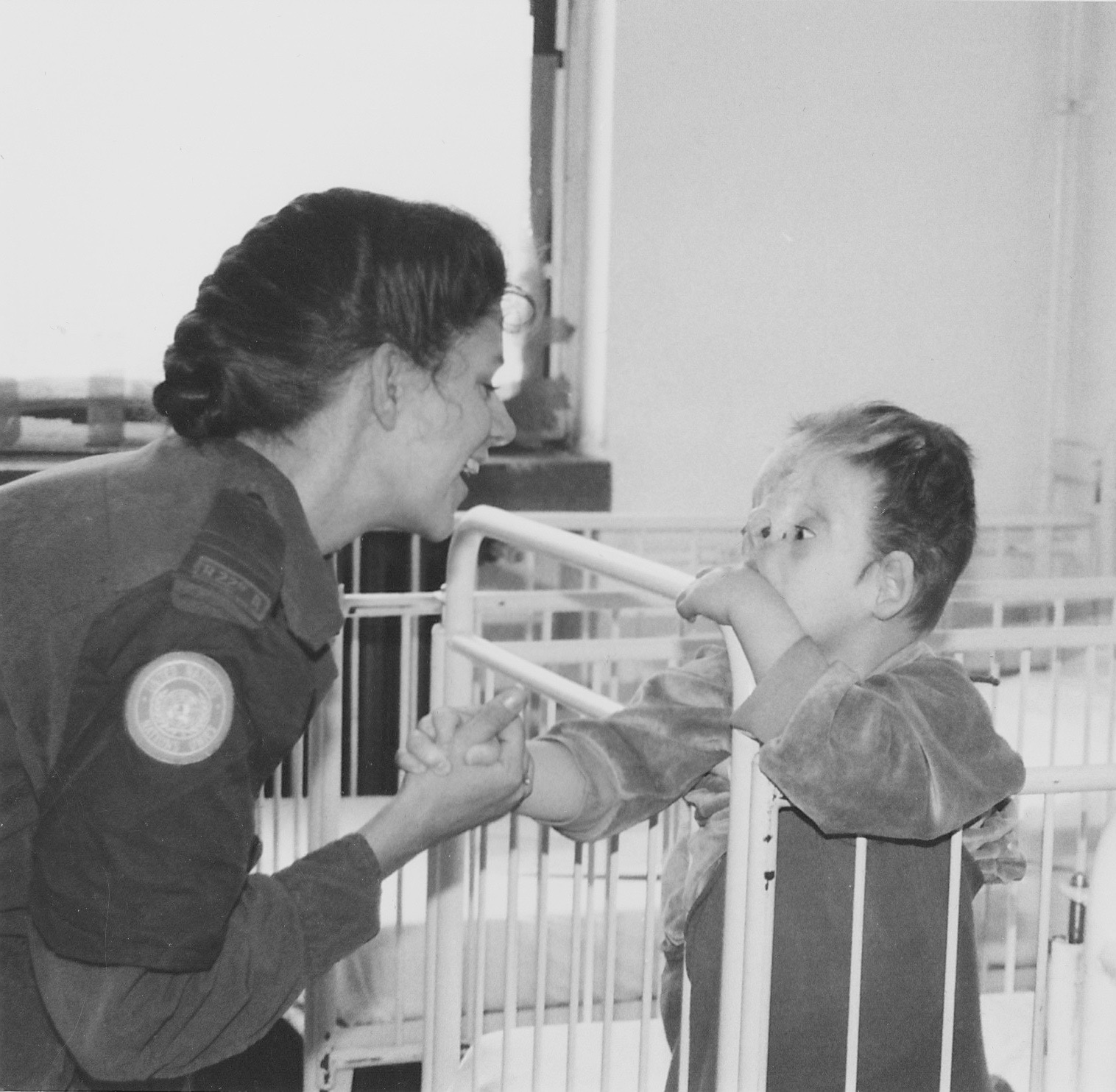
Captain Sandra Perron at the Fojnica Children’s Hospital, Bosnia, summer 1993.
After Bosnia, Perron distinguished herself further by graduating as the top student on the TOW antitank missile course. She went on to command a 42‑member TUA platoon in Croatia in 1995, an experience she described as the highlight of her military career. There, she earned commendations for efficiently establishing and managing a camp for hundreds of refugees. In environments shaped by chaos and displacement, Perron led with competence, credibility, and care.
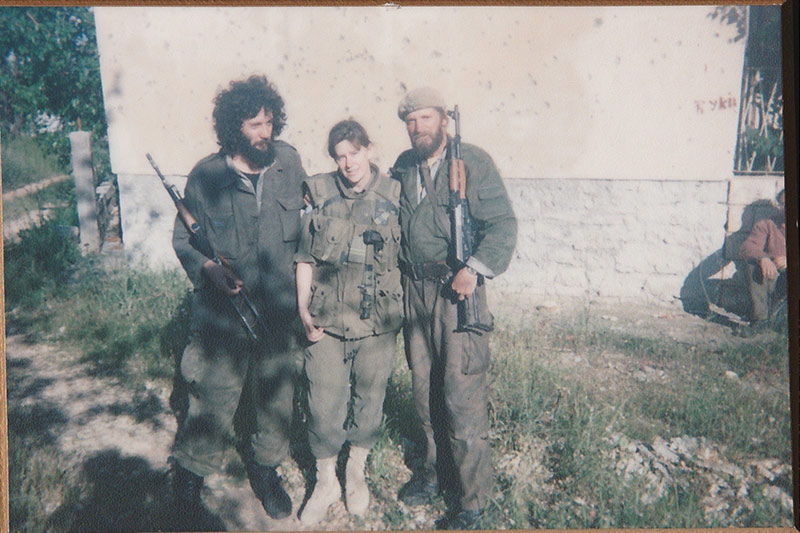
Perron was the anti-tank platoon commander during the Croation offensive in 1995. The Croation soldiers wanted to get their photo taken with Perron. They were surprised that a woman was “the big chief.”
Yet even excellence did not shield her from institutional indifference. In 1996, after being assigned a role, she considered far below her rank and qualifications, Perron made the difficult decision to leave the Army. She did not do so out of bitterness toward the institution itself, but because the accumulation of daily microaggressions had become unbearable. Her departure marked both a loss for the military and a stark indictment of its failure to protect and retain one of its most capable officers.
Service, however, did not end with her uniform. Perron continued her commitment to leadership as a cadet instructor, later achieving the rank of Major. She built a diverse post-military career in consulting, industry, and entrepreneurship, while also founding a non-profit organization supporting an orphans’ school in Tanzania. As a leadership consultant and public speaker, she dedicated herself to mentoring others and confronting injustice wherever it appeared.
In 2017, Perron gave voice to her experiences in Outstanding in the Field: A Memoir by Canada’s First Female Infantry Officer. The book lay bare the systemic barriers she endured and the personal cost of being a pioneer. Its critical acclaim reflected not only literary merit, but the urgency of its message. Her story resonated because it spoke to a broader truth: progress is often carried forward by those who endure what should never have been demanded of them.
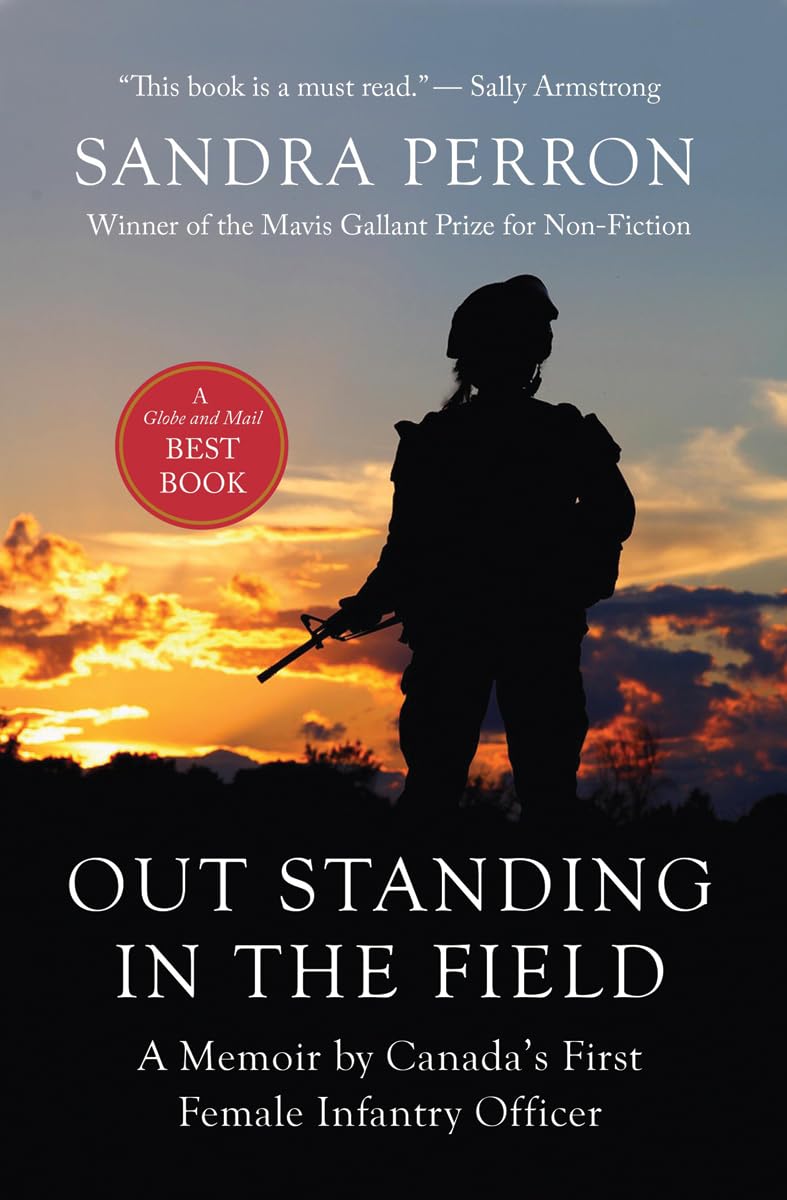
Perron’s memoir did not remain confined to the page. In 2025, Outstanding in the Field was adapted into the feature film Out Standing, directed by Mélanie Charbonneau and released in both English and French (Seule au front). Premiering at the Toronto International Film Festival, the film brought Perron’s story to a broader national and international audience. Critics widely praised Out Standing for its unflinching portrayal of institutional sexism within the military and for its refusal to simplify Perron’s experience into a conventional narrative of victimhood. Reviews highlighted the film’s power as both an intimate character study and a broader critique of systemic barriers, anchored by a commanding performance from Nina Kiri as Perron. The film received strong critical response across major outlets, with reviewers noting its emotional restraint, moral clarity, and relevance to ongoing conversations about gender, leadership, and accountability within traditionally male-dominated institutions. In translating Perron’s lived experience to the screen, Out Standing extended her legacy beyond history and literature, reinforcing her story as one that continues to challenge, provoke, and inspire.
Sandra Perron’s legacy is not defined solely by being “the first.” It is defined by what she made possible. Women now serve as infantry officers in Canada, and others have gone on to command troops in combat. Senior leaders have since acknowledged that Perron should have been recognized and supported, rather than resisted. Her career stands as both a triumph of resilience and a reminder of the work that remains.
Her life of service delivers a powerful message: barriers can be broken, but only when courage is sustained over time. Sandra Perron did not simply endure adversity, she transformed it into a path forward for others. In doing so, she proved that leadership is not granted by acceptance, but earned through integrity, perseverance, and the refusal to step aside when history demands change.